
Grooming for Dogs: Simple Tips for a Healthy, Happy Coat.
Learn grooming for dogs with easy at-home tips for brushing, bathing, nail care, and ear cleaning to support a healthy coat and happier pet every day.
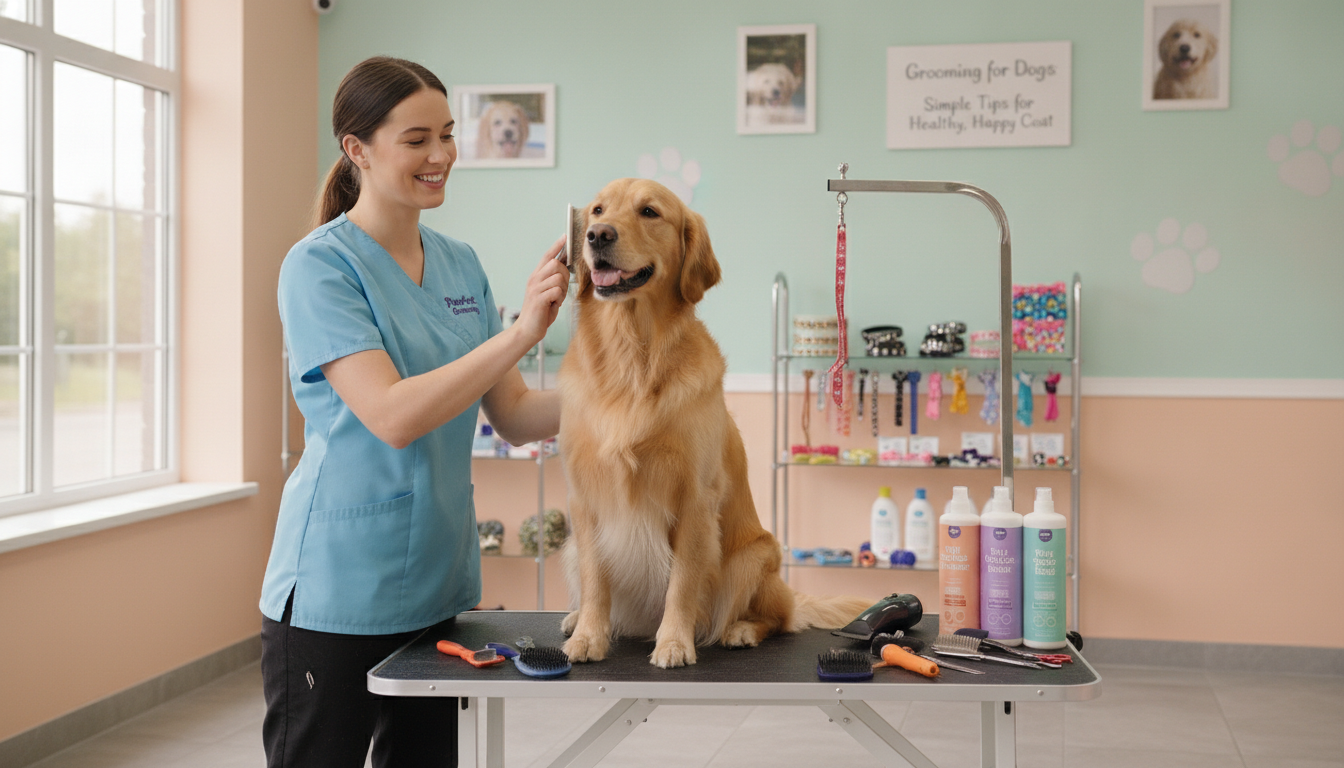
When your dog rests beside you after a long day, a clean coat and bright eyes show they’re healthy and happy. Grooming is more than just making your pet look neat. It’s a way to show love, notice changes, and build trust.
Regular brushing, bathing, nail trimming, ear cleaning, and dental care are key for your dog’s health. Routine skin checks can catch dry patches, lumps, pests, or irritation early. These tips help keep your pet clean, comfortable, and ready for daily activities.
You can do many grooming tasks at home with patience and the right tools. But, some dogs need professional help due to their coat type, size, age, health, temperament, or special grooming needs. With a steady routine, grooming can be safer, calmer, and easier for both of you.
Why Grooming for Dogs Supports Your Pet’s Health
Grooming for dogs does more than make them look good. It keeps their coat clean and healthy. It also helps you spot any issues early. Grooming can become a calming part of your dog’s routine.
How Regular Brushing Keeps Your Dog’s Coat Healthy
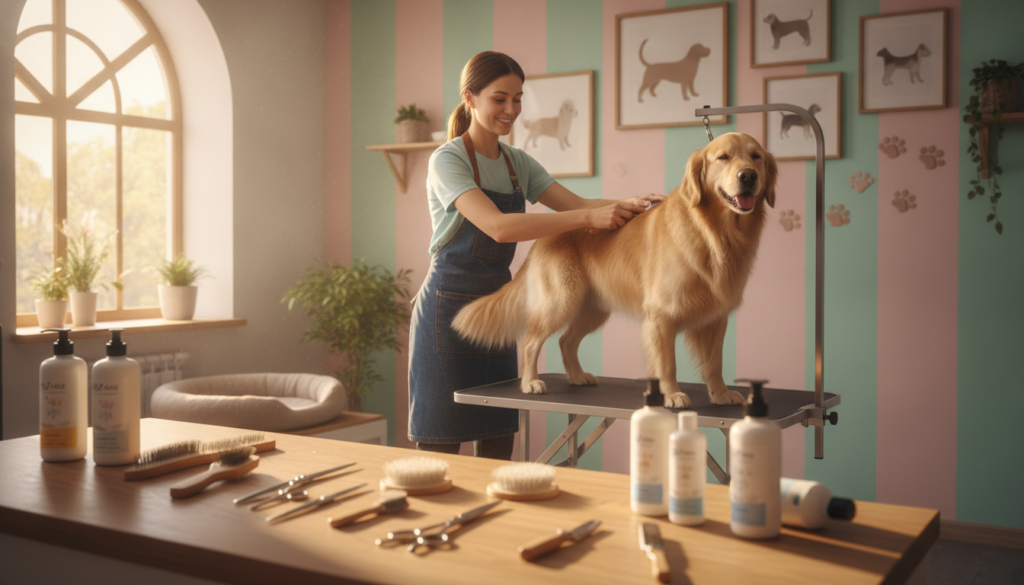
Brushing removes loose fur, dirt, and dander. It spreads natural oils, making the fur soft and shiny. This keeps the coat healthy.
Brushing also prevents mats from pulling on the skin. It can reduce shedding at home. Choose the right brush for your dog’s coat and brush gently.
How Grooming Helps You Spot Skin Problems Early
Grooming lets you closely examine your dog’s skin. Look for redness, swelling, parasites, lumps, or hot spots. An unusual smell could mean skin or ear issues.
Watch for persistent itching, open sores, or hair loss. If these signs don’t get better, see your vet. Early care can prevent bigger problems.
How Grooming Supports Comfort, Cleanliness, and Well-Being
Trimming fur near the eyes makes your dog more comfortable. Clean paws remove dirt and debris. Regular grooming keeps your dog smelling fresh.
Grooming makes your dog used to gentle touch. Handle their paws, ears, and coat carefully during grooming. This makes routine checks less stressful.
Essential Dog Grooming Tips for a Healthy Coat
Keeping your dog’s coat clean and healthy is easier with a regular routine. Start with gentle handling, the right tools, and short grooming sessions. These tips will make grooming safer for both you and your dog.
Choose the Right Brushing Routine for Your Dog’s Coat
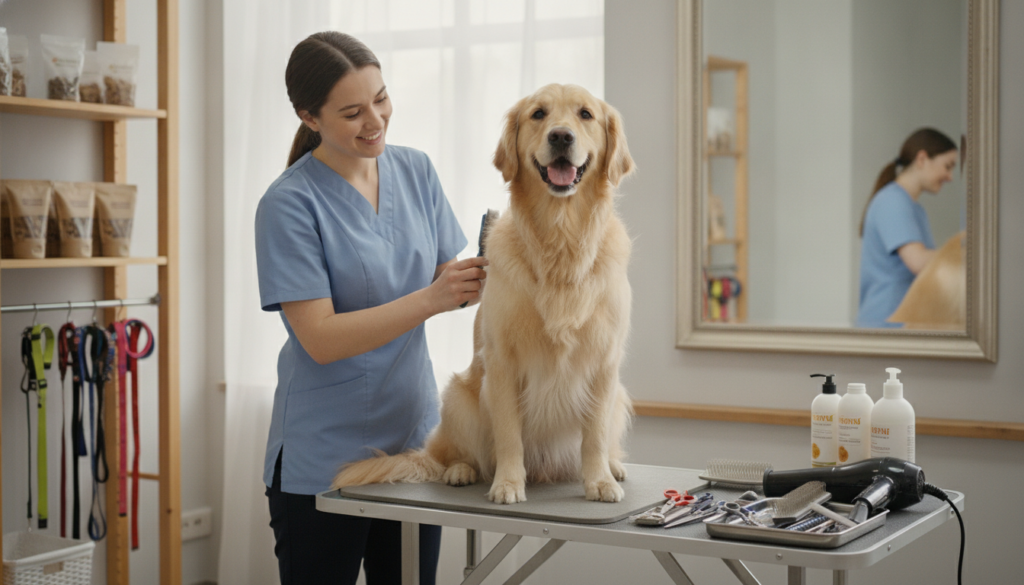
The type of your dog’s coat determines the best brushing routine. A slicker brush is great for many medium and long coats. Dogs with thick undercoats may need a special tool during shedding seasons.
Use a wide-tooth comb to check hard-to-reach areas like behind the ears and under the tail. Brush in small sections and gently move from the skin to the ends of the hair. Never pull hard on a tangle. If it won’t come out easily, get help from a professional groomer.
Bathe Your Dog Safely and Effectively
Start with preparation for a safe bath. Place a nonslip mat in the tub and have towels, shampoo, and a cup ready. Use lukewarm water and dog-specific shampoo to avoid drying out your dog’s skin.
Wet your dog slowly and avoid their eyes and ears. Massage the shampoo into the coat gently. Rinse until the water is clear to prevent itching. Dry them completely with towels or a pet-safe dryer on a low setting.
Trim Nails and Check Your Dog’s Paws
Trimming nails is safest when you do it in small amounts. Find the quick, which is pink in clear nails, to avoid cutting too much. Use styptic powder for minor cuts. Stop before reaching the center of the nail.
Examine each paw for cracks, swelling, stones, or debris. Check between the toes for redness and irritation. Trim hair between the pads carefully with pet grooming scissors, avoiding sharp tools.
Clean Your Dog’s Ears and Care for Their Teeth
Use a vet-approved ear cleaner for regular ear care. Apply as directed, massage the ear base, and wipe away dirt with cotton or gauze. Never insert a cotton swab too far into the ear. Seek vet care for redness, odor, swelling, or frequent head shaking.
Brush your dog’s teeth daily for better oral health. Use a soft pet toothbrush and toothpaste safe for dogs. Human toothpaste is not safe. Start slowly, reward calm behavior, and stop if your dog shows pain.
Dog Grooming Supplies You Need at Home
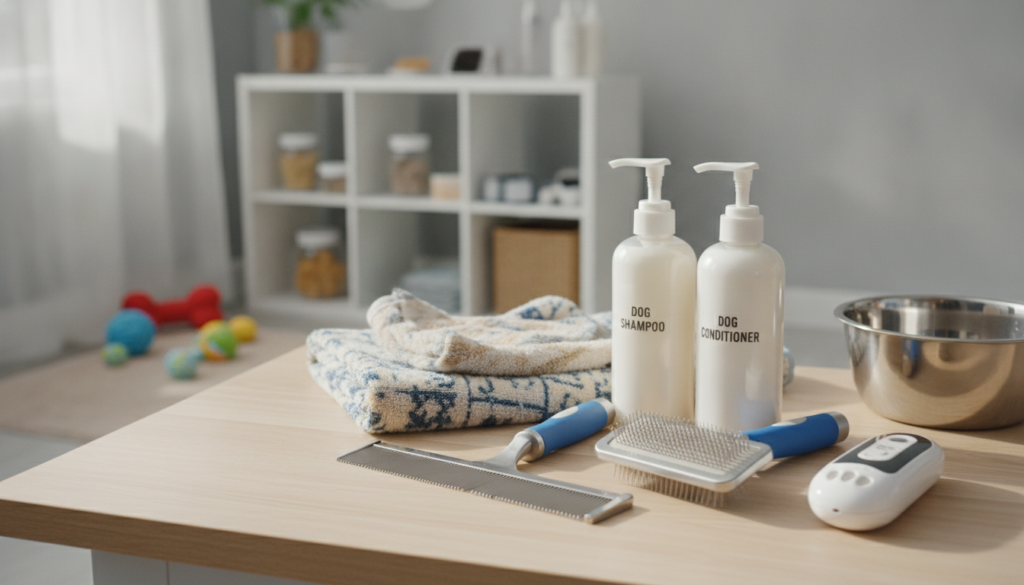
Choose dog grooming supplies that fit your pet’s coat, size, and skin needs. A short-haired dog may need a rubber brush. Long or curly coats need grooming brushes, a comb, and a detangling tool.
Use a mild dog shampoo made for pets. Human shampoo can dry or irritate your dog’s skin. Add absorbent towels and a nonslip bathing mat to help your dog stay steady during a bath.
A basic home kit should include:
- A suitable brush or comb for your dog’s coat
- Dog shampoo for your pet’s skin type
- Absorbent towels and a nonslip bathing mat
- Nail clippers or a pet nail grinder
- Dog-safe ear cleaning solution and cotton pads
- A pet toothbrush and enzymatic dog toothpaste
A grooming table can improve control during brushing and nail care. A secure, nonslip surface can work well, too. Never leave your dog unattended on an elevated surface, even for a short time.
Clean each tool after use and let it dry before storage. Check grooming brushes for bent pins, sharp edges, or loose parts. Replace worn tools before they pull hair or scratch the skin. Keep dog shampoo, nail tools, and dental products in a closed area away from children and pets.
Use care around your dog’s face and skin. Avoid scissors near these areas unless you have proper training. Clippers or professional help may be safer for tight mats and delicate spots.
Ask your veterinarian or a qualified groomer for product guidance if your dog has allergies, sensitive skin, a thick undercoat, or a coat that mats easily. The right dog grooming supplies can make home care safer and more comfortable for both of you.
How to Create a Stress-Free Grooming Routine
Starting a calm dog grooming routine is all about small steps. Keep each session short and follow a routine. Your dog should feel safe and not rushed or held for too long.
Introduce Grooming Tools Gradually
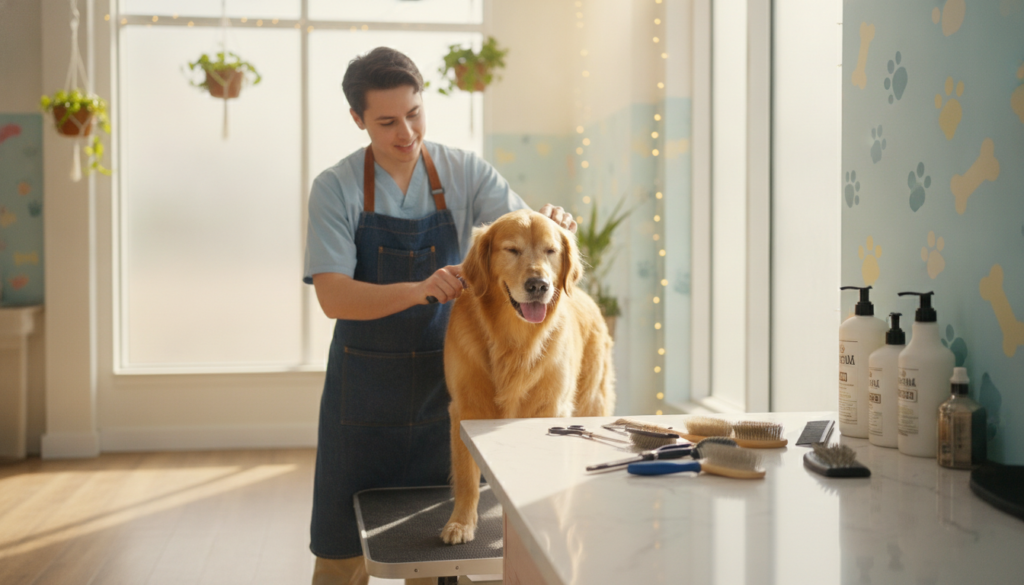
Let your dog get used to one tool at a time. Place a brush, clipper, towel, or nail grinder nearby without using it. Give a treat when your dog stays calm around it.
Touch your dog gently with the tool before grooming. For example, rest the brush on the coat for a moment. Stop if your dog still looks relaxed.
Use Positive Reinforcement During Grooming
Use small treats, quiet praise, or a favorite activity to reward calm behavior. This positive reinforcement makes grooming a pleasant experience for your dog.
Work on one area for a short time. Brush a few strokes, check your dog’s response, and reward them. End the session before they feel overwhelmed.
Recognize Signs of Stress or Discomfort
Your dog may show stress through lip licking, yawning, turning away, trembling, or unusual panting. A tucked posture, growling, or trying to escape means you need to stop.
Pause when you notice these signs. Give your dog space and let them settle. If handling becomes unsafe or your dog shows pain, seek help from a veterinarian or groomer.
Set a Grooming Schedule That Fits Your Dog
Your dog’s coat type and daily habits should guide the schedule. Dogs with long or dense coats may need frequent brushing to prevent mats. Short-coated dogs may need less brushing, but regular checks are still important.
- Check nails often and trim them when they become too long.
- Provide routine dental care with dog-safe products.
- Brush after outdoor play if burrs, dirt, or debris collect in the coat.
- Bathe your dog only when needed or when your veterinarian recommends it.
Use the same calm steps each time. A steady plan supports low stress grooming and makes care easier for both of you.
When to Choose Dog Grooming Services
Home grooming is great for simple tasks like brushing, baths, and checking paws. But, some tasks need a pro’s touch. Severe matting, hard-to-trim nails, and resistant dogs can be risky for both you and your pet.
Professional grooming is best for big dogs, anxious pets, or those with mobility issues. Specialized coats might need advanced dryers, specific tools, or detailed styling.
When Professional Pet Grooming Is the Better Option
Go for professional grooming if mats are tight against your dog’s skin. Trying to remove them at home can hurt or cause cuts. A groomer can safely remove tangles.
Expert groomers are great for thick, curly, or fast-growing coats. They know how to shape the coat for comfort and style.
Nail care is tricky for long, dark, or sensitive nails. A groomer can handle nervous dogs and avoid cutting the quick. Tell them about any past issues or concerns before the visit.
What to Expect at a Dog Grooming Salon
Your visit starts with questions about your dog’s health and habits. Share about their coat care, behavior, allergies, and past grooming. This helps the groomer tailor the service.
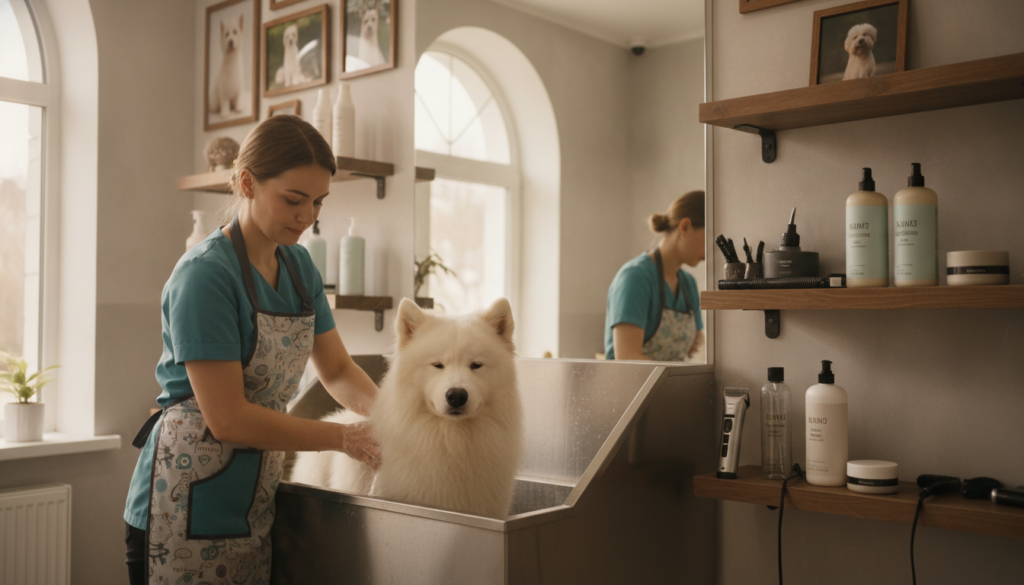
The groomer will check your dog’s coat, skin, ears, paws, and nails before starting. A typical visit includes bathing, drying, brushing, trimming, and nail care. Some places also offer ear cleaning or tooth brushing.
Good communication is key during the visit. The groomer should explain any concerns they find. Ask when your dog will be ready and how long the appointment will take.
Benefits of Mobile Dog Grooming
Mobile grooming comes to you, saving travel time and avoiding salon crowds. It’s great for dogs that get anxious in cars or busy places.
Some pets feel more at ease in familiar settings. Mobile grooming offers one-on-one attention, which can be calming for dogs that dislike noise or crowds. Check the van’s equipment and emergency plan before booking.
Mobile grooming might not be right for every dog. Make sure the groomer has the right tools and space for your dog’s needs.
How to Compare Dog Grooming Services
Don’t just look at prices when comparing grooming services. A low price might not mean your dog gets the care they need. Look at the groomer’s training, experience, and services offered.
- Ask how the groomer handles fear, movement, and difficult behavior.
- Check sanitation practices for tables, tools, tubs, and dryers.
- Confirm pricing, appointment length, cancellation rules, and included services.
- Ask about emergency procedures and access to veterinary support.
- Discuss policies for dogs with medical or behavioral needs.
Read recent reviews carefully. Look for comments on gentle handling, clear communication, clean equipment, and consistent results. A good groomer will answer your questions and tailor the service to your dog’s needs.
How to Find the Best Dog Groomers Near You
Finding a good groomer is more than just a quick search online. Look for someone who handles your dog safely, communicates well, and understands your dog’s needs.
Search for Dog Grooming Near Me
Begin by checking local directories and asking your vet for recommendations. Your vet might know groomers who are good with health issues. Breed clubs can also suggest groomers who know about your dog’s coat and style.
Talk to neighbors, friends, and pet groups for advice. Read reviews carefully, looking for comments on timeliness, gentleness, cleanliness, and how the groomer handles scared dogs.
Check Groomer Experience, Training, and Reviews
Find out how long the groomer has worked with dogs like yours. Their experience with your dog’s breed, coat, age, size, health, and behavior can make a big difference.
Ask about their training, certifications, and insurance. A good groomer will explain everything clearly and answer your questions. Look for reviews that match what the business claims.
Ask About Safety Practices and Grooming Methods
Before you book, ask how they handle scared or reactive dogs. Make sure they use gentle methods and stop if your dog gets stressed.
Check their cleaning routine, ventilation, and how they care for equipment. Ask about their emergency plan and how they report any issues. Their answers will show how much they care about your dog’s safety.
- Ask how tools and tables are cleaned between appointments.
- Confirm that staff inspect dryers and clippers often.
- Learn how the salon handles medical emergencies.
Prepare Your Dog for Their Grooming Appointment
Get your dog used to gentle handling at home. Touch their paws, ears, tail, and face for short times. Reward them for staying calm with praise or treats.
Share your dog’s health and behavior details with the groomer. Follow any feeding or vaccination advice they give. Bring vet-approved products and care instructions if needed.
When looking for dog grooming services, choose someone who listens and respects your dog’s boundaries. This way, you’ll find a groomer who provides safe and caring service.
Conclusion
Regular grooming keeps your dog’s coat clean and healthy. Brushing also helps spot skin issues early. It’s important to keep nails trimmed, check paws, care for ears, and brush teeth for comfort and health.
Find a grooming routine that suits your dog’s needs. Use the right tools and be gentle. Short, gentle sessions help your dog feel safe and build trust.
If you see signs of illness, like pain or infection, talk to your vet. If grooming at home is hard or scary, get help from a pro.
With regular care at home and expert help when needed, your dog will stay clean and healthy all year.