
How to Toilet Train a Puppy in 7 Days Step by Step
Learn how to toilet train a puppy in 7 days with a simple schedule, positive reinforcement, crate training, and practical steps for lasting success.

Few puppy moments feel as stressful as finding a fresh mess on the floor. You may feel frustrated, tired, or unsure what to do next. With a calm plan, every accident can support your puppy’s learning.
This guide shows how to toilet train a puppy in 7 days. Use close supervision, steady timing, quick rewards, and careful cleaning. Many puppies make clear progress in one week when their routine stays consistent.
Still, every puppy learns at a different pace. Age, breed, health, past living conditions, and temperament all affect the timeline. After seven days, success means fewer accidents and stronger habits, not perfect bladder control.
how to toilet train a puppy in 7 days
A clear setup gives your puppy the best chance to learn. Before day one, choose a potty area, gather supplies, and plan frequent bathroom breaks. These puppy toilet training tips help you build a calm routine.
Prepare Your Puppy’s Potty-Training Area
For outdoor training, choose one spot your puppy can reach quickly. Keep it away from busy sidewalks, heavy foot traffic, and unsafe animal waste. Use the same spot each time so its scent and location become familiar.
For indoor training, place puppy pads in a quiet area away from food, water, and bedding. The space should be easy for your puppy to reach and easy for you to watch. Keep doors open or use a safe gate when needed.
Gather Essential Cleaning and Training Supplies
Prepare a properly sized crate, leash, and collar or harness. Keep high-value treats in your pocket or near the exit. Reward your puppy right after a successful potty trip.
- Paper towels for quick cleanup
- An enzymatic cleaner for urine and stool odors
- Puppy pads for an indoor toilet area
- A written schedule for meals, naps, play, and bathroom breaks
An enzymatic cleaner breaks down odors that may draw your puppy back. Regular household cleaners may leave scents your puppy can still detect. This simple step supports useful puppy toilet training tips.
Set Realistic Expectations for a Seven-Day Plan
A seven-day plan builds a strong routine, but it may not create perfect control. Very young puppies often need bathroom trips every 30 to 60 minutes while awake. They may need overnight breaks because their bladders are still developing.
Accidents are part of learning, not deliberate disobedience. Watch for restlessness, sniffing, circling, or sudden pauses in play. Stay patient, keep the schedule steady, and adjust it as your puppy gains control.
Create a Consistent Puppy Potty Training Schedule
A steady routine gives your puppy clear chances to succeed. Take your puppy to the same potty area at set times each day. This routine supports effective puppy toilet training and helps you notice patterns early.
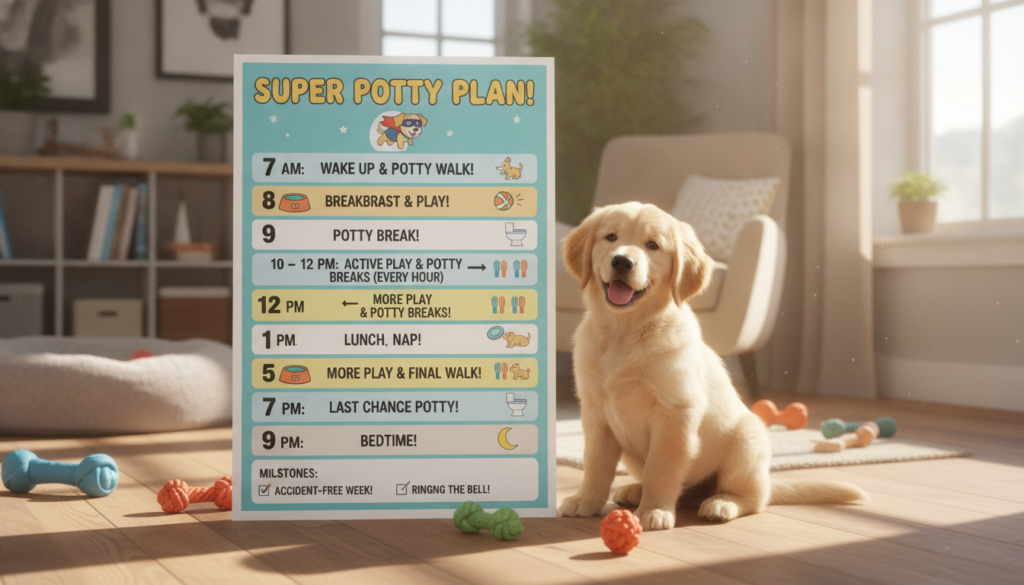
Take your puppy outside at the right times
Take your puppy outside when it wakes, finishes a meal, drinks water, or leaves the crate. Make another trip after naps and active play. These events often create a strong need to eliminate.
While awake, young puppies may need a potty break every 30 to 60 minutes. Adjust timing for your puppy’s age, size, water intake, and activity level. Follow your veterinarian’s guidance if your puppy has health concerns.
Walk straight to the designated area and wait calmly. Keep your puppy focused until the trip ends. When your puppy urinates or passes stool, give praise and a small treat right away.
Use meals, naps, and playtime as potty cues
Feed your puppy at consistent times instead of leaving food out all day. A regular meal plan makes bathroom needs easier to predict. Take your puppy out shortly after each meal and drink of water.
Keep a simple record of meals, water, naps, play, potty trips, successes, and accidents. This log can reveal useful patterns. You may learn that your puppy needs an extra break after busy play or a larger drink.
Use the record to adjust the schedule without guessing. A written plan supports effective puppy toilet training by linking daily habits with bathroom needs.
Choose a consistent potty command
Pick one short phrase, such as “go potty.” Say it calmly when your puppy begins to eliminate. Use the same words each time, and avoid extra commands while waiting.
Stay in the potty area until your puppy finishes. Give immediate praise after successful elimination. With steady practice, the phrase becomes a clear cue and strengthens effective puppy toilet training.
Use Positive Reinforcement for Fast Puppy Potty Training
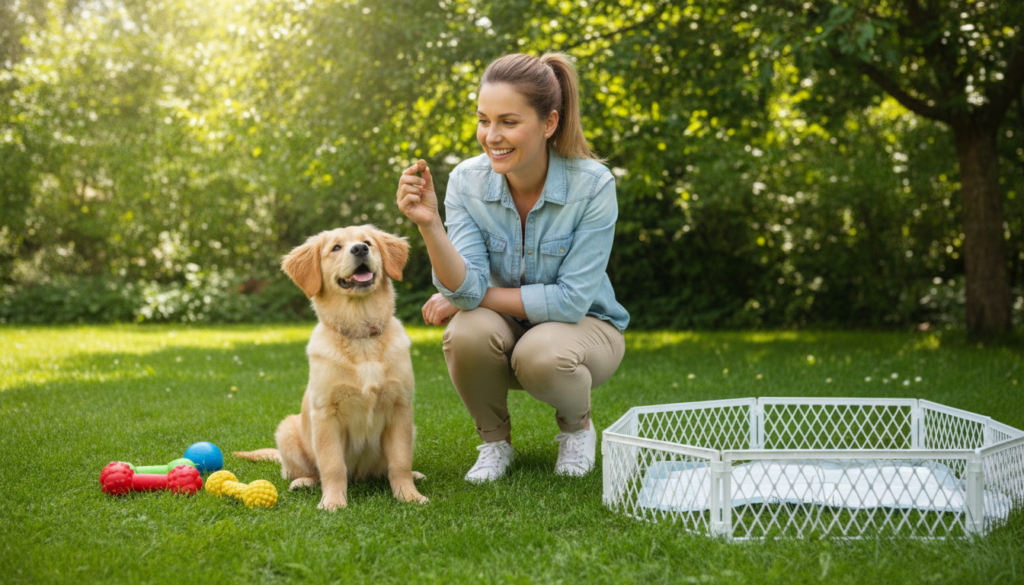
Positive reinforcement helps your puppy link the right action to a good result. When your puppy eliminates in the correct spot, give a small, tasty treat within a few seconds. Add cheerful praise, such as “Good potty!” so your puppy knows which action earned the reward.
Keep treats ready for every scheduled trip during the early days of fast puppy potty training. Reward calm crate behavior, a signal at the door, and a smooth return to the potty routine. These rewards help your puppy build a clear, reliable habit.
- Use tiny treats that your puppy can eat quickly.
- Praise your puppy right after successful elimination.
- Reward the behavior each time during early training.
As your puppy becomes dependable, give treats less often. Continue verbal praise to keep the habit strong. A steady reward plan supports fast puppy potty training without making your puppy depend on food every time.
Never yell, punish, frighten, or rub your puppy’s nose in a mess. These actions can create fear and may make your puppy hide when needing to go. Calm guidance and timely rewards make fast puppy potty training clearer and safer.
Handle Accidents and Housebreak a Puppy Quickly
Accidents are normal during puppy training. Stay calm to help your puppy learn the right place and housebreak a puppy quickly.
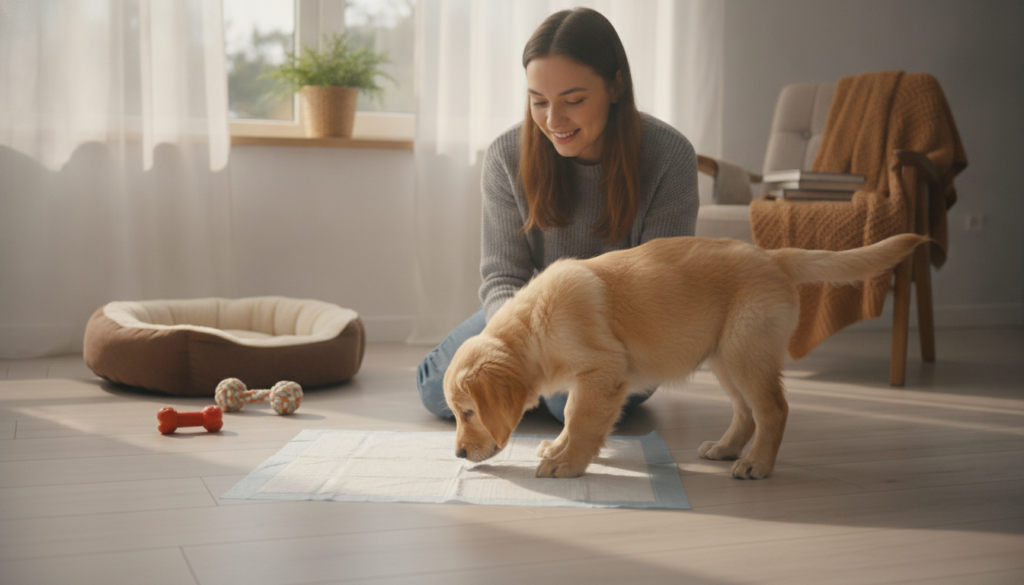
Respond to Accidents Calmly and Effectively
If you see your puppy start to go, interrupt gently with a soft sound. Take your puppy to the correct potty area right away. Wait quietly, then praise and give a small treat when your puppy finishes there.
If you find a mess later, clean it without scolding. Your puppy cannot connect delayed punishment to an earlier action. Fear can make training harder and weaken trust.
Clean Indoor Messes to Prevent Repeat Accidents
Use an enzymatic pet cleaner made for urine and feces. Follow the product directions and cover the entire area. These cleaners break down odor molecules that may draw your puppy back to the same spot.
- Blot fresh urine before applying the cleaner.
- Keep your puppy away while the area dries.
- Check nearby rugs, seams, and floor edges for hidden odor.
Know When to Use Indoor Puppy Potty Pads
Puppy pads can help with apartment living, extreme weather, limited mobility, or temporary veterinary restrictions. They can help you train your puppy to potty indoors fast when outdoor trips are unsafe or impractical.
Choose a clear pad location and guide your puppy there at regular times. Switching between pads and outdoor training requires clear boundaries and gradual changes. Move the pad closer to the door over time, then take your puppy outside when the new routine feels steady.
Contact your veterinarian if accidents suddenly increase. Seek advice about straining, frequent urination, diarrhea, excessive thirst, or other signs of illness.
Conclusion
A seven-day plan gives you a clear start to house training. Set up one potty area, follow a steady puppy potty training schedule, and watch your puppy closely. Take your puppy out after meals, naps, play, and sleep.
When your puppy eliminates in the right place, reward it at once. This positive reinforcement puppy training helps your puppy connect good behavior with a pleasant result. Keep praise calm, clear, and consistent.
Accidents may continue after the first week, so keep the same routine for several weeks or longer. Clean each mess well, and add freedom one room at a time as your puppy improves. Continue regular potty breaks and close supervision.
If progress stops, return to more frequent trips and closer watching. A change in behavior may signal a health or training concern. In that case, ask your veterinarian or a qualified trainer for guidance.