
How to Train a Deaf Puppy with Easy and Friendly Methods.
Learn how to train a deaf puppy with gentle hand signals, positive reinforcement, and practical routines that build confidence, trust, and lifelong skills.

Training a deaf puppy may feel uncertain at first, but deafness does not stop learning. You cannot call your puppy’s name or use your voice to guide behavior. With patience, kindness, and clear signals, you can build a strong bond and help your puppy feel secure.
To train a deaf puppy, replace spoken cues with hand signals, body language, gentle touch, visual markers, and light cues. Use light cues only in safe settings, and keep each lesson short, calm, and easy to follow. Reward desired behavior with treats, toys, or warm praise through touch and expression.
Trust should come before strict obedience. Avoid startling your puppy by touching gently where they can see you. Predictable routines ease daily life and reduce stress, forming the foundation of effective puppy training for deaf dogs.
Safety matters at every stage. Your puppy may not hear traffic, animals, or a recall cue, so use a secure leash or fenced area outdoors. As you learn how to train a deaf puppy, use steady communication and supervision, creating positive experiences that build success.
Understanding Deaf Puppy Behavior and Training Needs
A deaf puppy learns through sight, touch, scent, and movement rather than sound. Deafness does not cause stubbornness or bad behavior. Your puppy needs clear visual cues and consistent signals to understand your expectations.
Good communication skills for deaf puppy training start with patience. Watch your puppy’s body language, keep signals consistent, and seek veterinary care if you suspect hearing loss.
Recognizing How Deafness Affects Communication
Stay within your puppy’s field of vision when approaching. If your puppy faces away, gently touch the floor or a nearby surface to create a soft vibration. Use a soft light cue, but never shine light directly into your puppy’s eyes.
Use one clear hand signal for each behavior. Avoid sudden movements near the face because they may startle your puppy. These are useful tips for training a deaf puppy and make lessons easier to follow.
Creating a Safe and Supportive Training Environment
Safety requires planning because your puppy cannot hear cars, alarms, or people approaching. Use secure fencing, a properly fitted harness, and controlled access to doors, stairs, and outdoor areas.
- Choose identification that clearly notes your puppy is deaf.
- Check gates, latches, and fence gaps often.
- Use a harness for walks and supervised outdoor time.
- Block unsafe stairs until your puppy learns safe movement.
Keep the home layout steady when possible. A predictable space supports communication skills for deaf puppy training and lowers the risk of surprises.
Building Trust Before Teaching Commands
Trust grows through calm handling, predictable routines, food rewards, and gentle play. Start with brief sessions when your puppy feels relaxed. Reward eye contact, turning toward you, and calm responses.
Watch for stress signs, such as a tucked tail, stiff body, hiding, lip licking, or repeated yawning. Pause the lesson and give your puppy space. If fear, reactivity, or handling concerns continue, ask a qualified trainer or veterinarian for guidance.
how to train a deaf puppy with Positive Reinforcement
Deaf puppies learn well with clear visual cues, gentle guidance, and rewards. Positive reinforcement for deaf puppy training helps your puppy link a behavior to a good result. Keep lessons short, calm, and easy to repeat.
Using Hand Signals and Visual Cues
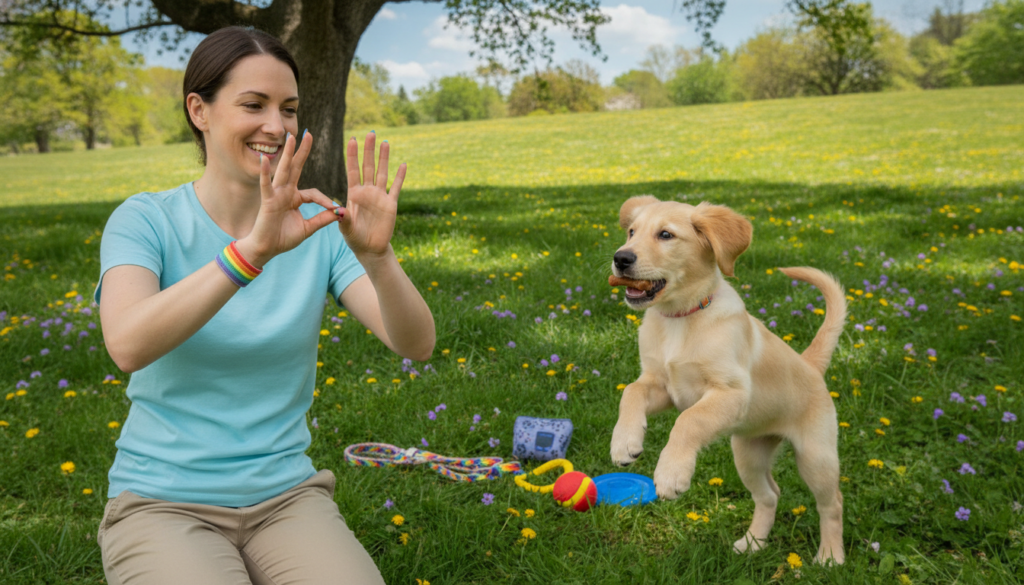
Pair each behavior with one clear hand signal. Examples include an open palm for “stay,” a downward motion for “down,” or a sweeping motion toward yourself for “come.” No signal is better than another.
Consistency matters most, so everyone in your home should use the same cue.
Show the signal before guiding or capturing the behavior. When your puppy performs it, mark that moment with a thumbs-up or brief hand flash. Give the reward right away.
This timing helps your puppy understand which action earned praise.
Choosing Effective Rewards for Deaf Puppies
Use small, soft treats that your puppy can eat quickly. Check for food allergies, and count treats as part of your puppy’s daily calories. If food is not best, try a favorite toy, short game, or gentle play.
Safe sniffing can also be a strong reward. Let your puppy explore a clean, secure area after successful behavior. Watch your puppy’s response during training. The best reward keeps your puppy eager to participate.
- Small treats with a soft texture
- A favorite toy or brief play session
- Gentle praise through touch, when welcomed
- Access to safe sniffing and exploration
Reinforcing Good Behavior Consistently
Practice one skill at a time in a quiet space. Use the visual cue, guide the behavior when needed, and mark success at once. Frequent practice works better than long sessions that tire your puppy.
As your puppy improves, add small challenges. Change the distance, room, or distraction level one step at a time. Keep the same signal and marker during each stage.
These training techniques for deaf puppies support clear learning without confusion.
Avoid punishment, sudden corrections, and startling touches. Your puppy may not hear you approach, so enter the visual field before giving a cue. Reward calm attention and correct choices often.
With steady practice, positive reinforcement for deaf puppy training can build trust and useful daily skills.
Essential Training Techniques for Deaf Puppies
Clear visual cues help your puppy understand what you want. Begin in a quiet, familiar place with few distractions.
Keep each session short, calm, and upbeat. These deaf dog training methods work best with the same signal every time.
Teaching Commands to a Deaf Puppy
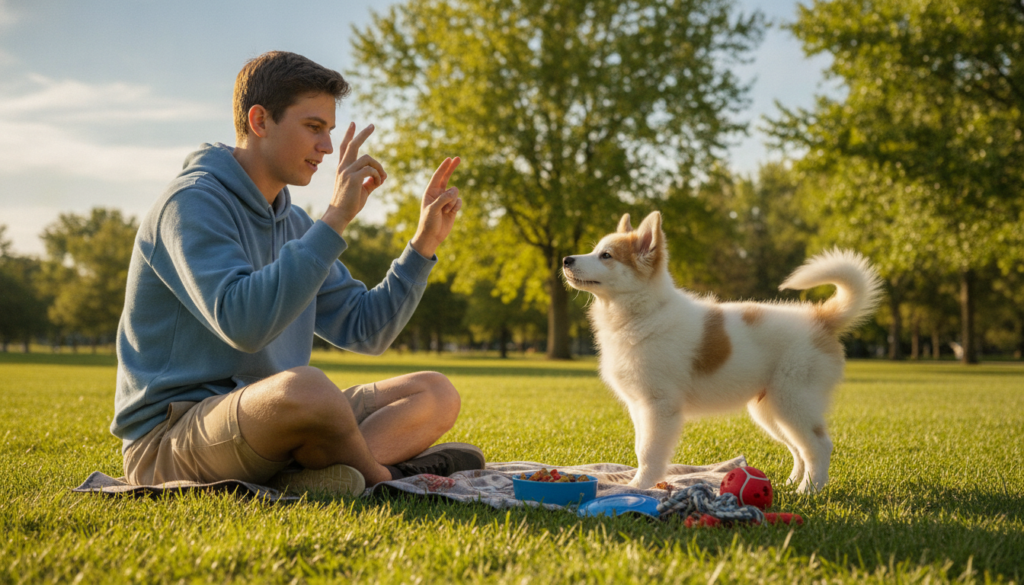
Use a small, visible treat as a lure when your puppy needs help. Add the hand signal before the movement becomes automatic. Reward each correct response with food, touch praise, or a favorite toy.
- Sit: Hold a treat near your puppy’s nose and move it up and back. As your puppy sits, show the hand signal, mark the behavior, and reward it.
- Down: Guide the treat from your puppy’s nose toward the floor. When the elbows touch the ground, show the signal, mark the action, and give the reward.
- Stay: Ask for a sit or down. Show a clear stay signal, wait for one second, and reward your puppy while they remain still. Increase time and distance in small steps.
- Leave it: Place a treat in your closed hand. When your puppy stops trying to reach it, show the signal and reward them with a different treat.
- Drop it: Offer a toy with low value. Show a treat near your puppy’s nose. When they release the toy, give the treat and return the toy when safe.
- Wait: Show the wait signal at doors, gates, or food bowls. Pause for a brief moment, reward calm behavior, and release your puppy with a separate signal.
- Loose leash walking: Reward your puppy when the leash hangs in a soft curve. Stop moving when the leash tightens. Resume walking when your puppy looks toward you or returns to your side.
Fade the lure once your puppy understands the movement. Show the empty-hand signal, mark the response, and reward from your other hand. This keeps the signal clear and stops your puppy from following food every time.
Introducing a Marker Signal for Training
A marker tells your puppy the exact moment they make a good choice. Choose one visual marker, such as an open palm or quick flash of a colored card. Use the same marker for every lesson.
- Show the marker when your puppy is watching.
- Give a high-value treat right away.
- Repeat this pattern many times in short sessions.
- Test the marker without asking for a behavior. Reward your puppy if they look toward you or expect a treat.
Once your puppy understands the marker, use it while teaching commands to a deaf puppy. Mark the instant your puppy completes the action. Give the reward within one or two seconds.
Practicing Attention and Recall Skills
Reward your puppy whenever they choose to look toward you. This simple habit builds attention without pressure. Reward them at once, even after a brief glance.
Next, create a gentle floor vibration by tapping your foot near your puppy. Pair it with a small movement cue, such as waving your hand. When your puppy checks in, show the marker and reward them.
Practice recall in a secure, fenced area with a long line. Use a bright visual signal and a high-value reward, such as cooked chicken or cheese. Start nearby and make each return feel safe and fun.
- Call your puppy once with the visual cue.
- Move away in a playful manner if your puppy needs encouragement.
- Mark the moment your puppy turns toward you.
- Give several small rewards when your puppy reaches you.
- Release your puppy to explore again after the reward.
Never punish your puppy after they return, even if recall took time. A positive return helps your puppy trust the cue. These deaf dog training methods support safer practice and stronger communication.
Obedience Training and Safety Tips for Deaf Dogs
Begin obedience training for deaf puppies at home, where distractions stay low. Practice hand signals for sit, down, stay, wait, and follow. Reward every correct response with food, play, or gentle praise.
Move practice to the yard, driveway, and quiet neighborhood streets. Add distractions slowly, including new smells, toys, people, and moving cars. Use strong rewards to compete with exciting sights and sounds your puppy cannot hear.
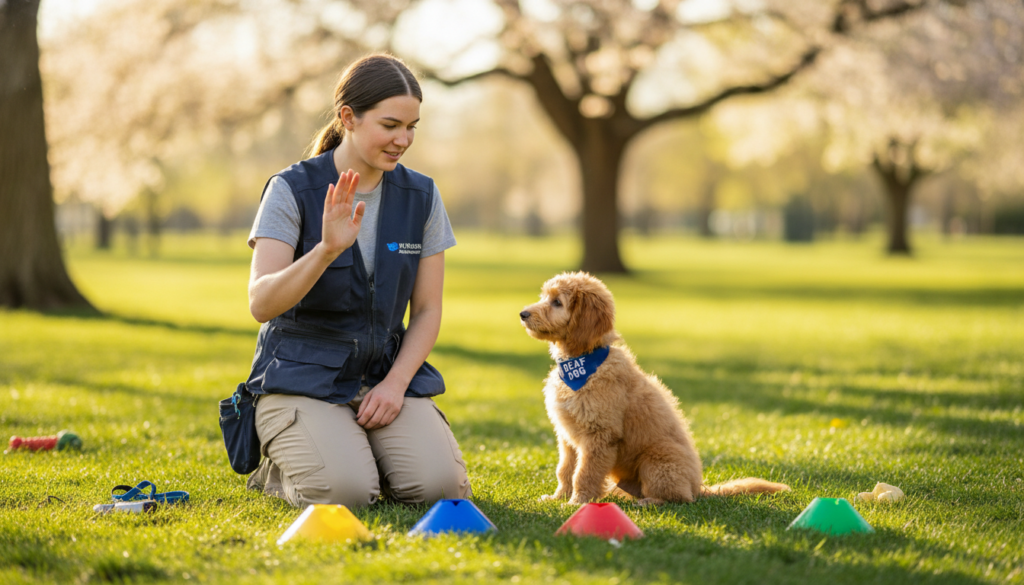
Use visual recall training in a secure area before visiting public spaces. Show the recall signal, step back, and reward your puppy for turning toward you. Practice near calm parks or empty fields before crowds, bicycles, and other dogs.
Off-leash access creates special risks. A deaf puppy cannot hear vehicles, bicycle bells, warnings, or approaching dogs. Use a secure fence, well-fitted harness, and long line unless the area is fully enclosed for safe play.
- Teach a clear stop signal for sudden danger.
- Use a separate wait signal near doors, streets, and gates.
- Teach your puppy to turn toward you when you raise your hand.
- Practice follow skills so your puppy stays near you during walks.
Strong deaf puppy safety habits matter inside the home. Create a plan to prevent door dashing before guests arrive.
Use a gate, closed room, leash, or trained wait at every entrance. Never depend on a verbal warning to stop your puppy.
Place a tag on your puppy’s collar or harness stating that the dog is deaf. Keep the microchip contact details current, and use a current rabies tag. Check the harness, long line, and gate before each outing.
Ask a qualified reward-based trainer or veterinary behaviorist for help with fear, aggression, severe startle responses, or ongoing training problems. Early support can protect trust and make daily routines safer.
Conclusion
Successful deaf puppy training begins with clear visual communication, steady rewards, and patient repetition. Choose a small set of hand signals and use them throughout your home. This consistency helps your puppy understand your expectations.
Build a simple deaf puppy training routine with short sessions throughout the day. Reward your puppy for watching you, staying calm, and responding to signals. Praise quiet focus along with completed commands.
Training that fits how your puppy experiences the world can help your dog become confident and well mannered. Keep practicing recall, impulse control, leash skills, and emergency responses as your puppy grows.
Refresh these lessons in new places and adjust rewards when your dog’s needs change. Daily practice strengthens lifelong communication skills and supports a safer, closer bond between you and your dog.