
How to Make Puppy Training Bath Easy and Stress-Free.
Make puppy training bath easy and stress-free with gentle steps, positive reinforcement, safety tips, and expert guidance for a clean, confident pup.
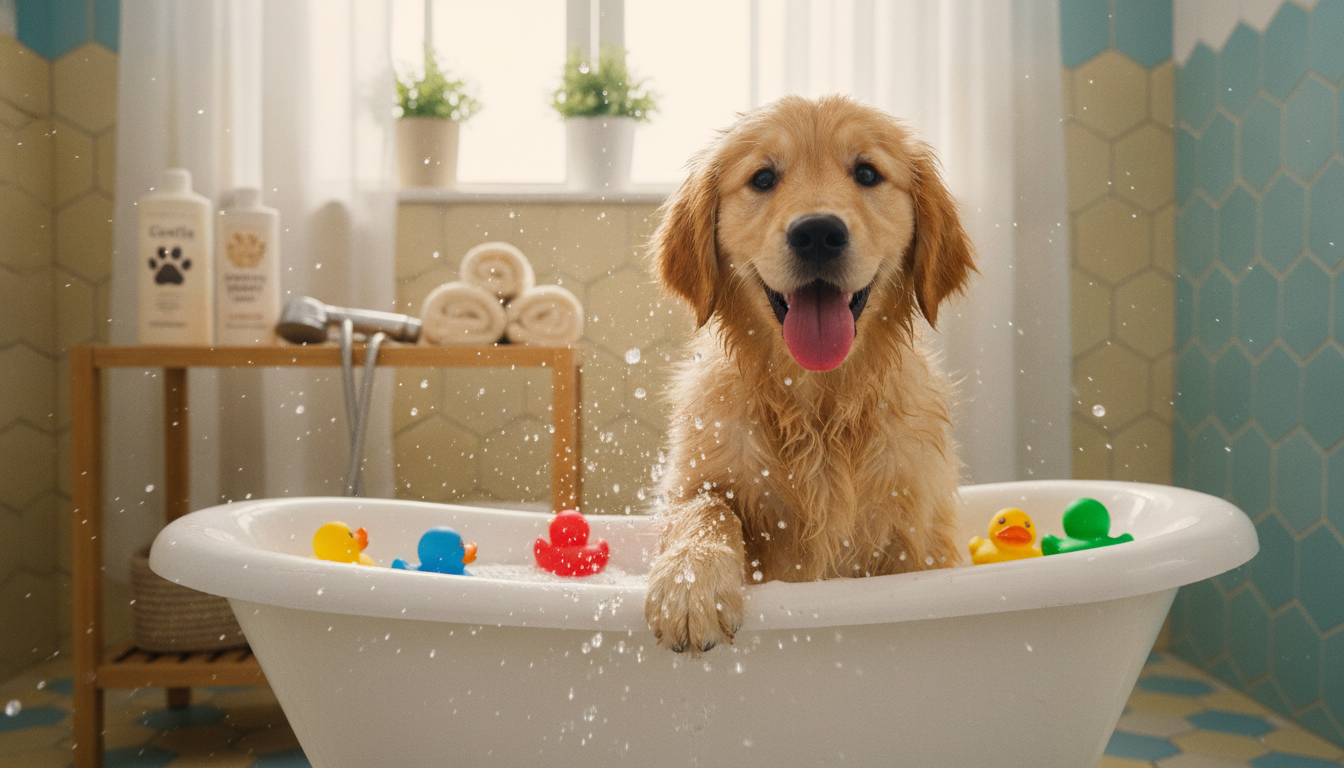
A first bath can feel important for both of you. Your puppy may tremble, pull away, or stare at the water with wide eyes. Use patience and a calm voice to make bath time feel safe, not scary.
This puppy training bath guide helps you build trust one small step at a time. You will learn to prepare the space, handle your puppy gently, use rewards, and spot stress early.
Every puppy learns at a different pace. Pause when your puppy feels overwhelmed, and never force them into the water. Safe, steady care can make bath time calm, support your puppy care guide, and help you grow closer.
Getting Ready for a Successful Puppy Training Bath
Good preparation can make your puppy’s first bath calm and predictable. Set up the space before bringing your puppy near the water. Keep all items close, and plan rewards for relaxed behavior.
Gather Puppy-Safe Bathing and Grooming Supplies
Place a nonslip mat inside the tub or basin. A shallow basin may feel less overwhelming than a deep tub. Use puppy-safe shampoo, absorbent towels, a cup or gentle sprayer, and a soft brush.
Keep small treats nearby to reward calm choices. Use a secure mat or stable support to prevent slipping without holding your puppy. Never tie your puppy down or limit normal movement during the bath.
These simple dog grooming tips help you work smoothly. Check the water flow, open the shampoo bottle, and unfold the towels before bathing. Never leave your puppy alone near water.
Choose a Calm, Safe Bathing Location
Choose a warm, draft-free bathroom with safe, comfortable footing. Close the door to block sudden noise, and keep other pets away. Keep cords, bottles, and other hazards off the floor.
A space with easy cleanup can lower your stress. Test the water temperature with your wrist before your puppy enters. It should feel warm, not hot.
Use Puppy Socialization Techniques Before the First Bath
Let your puppy explore the bathroom during a quiet time. Allow gentle sniffing around the tub, towels, brush, and empty basin. Give a treat when your puppy calmly notices an item or steps onto the mat.
Introduce each experience during short sessions. Let your puppy hear the sprayer briefly from a distance, then turn it off. Touch the shoulders, paws, ears, and coat gently while offering praise.
These puppy socialization techniques introduce new sights, sounds, surfaces, and handling without pressure. Stop while your puppy feels comfortable. Repeat the practice later with a light, rewarding mood.
How to Introduce Your Puppy to Bath Time Gradually
Slow steps can help bath time feel safe. Keep each session short, calm, and easy. Stop before your puppy shows stress, such as hiding, shaking, or pulling away.
Help Your Puppy Feel Comfortable Near Water
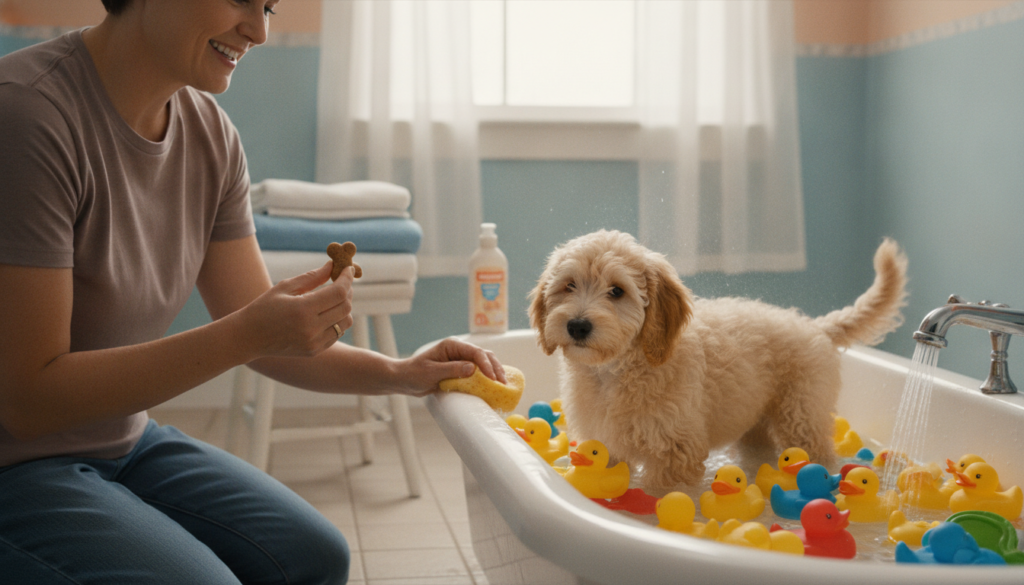
Begin beside an empty tub. Toss treats near it and offer warm praise when your puppy looks at it, moves closer, or sniffs the edge. Use the cue “come” to invite your puppy over.
When your puppy stays relaxed, touch the coat with a damp cloth for one or two seconds. Reward calm behavior right away.
Over several sessions, add a little lukewarm water to the tub. Let your puppy hear the water before it touches the coat.
Practice Handling Paws, Ears, and Fur
During quiet moments, gently touch one paw, ear, leg, tail, or small part of the coat. Give a treat after each brief touch. Use a soft voice and light pressure.
Practice the cues “stand” and “wait” for a few seconds. These skills support puppy obedience training and help your puppy know what to expect during grooming. Touch only while your puppy stays calm.
Build Trust With Positive Reinforcement Training
Reward each small step right away. Give a treat when your puppy stands still, looks toward you, enters the tub, or accepts gentle handling. Good timing helps your puppy connect the action with the reward.
Use positive reinforcement training instead of force or restraint. Keep sessions brief and end with praise while your puppy feels secure. Regular practice builds comfort and makes puppy obedience training useful during future baths.
Step-by-Step Puppy Training Bath Routine
Keep each puppy training bath calm and predictable. First, brush off loose dirt and gently remove tangles. Speak softly while showing your puppy each step.
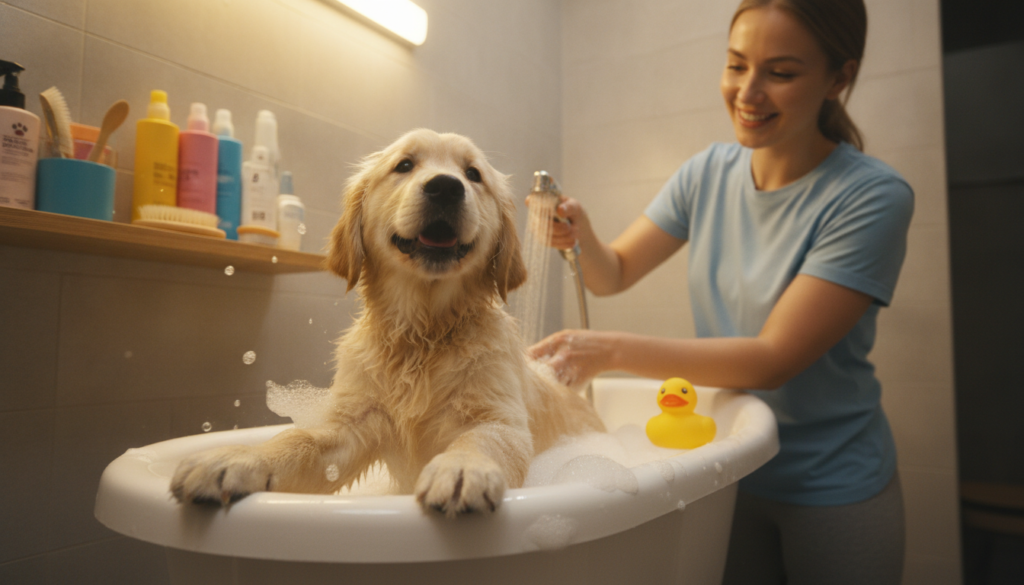
Place your puppy on a nonslip surface. Test the water with your wrist. It should feel warm, never hot.
Wet the body slowly, beginning at the shoulders and moving toward the tail. Keep water away from the eyes, nose, and inner ears.
Use a small amount of puppy-safe shampoo. Massage it gently in the direction of hair growth. Move slowly across the legs, chest, back, and belly.
Rinse until the water runs clear and all shampoo is gone. Leftover shampoo may cause dry, itchy skin.
Clean the face with a damp cloth. Never pour water over your puppy’s face.
Give small treats when your puppy stands calmly or accepts gentle handling. Keep your voice soft during the bath.
Watch your puppy’s body language. Shaking, freezing, frantic escape attempts, or repeated cries may show intense distress. Stop the bath, dry your puppy safely, and try a shorter session another day.
A steady routine supports puppy behavior modification. Each calm response earns comfort or a reward. Over time, your puppy may replace fear with calmer behavior during a puppy training bath.
Dog Grooming Tips for a Calm and Comfortable Bath
A calm routine helps your puppy feel safe from start to finish. Use these dog grooming tips to protect sensitive skin, lower stress, and build trust during every bath.
Use the Right Water Temperature and Gentle Shampoo
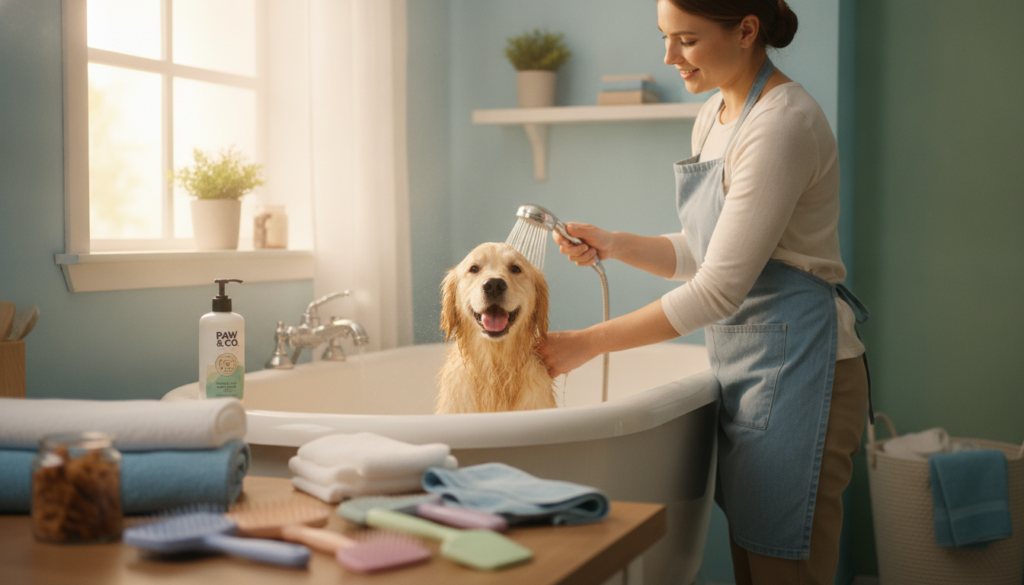
Test the water on your wrist before placing your puppy in the tub. It should feel lukewarm, never hot or cold. Use a veterinarian-recommended puppy shampoo made for a dog’s skin. Human shampoo can remove natural oils and cause dryness or irritation.
Wet the coat slowly, keeping water away from the eyes and inside the ears. Massage shampoo with gentle strokes. Rinse until the water runs clear, since leftover soap may cause itching.
Keep Bathing Sessions Short and Positive
Young puppies have limited patience, so short baths often work best. Aim for a calm, efficient routine instead of a long cleaning session. Speak softly and offer small treats when your puppy stands quietly.
Watch for stress signs, such as shaking, freezing, or repeated escape attempts. Pause when needed and keep your movements slow. These steps fit a gentle puppy care guide and help your puppy gain confidence.
Dry, Brush, and Reward Your Puppy Safely
Use a soft towel to blot the coat. Avoid rough rubbing, which can tangle fur or irritate the skin.
If your puppy accepts the sound and airflow, use a dryer on a low, warm setting. Keep it moving, and never aim hot air at one spot.
Brush the coat gently when it is partly dry. Keep your puppy away from drafts until the coat is fully dry. Check the skin, paws, ears, and coat for redness, swelling, sores, or unusual changes.
Reward relaxed behavior throughout the process with praise and treats.
Solving Common Puppy Bathing and Behavior Challenges
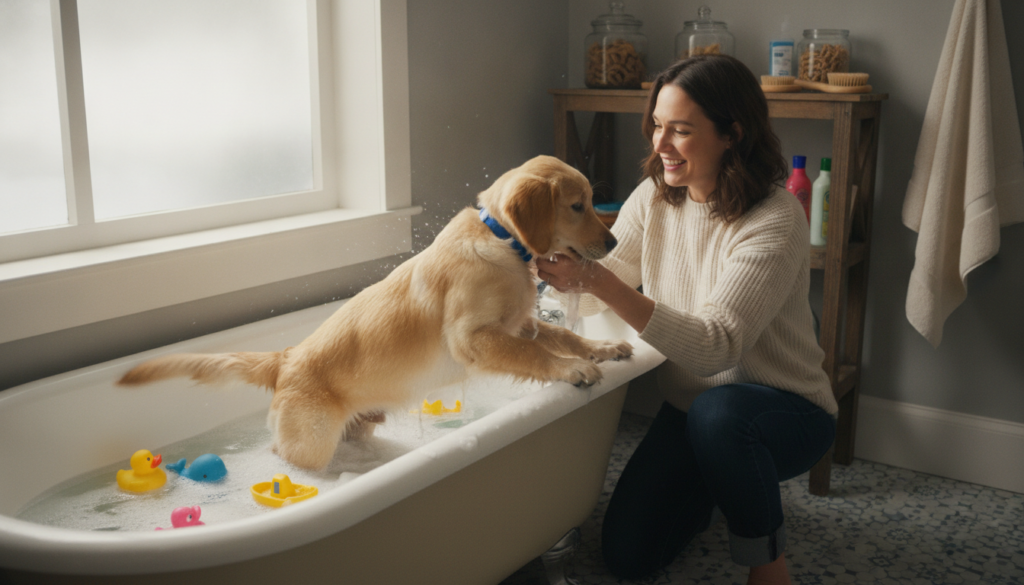
Your puppy may hide from the tub, bite the spray nozzle, or scramble on wet surfaces. Shaking, barking, freezing, and escape attempts may show fear, not stubbornness. Pause the bath and give your puppy space.
Make the task easier by returning to an earlier step. Reward calm behavior near the bathroom, tub, or towel. Practice touching wet fur, lifting each paw, and hearing running water before a full bath.
- Use small, tasty rewards your puppy loves.
- Keep water off the face and eyes.
- Place a nonslip mat in the tub.
- End practice before your puppy becomes overwhelmed.
This gradual approach supports puppy behavior modification. It teaches your puppy that handling can feel safe and predictable. A calm voice and steady routine can build trust over time.
Accidents may happen during stressful handling, especially with housebreaking puppies. Clean the area without scolding or showing anger. Punishment can increase fear and make future grooming harder.
Contact your veterinarian or a qualified force-free trainer if your puppy panics, shows aggression, develops skin irritation, or cannot tolerate basic grooming. Puppy training classes can build handling skills, focus, and confidence through humane, reward-based methods.
Conclusion
A successful puppy training bath starts with patience and preparation. Use safe supplies, choose a calm space, and let your puppy explore water gently. Speed and restraint can create fear, while steady steps help build trust.
Keep each bath brief and predictable. Watch your puppy’s body language, and reward small wins, such as entering the bathroom calmly or accepting a damp cloth. Positive reinforcement training makes these moments feel safe and rewarding.
Continue using puppy socialization techniques during daily handling. Touch your puppy’s paws, ears, and coat gently so grooming feels familiar. With calm repetition, your puppy can become cleaner, more confident, and easier to care for as they mature.