
When Do Puppies Lose Their Baby Teeth and What to Expect.
Learn when do puppies lose their baby teeth, explore the puppy teething timeline, and discover how to support healthy teeth and comfort at home today.

One day, your puppy chews your fingers. The next, you find a tiny tooth on the floor and wonder whether something is wrong. Teething may surprise you, but it is a normal part of growth.
Most puppies start losing their baby teeth at three to four months old. Adult teeth usually replace them by six months. Breed size and development can change this puppy teething timeline.
During this stage, you may see more chewing, sore gums, drooling, or small mouth changes. You will learn what is normal, how to ease discomfort, and which warning signs need a veterinarian’s attention. Knowing when do puppies lose their baby teeth helps you guide your puppy through this milestone with confidence.
when do puppies lose their baby teeth: The Typical Timeline
Puppies are born without visible teeth. Their first baby teeth usually appear between two and four weeks of age. These small teeth help puppies eat solid food and chew normally.
When do puppies lose their baby teeth? Most puppies begin losing them between three and four months. Incisors often loosen first, followed by canine teeth and premolars as adult teeth grow in.
Puppy teething stages can vary by breed and individual growth rate. Most puppies have all their adult teeth by six to seven months. Small breeds may keep some baby teeth longer.
Check your puppy’s mouth as adult teeth appear. A baby tooth beside an adult tooth can crowd the mouth and trap food. Your veterinarian should examine any retained tooth and recommend the right care.
Puppy Teething Stages From Birth to Adulthood
The puppy teething timeline follows a steady pattern. Teeth appear early, adult teeth arrive months later, and teething usually ends before your dog’s first birthday. These puppy teething stages help you track growth and support good puppy dental health.

When puppies develop their first baby teeth
Most puppies develop their first baby teeth between two and four weeks of age. These small, sharp teeth help puppies move from nursing to soft and solid food. A puppy usually has 28 baby teeth when this stage is complete.
Your puppy may start chewing more often during this time. Gentle chewing is normal as the gums grow and the mouth becomes more active. Support puppy dental health with safe, soft items made for young dogs.
When adult teeth begin replacing baby teeth
Adult teeth commonly begin appearing around three to four months of age. As each permanent tooth grows through the gum, it loosens the matching baby tooth. You may notice more chewing, mild gum tenderness, or a small amount of blood on a toy.
Check your puppy’s mouth each week for adult teeth beside baby teeth, crowded areas, swelling, or an unusual bite. A retained baby tooth can trap food and raise gum disease risk. Your veterinarian can decide if treatment is needed.
When puppies finish teething
Most puppies finish teething between six and seven months. By then, they should have about 42 permanent teeth. The gums should look calm, and chewing should return to a regular pattern.
Keep checking your dog’s mouth as the puppy teething timeline ends. Regular checks help you spot retained teeth, crowding, swelling, or bite problems early. Quick attention supports comfortable eating and strong puppy dental health.
Common Signs of Puppy Teething
Teething symptoms in puppies often begin between 3 and 6 months of age. Your puppy may chew furniture, toys, or your hands more often than usual. Chewing eases pressure in tender gums as adult teeth move into place.
Other signs of puppy teething include extra drooling, mild gum redness, and sore gums. You may notice small spots of blood on a toy after chewing. A loose tooth or small amount of blood can be normal during this stage.

Your puppy may eat more slowly or show less interest in hard food. Tender gums can make meals uncomfortable. Mild irritability is common, so your puppy may whine, rest less, or avoid mouth touches.
Watch your puppy’s mouth and behavior without forcing the jaw open. A quick, gentle look can reveal changes without causing fear or pain.
- Severe or ongoing bleeding
- Facial swelling or pus near the gums
- Persistent refusal to eat
- Repeated vomiting or diarrhea
- Fever or marked lethargy
These problems are not typical teething symptoms in puppies. Contact your veterinarian if you notice them, or if signs of puppy teething seem severe or do not improve.
What to Expect When Your Puppy Loses a Baby Tooth
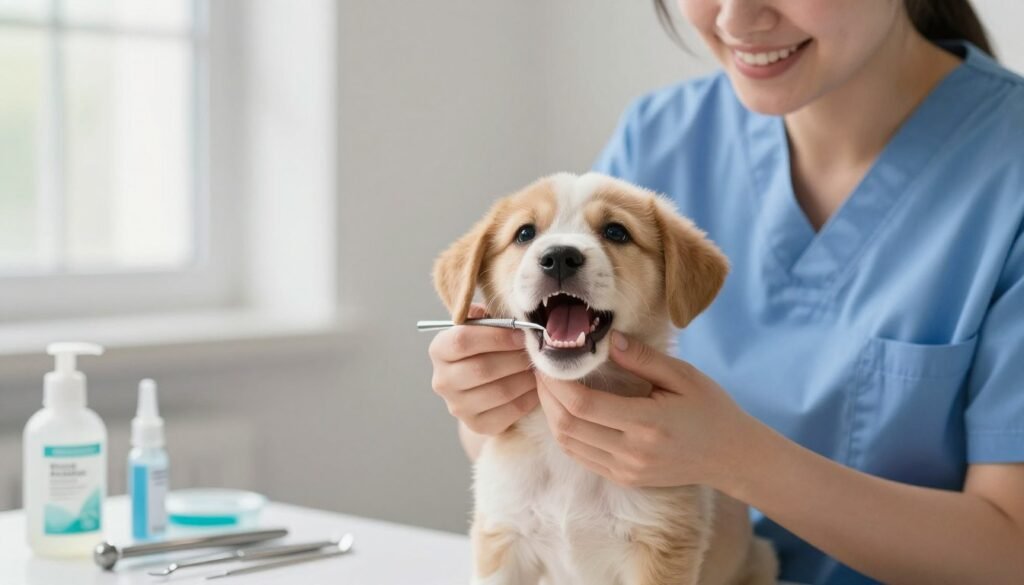
A baby tooth may fall out while your puppy eats, chews, or plays. You may see a small gap before the adult tooth appears. This change is a normal part of puppy dental health.
Normal changes in your puppy’s mouth
Your puppy’s gums may look red or feel tender near the lost tooth. A tiny spot of blood can appear, but heavy bleeding is not normal. Watch your puppy’s mouth during daily care.
Gentle caring for puppy teeth helps you notice changes early. Handle your puppy calmly, and avoid pressing on sore gums. Your puppy may pull away briefly when you check the mouth.
Why you may not find the lost teeth
Many puppies swallow shed baby teeth while eating or chewing. This is usually harmless, and you may never see the tooth. The tooth is often tiny and can pass without causing a problem.
Do not worry if several teeth seem to disappear. Track visible gaps and watch for signs of puppy teething, such as mild gum redness or extra chewing.
Changes in chewing and behavior
Chewing may increase as your puppy tries to ease gum pressure. Your puppy may choose soft toys, cold items made for dogs, or other safe options. Protect shoes, furniture, and cords by offering an approved chew instead.
Gum tenderness can make your puppy cautious with hard food or mouth handling. Seek veterinary care if a tooth breaks, an adult tooth grows beside a baby tooth, or your puppy seems uncomfortable. These signs need more than routine puppy dental health care.
How to Care for Puppy Teeth During Teething
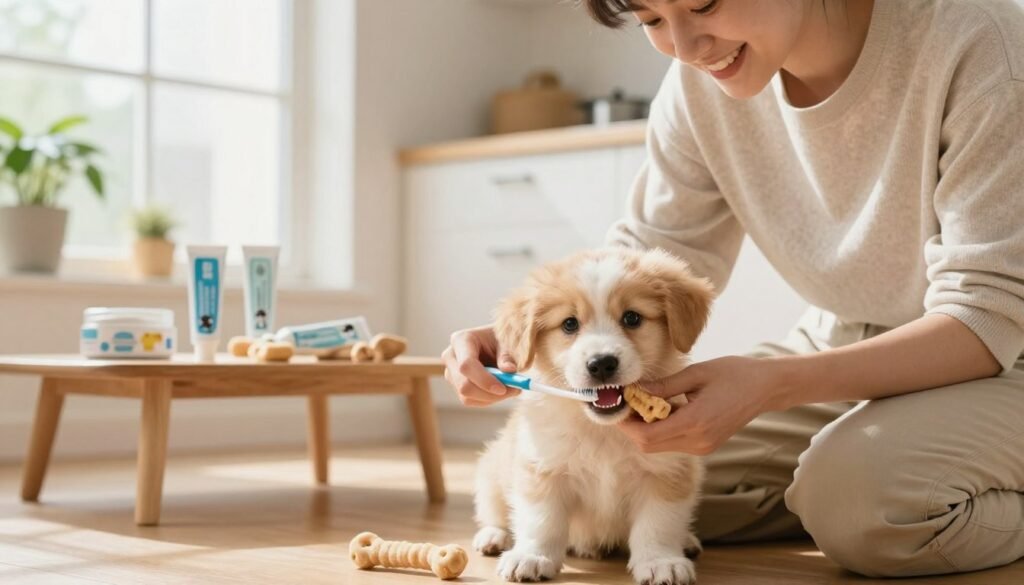
Check your puppy’s mouth several times each week. Gently lift the lips and look for red gums, swelling, bleeding, or misplaced teeth. Keep each check brief, then reward calm behavior with praise or a small treat.
After your puppy accepts mouth checks, introduce tooth brushing. Use a soft pet toothbrush and veterinary toothpaste made for dogs. Let your puppy taste a small amount first, then brush the outer surfaces of the teeth with gentle strokes.
Never use human toothpaste. Many formulas contain xylitol, a sweetener that can cause a dangerous drop in dogs’ blood sugar. Some products contain other ingredients that may upset your puppy’s stomach.
Caring for puppy teeth starts with daily habits. Feed a complete puppy diet for your dog’s age and size, and provide fresh water at all times. Never pull a loose tooth; it should fall out on its own unless your veterinarian advises treatment.
Your puppy teething timeline may vary by breed and individual growth. Routine veterinary exams help track normal changes during this stage. Your veterinarian can find retained baby teeth, poor alignment, gum disease, or other problems before they harm adult teeth.
Regular checks support strong puppy dental health as your dog grows. Contact your veterinarian for severe swelling, lasting bleeding, foul odor, or trouble eating. Also call if a tooth remains after an adult tooth appears.
Best Puppy Teething Toys and Safe Chewing Options
Choosing safe puppy teething toys can ease sore gums and support good puppy dental health. Pick items made for puppies, not adult dogs. Watch your puppy during every chewing session.
Features to look for in puppy teething toys
Select a toy that is large enough to prevent swallowing. It should bend or flex under pressure without breaking. Durable rubber made for supervised puppy use is a strong choice.
- Choose a size suited to your puppy’s weight and mouth.
- Look for soft, flexible materials that will not crack teeth.
- Check toys often for tears, loose parts, or sharp edges.
- Replace any damaged toy at once.
Some toys support puppy dental health by rubbing the gums as your puppy chews. They should not replace tooth brushing or regular veterinary care. Ask your veterinarian which materials fit your puppy’s age and chewing style.
Chews and items to avoid
Avoid cooked bones, antlers, hooves, and hard nylon objects. These items can fracture teeth or break into sharp pieces. Ice cubes may be too hard for young teeth.
Use caution with rawhide products of uncertain quality. Small toys, broken pieces, and loose objects can cause choking, intestinal blockage, or serious injury. Keep unsafe household items out of reach.
How to use frozen toys and food safely
For simple teething remedies for puppies, chill a size-appropriate rubber toy in the refrigerator. You can fill a veterinarian-approved toy with suitable food before chilling it. Cold toys may soothe tender gums.
Avoid extremely hard frozen objects. Supervise every chewing session, and remove the toy when it becomes damaged or too small. Clean each toy as directed to protect your puppy’s mouth and puppy dental health.
Teething Remedies for Puppies and Ways to Relieve Discomfort
Teething can make your puppy restless, sore, and eager to chew. Most teething symptoms in puppies are mild, but simple care can provide comfort.
Safe at-home comfort measures
Chilled puppy toys can soothe tender gums. Choose a toy made for puppies, and check it often for cracks or loose pieces.
- Massage your puppy’s gums with a clean finger and gentle pressure.
- Offer soft food if chewing kibble seems painful.
- Provide a quiet place for naps and calm rest.
These teething remedies for puppies may ease discomfort without adding stress. Stop the massage if your puppy pulls away or seems upset.
Managing unwanted chewing
Keep safe chew toys within easy reach. When your puppy grabs a shoe, cord, or household item, calmly trade it for an approved toy.
Use gates or a puppy-safe area to limit access to wires, furniture, and small objects. Reward calm behavior with praise, a treat, or gentle attention. These steps can reduce common signs of puppy teething, such as chewing on nearly everything nearby.
When not to use human pain medication
Never give your puppy ibuprofen, acetaminophen, aspirin, or other human pain medicine. Give these drugs only when a veterinarian prescribes a safe treatment and dose. They can cause poisoning, stomach ulcers, kidney damage, liver damage, or death in dogs.
Call your veterinarian if your puppy cannot eat, has heavy bleeding, shows severe pain, or develops swelling. A professional can check your puppy’s mouth and recommend safe care.
Conclusion
Most puppies start losing their baby teeth at three to four months old. Most have a full set of adult teeth by six to seven months. Knowing when do puppies lose their baby teeth helps you spot normal changes and support each stage.
Safe puppy teething toys can soothe sore gums and stop chewing on furniture, shoes, and hands. For caring for puppy teeth, check your puppy’s mouth often. Start tooth brushing slowly with pet-safe toothpaste.
Contact your veterinarian if your puppy has lasting pain, heavy bleeding, swelling, or trouble eating. Also seek care if a baby tooth remains beside an adult tooth. Retained teeth may cause crowding and other dental problems.