
Can Puppies Catch a Human Cold What You Need to Know.
Can puppies catch a human cold? Learn how to protect your puppy, recognize respiratory symptoms, and know when to call your veterinarian for guidance.
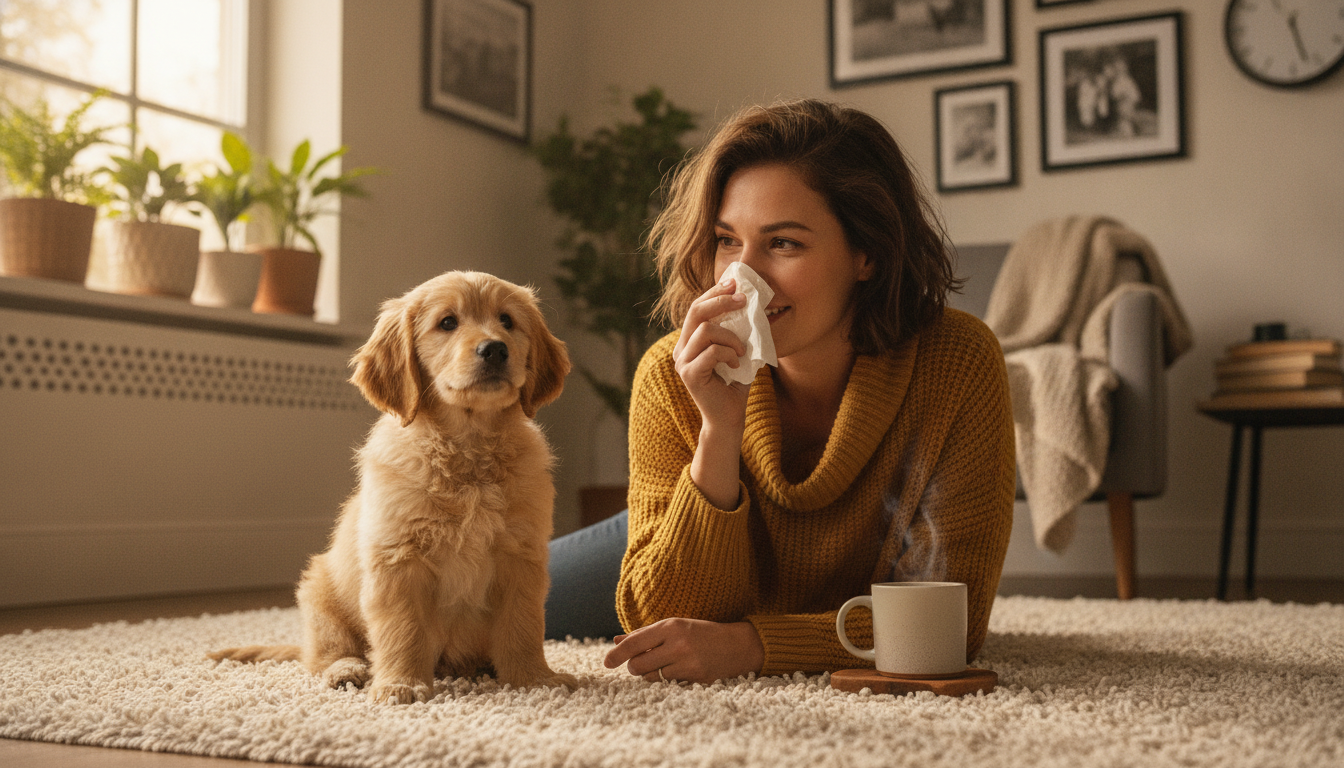
When your puppy sneezes or seems tired, worry is natural. You may ask, can puppies catch a human cold after you get sick?
Most viruses behind ordinary human colds are species-specific. They usually do not infect puppies. However, puppies can develop contagious canine respiratory infections with similar signs: coughing, sneezing, nasal discharge, watery eyes, tiredness, and a lower appetite.
Understanding puppies and human colds helps you respond with care, not fear. This guide explains symptoms to watch, safe support to provide, and when to contact your veterinarian.
Young puppies need extra attention because their immune systems still develop. A respiratory illness may worsen faster in puppies than in healthy adult dogs, so early action matters.
can puppies catch a human cold
Your puppy will not usually catch a typical human cold from you. Most cold viruses infect people, not dogs. Thus, daily contact with a person who has a cold rarely gives puppies the same illness.
Still, some respiratory infections are serious and can affect more than one species. Some pathogens can cross the species barrier. A veterinarian should examine a puppy with severe, worsening, or lasting signs.
Direct infection is not the only concern. Germs can spread through hands, clothing, shoes, household surfaces, or shared items. The link between puppy illness and human cold concerns makes basic hygiene important for pet safety.
Wash your hands before handling your puppy, especially after coughing or blowing your nose. Do not cough or sneeze near your pet. Keep human cold medicines away from pets; many products can be toxic and threaten canine health during human colds.
How Human Colds Affect Puppies and Dogs
When you have a cold, you may worry about your puppy. Most human cold viruses do not infect dogs. If your puppy sneezes or has a runny nose, causes may include canine infection, allergy, irritant, or another health problem.
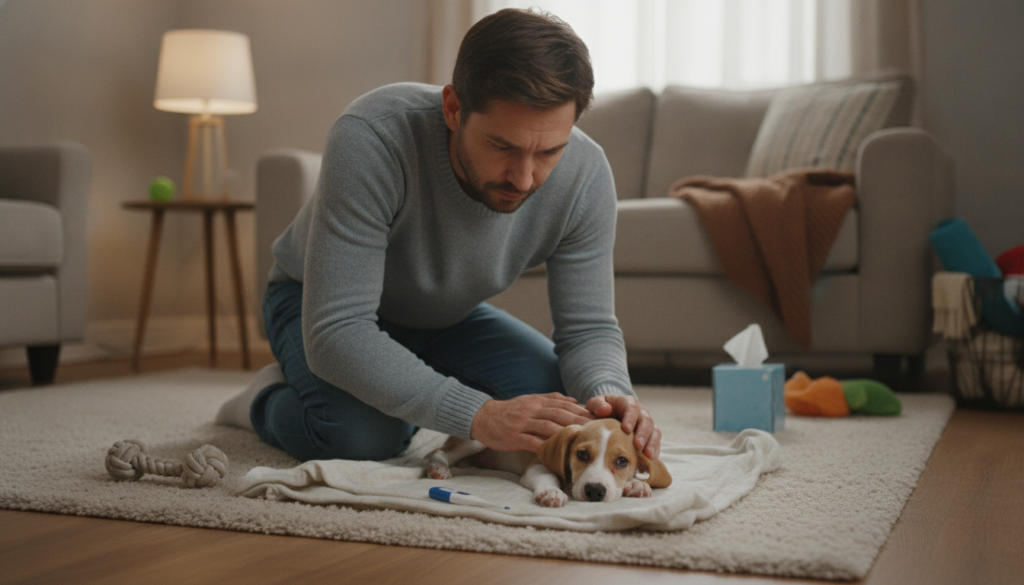
Why most human cold viruses do not spread to puppies
Viruses need matching host cells and receptors to reproduce. They also need suitable body conditions in the infected animal. Many human cold viruses cannot attach to or multiply inside canine respiratory cells.
This limits dog and human illness transmission. Canine pathogens, including those linked to kennel cough, more often cause respiratory signs in dogs. Dust, smoke, pollen, parasites, and other veterinary conditions can cause similar signs.
When human illness may still affect puppy health
Your illness may affect your puppy without infecting it directly. Feeling weak can make feeding, exercise, cleaning, supervision, and medicine schedules harder. These changes can create puppy health concerns, especially for a young dog.
Good hygiene still matters. Wash your hands before handling food, bowls, toys, or medicine. Clean high-touch surfaces because contaminated hands and objects may carry other infectious agents.
Ask your veterinarian about unusual exposure risks if your puppy is very young, recently adopted, unvaccinated, or medically vulnerable. Share details about your illness and your puppy’s symptoms, so your veterinarian can guide safe care.
Common Symptoms of Canine Respiratory Infections
Respiratory illness can cause signs like a human cold. Your puppy’s age, vaccine status, appetite, breathing pattern, and recent contact with other dogs can show illness severity.
Signs That May Look Like a Human Cold
Mild puppy respiratory symptoms may include sneezing, a light cough, clear nasal discharge, or watery eyes. Your puppy may sound congested and have less energy.
Watch symptoms over time. A puppy that eats, drinks, and breathes normally may need close monitoring. Keep your puppy away from other dogs until a veterinarian checks whether the illness can spread.
Symptoms That Require Closer Attention
Thick yellow or green discharge, repeated coughing, fever, vomiting, or diarrhea can signal a serious problem. Weakness, dehydration, or loss of appetite needs prompt veterinary advice, especially in a young puppy.
- Open-mouth breathing
- Obvious effort while breathing
- Blue or pale gums
- Collapse
- Severe lethargy
These warning signs may occur with serious canine respiratory infections. Seek urgent veterinary care if your puppy struggles to breathe, collapses, or becomes hard to wake. Call a veterinary clinic before symptoms worsen.
How to Care for a Puppy With Cold-Like Symptoms
Mild respiratory signs can make your puppy tired and uncomfortable. Give your puppy a quiet, warm, draft-free place to rest. Keep fresh water nearby, so your puppy does not need to walk far.
Good puppy care for cold-like symptoms focuses on comfort and close observation. Offer your puppy’s usual food in small, appealing portions. Follow your veterinarian’s instructions if they suggest a different feeding plan.
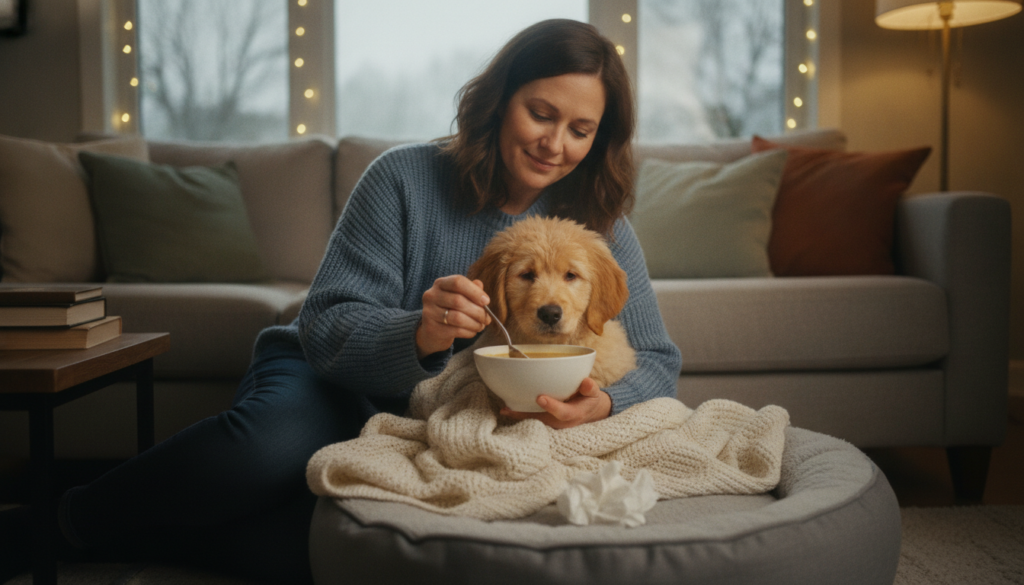
Supportive puppy care at home
Gently clean your puppy’s nose and eyes with a soft, damp cloth. Use a clean part of the cloth for each area. Stop if your puppy seems painful or distressed.
A humidifier may add moisture to dry air. Use it only as directed, and place it where your puppy cannot reach it. Keep it clean and away from bedding, cords, and water bowls.
Never give your puppy human cold medicine, pain relievers, decongestants, or cough suppressants. Essential oils and leftover antibiotics may harm your puppy. Use medication only when your veterinarian prescribes it.
Safe ways to monitor your puppy
Home care for sick puppies includes a simple daily check. Watch your puppy’s breathing rate and effort, appetite, water intake, energy, and coughing. Check nasal discharge, urination, and stool quality.
- Write down new or worsening symptoms.
- Note how much your puppy eats and drinks.
- Track sleep, play, breathing, and bathroom habits.
- Keep your veterinarian’s contact information nearby.
Call your veterinarian if signs worsen or do not improve. Seek guidance if symptoms affect eating, drinking, sleeping, or normal activity. Your notes can help the veterinary team judge changes in your puppy’s health.
When to Contact Your Veterinarian About Puppy Illness
Some symptoms need quick action, especially in young puppies. Use these puppy illness warning signs to decide when to call your veterinarian. If unsure, ask for guidance instead of waiting for symptoms to worsen.
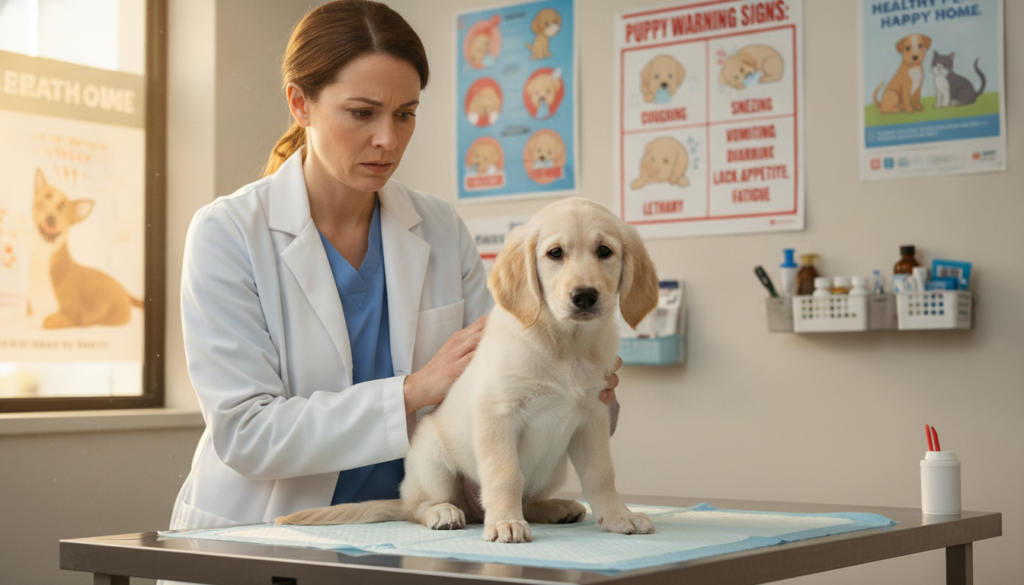
Warning signs that need prompt veterinary care
Contact a veterinarian promptly if your puppy has trouble breathing, a lasting or worsening cough, or refuses food or water. Repeated vomiting, diarrhea, dehydration, high fever, marked weakness, or collapse requires medical attention.
- Pale or blue gums
- Difficulty waking your puppy
- Fast or strained breathing
- Little or no interest in drinking
- Sudden weakness or loss of balance
Young puppies with breathing symptoms should receive same-day guidance. Their condition can change quickly. Call the clinic before arrival so staff can limit contact with other patients if a contagious illness may be present.
Why puppies need extra medical attention
Incomplete vaccinations raise the risk of canine parvovirus, canine distemper, and contagious respiratory infections. Puppies have smaller reserves than adult dogs, so fluid loss and breathing problems may become serious quickly.
During veterinary care for puppies, your veterinarian may check breathing, hydration, oxygen levels, temperature, and gum color. They may review vaccination records and recent exposure to other dogs. Diagnostic tests or prescription treatment may be needed after the examination.
Common Cold in Dogs Versus Human Colds
The phrase common cold in dogs is informal. It can describe several conditions that cause sneezing, coughing, nasal discharge, or watery eyes. These signs do not identify one specific disease.
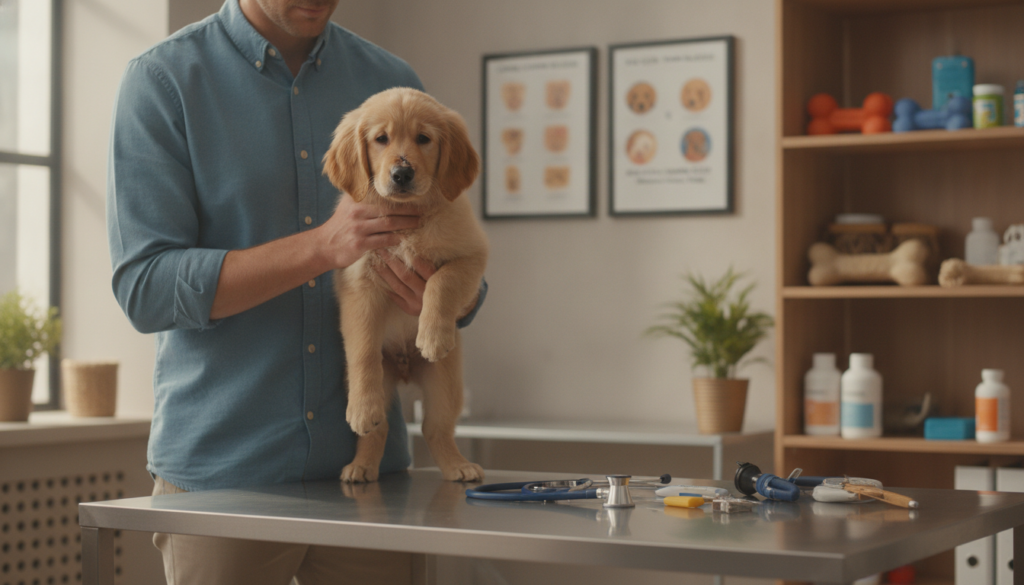
Canine illnesses that cause cold-like symptoms
A puppy may have canine infectious respiratory disease complex, kennel cough, or canine influenza. Canine distemper can cause similar signs and may become severe. Bacterial infections, allergies, nasal irritation, or foreign material in the nose can also cause these symptoms.
Heart or lung disease may also cause coughing or breathing changes. Symptoms alone cannot show which condition is present. They cannot confirm whether your puppy is contagious.
Why diagnosis matters
Accurate canine illness diagnosis helps your veterinarian choose the right care. Treatment, isolation, monitoring, and outlook can vary between conditions. A mild infection may need rest, while another illness may require urgent treatment.
Your veterinarian may check your puppy’s temperature, breathing, vaccination history, and recent exposures. Depending on the exam, testing may include nasal or throat swabs, blood work, or chest imaging. This approach helps separate the common cold in dogs from illnesses needing closer care.
Puppy Care Tips for Cold Season and Illness Prevention
Young puppies have developing immune systems, so daily habits matter during cold season. Your veterinarian can create a vaccine plan for core diseases and respiratory infections common in your area. Follow that schedule before exposing your puppy to busy pet settings.
These puppy care tips for cold season can lower health risks. Keep your puppy away from sick dogs, and ask about vaccine and illness policies before using shared pet services.
Protecting your puppy from respiratory infections
Until your veterinarian recommends broader social contact, avoid dog parks, boarding facilities, grooming shops, and group training classes. Choose clean, well-managed settings when your puppy is ready to attend.
Do not let your puppy share water bowls, toys, bedding, or other items with sick pets. These steps support preventing illness in puppies while your puppy completes the recommended vaccines.
Reducing the spread of germs at home
Wash your hands before and after handling your puppy, food, bowls, or waste. Clean food and water bowls often. Launder bedding regularly and disinfect safe surfaces according to the product label.
Keep sick and healthy pets apart when possible. Separate their supplies, and clean your hands after caring for an ill animal. Good household germ prevention protects every pet in your home.
What to do if you have a cold
If you have a cold, limit face-to-face contact with your puppy. Do not kiss your puppy. Cover coughs and sneezes, wash your hands often, and avoid touching your face before handling food or toys.
Ask someone you trust to help with care if you feel too sick to supervise your puppy. Contact your veterinarian if you have a confirmed infection known to affect animals, or if your puppy shows illness signs.
Conclusion
Most puppies do not catch ordinary human colds. However, do not ignore coughing, sneezing, nasal discharge, or low energy. These signs may show a contagious canine infection or another health problem.
To support canine health and human colds awareness, watch your puppy’s breathing, appetite, hydration, energy, and changing symptoms. Symptom progress matters more than similarity to a human cold.
Protecting puppy health includes washing your hands, keeping vaccines current, and avoiding sick dogs. Never give your puppy human medicine unless your veterinarian gives clear instructions.
Contact your veterinarian promptly if symptoms are severe, persistent, or worsening. Seek advice sooner if your puppy is very young or has not completed the recommended vaccination series.