
How to Kennel Train a Dog for Happy and Safe Living
Learn how to kennel train a dog with gentle steps, crate tips, and daily routines that build comfort, confidence, and safe habits for happy living.
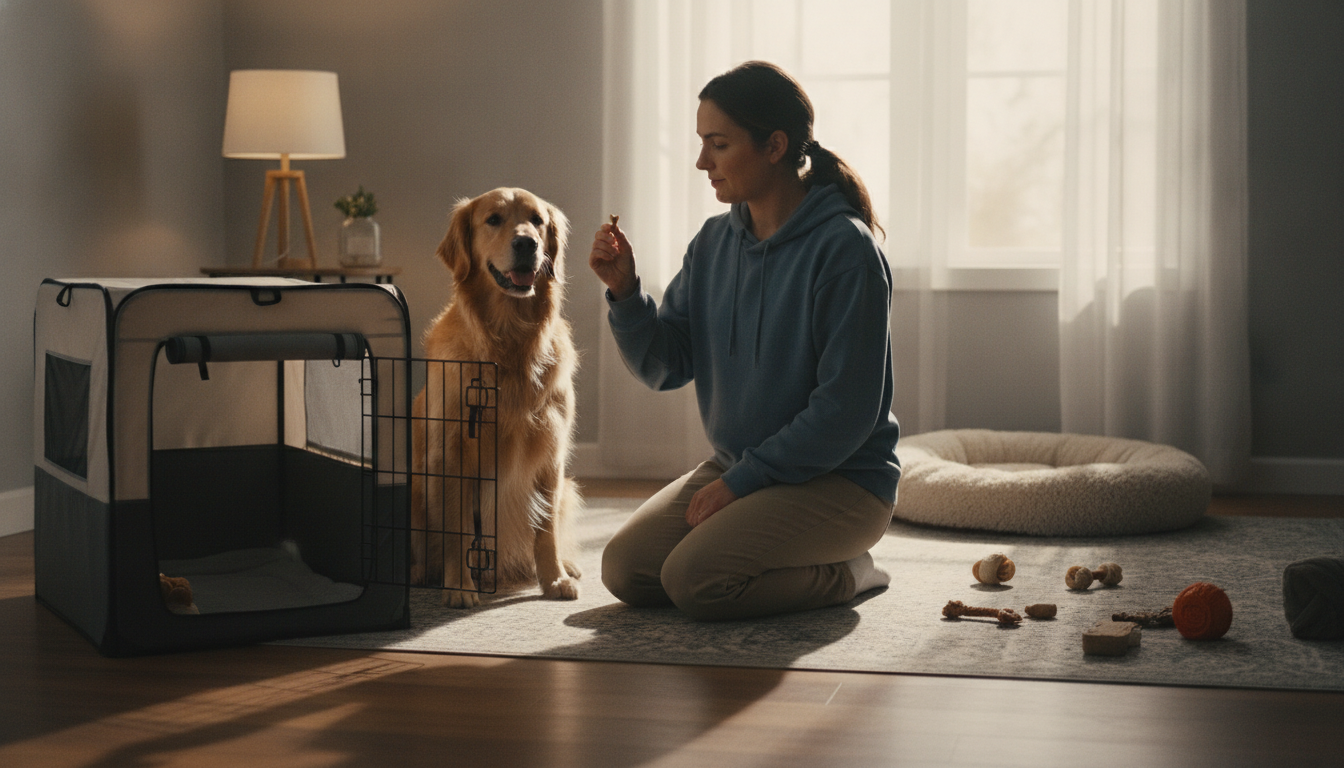
Bringing a new pet home is a joy filled with discovery. You want your pet to feel safe and secure. Teaching them boundaries is key for harmony.
Learning to kennel train your dog gives them a safe space. It helps reduce anxiety on busy days.
This process needs patience, positive reinforcement, and consistency. Seeing the crate as a cozy den helps your pet accept it. Success comes from respecting their pace and giving them exercise and social time.
This guide helps with all types of pets, from puppies to adult rescues. We focus on safety and comfort. Remember, a crate is part of daily life but can’t replace love and attention.
Prepare for Successful Crate Training
Success in training starts before your dog enters the crate for the first time. Organize your space and gather the right tools. This creates a secure foundation for your pet.
Choose the Right Crate Size and Style
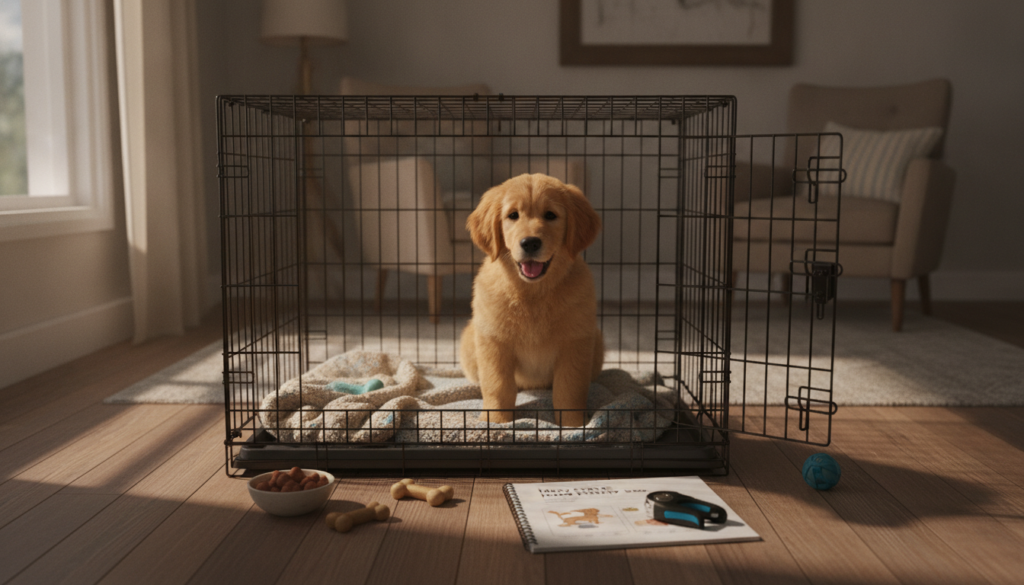
Choosing the right size is key for comfort and safety. Your dog should be able to stand, turn, and lie down comfortably. A crate that’s too big can make housebreaking harder.
There are many crate styles to choose from. Wire crates are great for air and visibility. Plastic crates feel cozy. Adjustable wire crates are perfect for growing puppies.
Gather Essential Crate Training Supplies
Having the right gear makes training easier. Your crate training essentials list should include items for comfort and fun. Here are some must-haves:
- Washable, durable bedding for comfort.
- Safe, chew-resistant food toys to keep them occupied.
- High-value treats to reward positive behavior.
- A spill-proof water bowl or attachment.
- Enzyme-based cleaning supplies for accidents.
These items make the crate a positive space. Always check that any bedding or toys are safe for your dog.
Pick a Calm Location and Consistent Routine
Where you place the crate is important. Choose a quiet spot where your dog can see and hear what’s happening. This helps them feel connected while they learn to settle.
Consistency is crucial. Set a regular schedule for meals, potty breaks, and rest. Following these crate training essentials helps your dog feel secure and confident.
Understand the Benefits of Crate Training
Learning about crate training is key to a peaceful home. It teaches good behavior and makes your dog feel safe. This is especially true when you’re patient and consistent.
Support House Training and Bladder Control
Dogs naturally want to keep their sleeping area clean. A crate helps them hold their bladder until you take them outside. This makes housebreaking faster for puppies.
Remember, young puppies can’t control their bladder well. You need to take them out often. This keeps them comfortable and successful.
Create a Secure Resting Space
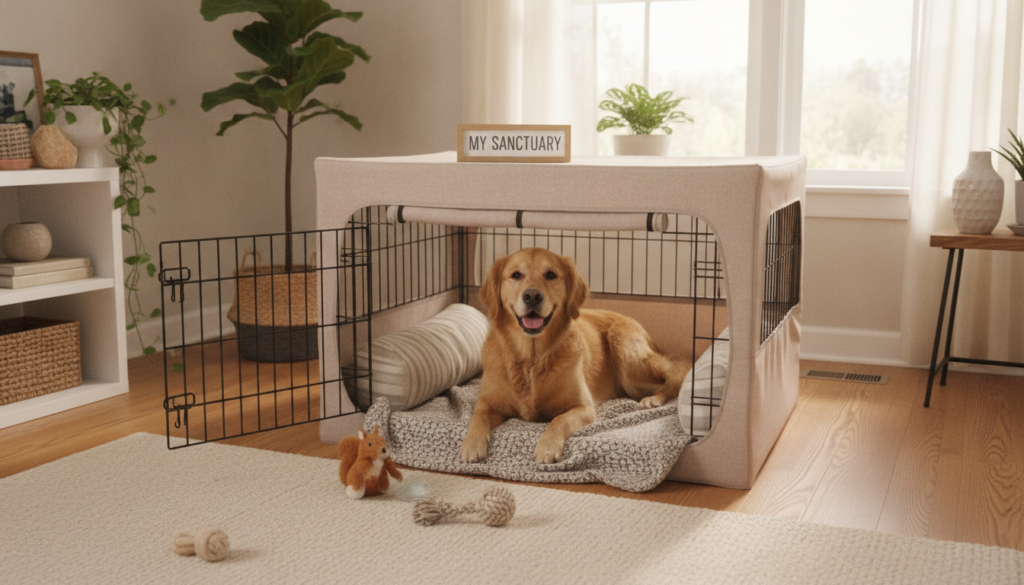
A crate is like a den for your dog. It’s a safe place to go when they’re stressed or tired. This space helps reduce stress in busy homes.
When your dog sees the crate as a safe spot, they relax faster. This is good for their well-being.
Make Travel, Boarding, and Veterinary Visits Easier
Getting your dog used to a crate makes travel easier. It also makes vet visits less scary. This helps them stay calm in new places.
Prevent Destructive Behavior When Supervision Is Not Possible
Using a crate keeps your home safe when you’re not watching. It stops your dog from chewing on things they shouldn’t. But, it’s not a replacement for exercise, mental games, or spending time with you.
How to Kennel Train a Dog Step by Step
Learning to kennel train a dog is a rewarding journey. It builds confidence and security for your pet. By following a structured method, your dog will see their crate as a safe space, not a prison.
Let Your Dog Investigate the Open Crate
Begin by placing the crate in a quiet, busy area of your home. Make sure it’s a place where your dog feels at ease. Open the door and let your dog explore at their own speed.
You can make the crate more inviting by adding a soft blanket or a favorite toy. This encourages your dog to check it out.
Build Positive Associations With Meals and Rewards
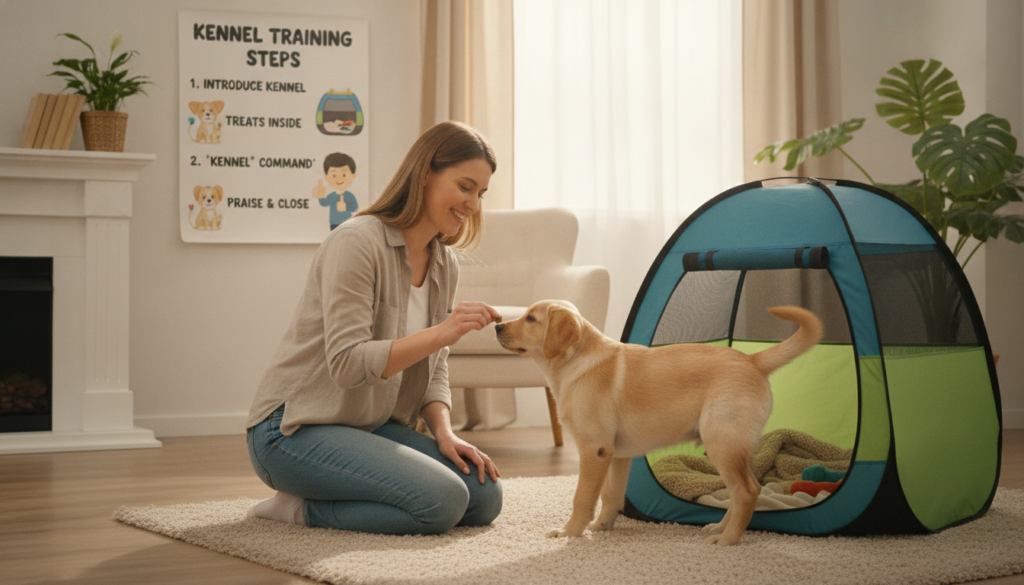
Once your dog is comfortable near the crate, start feeding them inside. This links the crate to good times and tasty rewards. If they’re slow to enter, start by placing the food bowl just outside the door.
Gradually move the bowl further into the crate over a few days. This helps your dog get used to the crate.
- Use high-value treats to reward voluntary entry.
- Keep the crate door open during initial feeding sessions.
- Provide long-lasting chew toys to keep them occupied.
- Always maintain a calm and encouraging tone of voice.
Practice Brief Door Closures
Once your dog is used to entering the crate for meals, start practicing short door closures. Close the door for a few seconds while they’re eating or enjoying a treat. If they stay calm, open the door right away.
Give them praise to reinforce good behavior. This helps them feel safe and builds trust.
Increase Crate Time Gradually
As your dog gets more comfortable, you can extend the time the door is closed. Start with small increases, checking that your dog remains calm. If they show signs of stress, go back to a previous step.
Remember, consistency and patience are crucial. Training your dog takes time and effort, but it’s worth it for their well-being.
Follow a Practical Crate Training Schedule
Creating a consistent routine is key to successful crate training. Organizing your dog’s day around their natural needs makes their environment predictable. This reduces anxiety and helps them understand when to rest and play.
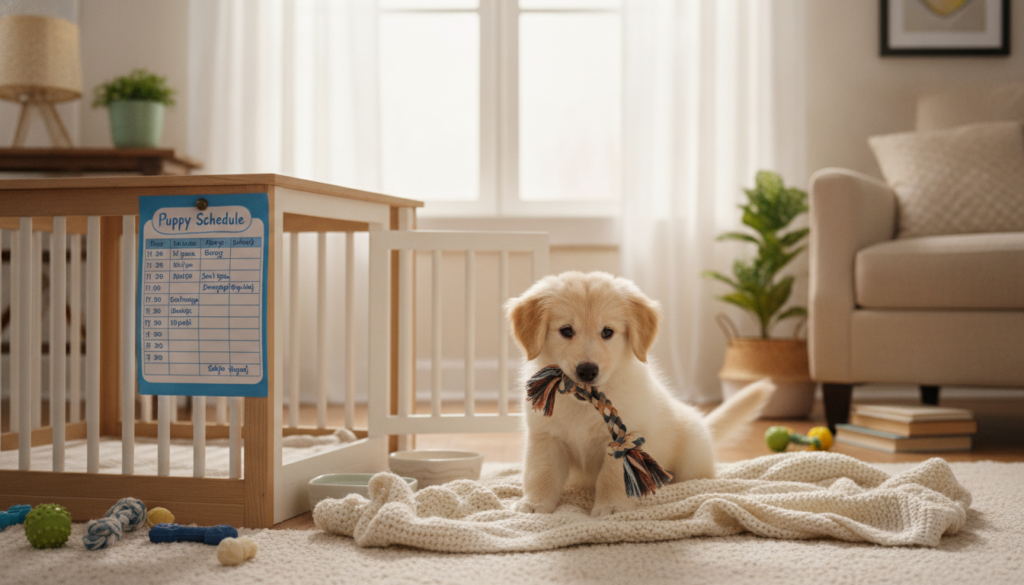
Build a Puppy Crate Training Schedule
Young dogs have small bladders, so a frequent crate training schedule is crucial. Plan for short crate sessions followed by outdoor breaks. This teaches your puppy to see the crate as a place to relax, not a source of discomfort.
Effective puppy crate training means watching your dog closely after meals and naps. As your puppy grows, you can increase crate time. Always use positive reinforcement to keep the training rewarding.
Adapt the Schedule for an Adult or Newly Adopted Dog
An adult or newly adopted dog may need time to adjust. They may carry stress from past environments or shelters. Be patient and let them settle at their own pace.
Begin with short intervals to build trust before longer crate times. Watch your dog’s body language to ensure they feel safe. A flexible crate training for puppies or adult dogs should always prioritize emotional well-being.
Use Overnight Crate Training Responsibly
For overnight success, place the crate in a quiet, comfortable spot. Make sure it’s big enough for them to stand, turn, and lie down. Young dogs might need a quiet bathroom break during the night.
Keep nighttime calm and minimal to signal sleep time. Avoid bright lights or play during these breaks. Consistency teaches your dog that nights are for rest.
Balance Crate Time With Freedom and Interaction
The crate should not replace exercise or social time. A balanced crate training schedule includes walks, training, and play. This prevents boredom or frustration.
When not in the crate, give your dog supervised freedom to explore. This mix of structure and activity is crucial for crate training for puppies and adults. It supports their physical and mental health.
Teach Calm, Comfortable Crate Behavior
A quiet and comfortable dog is the ultimate goal when you learn how to kennel train a dog. By focusing on relaxation, you help your pet view their crate as a safe haven. These essential dog crate training tips will help you foster a peaceful environment for your canine companion.
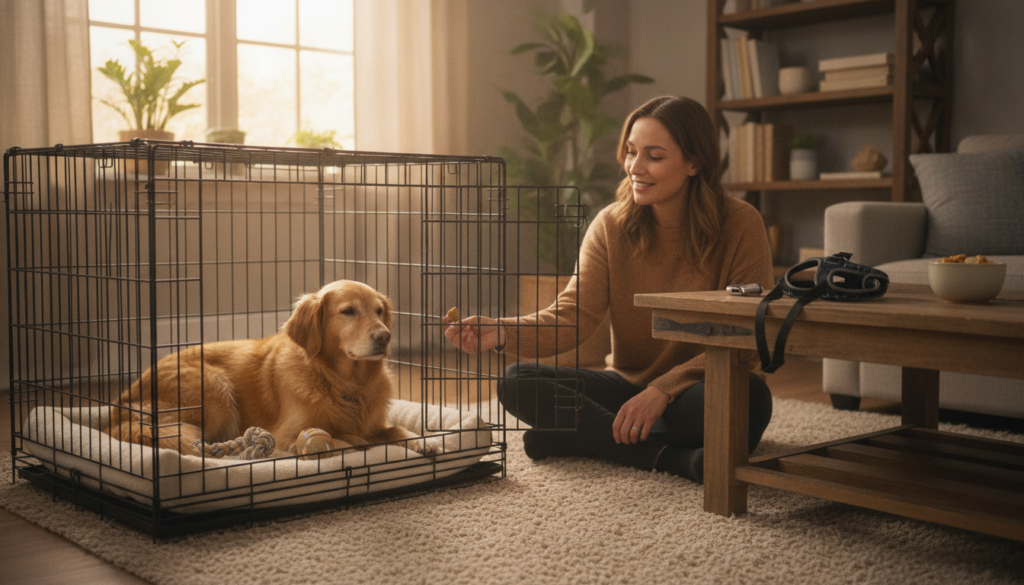
Reward Relaxation Instead of Excitement
Consistency is key when teaching your dog to settle down. You should provide treats or praise only when your dog is lying down quietly or resting with a relaxed body posture.
Avoid giving attention when your dog is jumping, pawing, or barking at the door. If you reward frantic behavior, you accidentally teach your dog that excitement gets them what they want.
Use Verbal Cues for Entering and Exiting
Establishing clear boundaries helps your dog understand the rules of the crate. Use a specific command like “crate” or “kennel” to signal when it is time to enter.
When it is time to let them out, ensure they are sitting calmly before you open the door. This prevents the dog from rushing out and teaches them that patience is rewarded.
- Use a calm, steady voice for all commands.
- Wait for eye contact before opening the door.
- Require a “sit” or “stay” before release.
- Keep the exit process slow and controlled.
Manage Whining, Barking, and Scratching
It is normal for a dog to protest slightly when they first enter a crate. However, you must distinguish between simple attention-seeking and genuine distress.
If the behavior is just a protest, ignore it until the dog stops. Once they are quiet for a few seconds, you can offer a reward to reinforce the silence.
Prevent Separation Anxiety From Being Mistaken for Normal Protest
Some dogs experience severe distress that goes beyond simple boredom or protest. You must watch for specific signs that indicate your dog is struggling with anxiety.
Look for these red flags during crate time:
- Persistent, frantic escape attempts.
- Heavy panting or excessive drooling.
- Self-injury or damage to the crate.
- Continuous, high-pitched vocalization.
If you notice these symptoms, stop the training immediately. Consult a professional veterinarian or a certified behaviorist, as standard dog crate training tips may not be enough to address deep-seated separation anxiety.
Apply Crate Training Dos and Don’ts
Setting healthy boundaries is key for a good experience. Knowing the crate training dos and don’ts is crucial for pet owners. By following a structured approach, your dog will see their crate as a safe space, not a cage. Consistency is the core of this process.
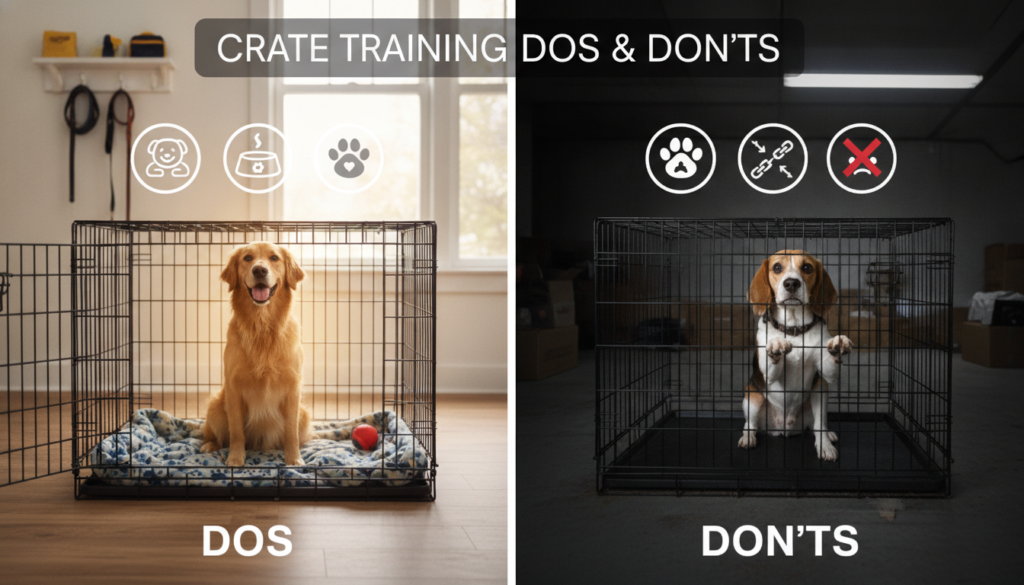
Crate Training Dos
Always use positive reinforcement to make crate time a positive experience. Use treats, toys, and calm words when your dog goes into the crate willingly.
- Maintain a predictable daily routine for meals and rest.
- Ensure the crate is located in a quiet, comfortable area of your home.
- Provide plenty of mental stimulation and physical exercise before confinement.
- Keep the crate door open initially to allow for natural exploration.
Crate Training Don’ts
Never use the crate as punishment. If you punish your dog in the crate, they will hate it.
- Avoid forcing a fearful or reluctant dog into the crate.
- Do not leave your dog confined for longer than their physical capacity allows.
- Never ignore signs of extreme distress or panic while the dog is inside.
- Avoid using the crate as a substitute for proper training or social interaction.
Set Appropriate Limits for Puppies and Adult Dogs
It’s important to know the difference between a puppy and an adult dog. Puppies need to go out more often because their bladders are smaller.
Adult dogs can handle longer crate times but still need regular breaks and social interaction. No matter the age, balance crate time with freedom, training, and play to keep your dog happy and healthy.
Prevent Common Crate Training Mistakes
Training your dog to love their crate takes patience. But, some mistakes can slow you down. Spotting these mistakes early helps you change your plan before it’s too late. If your dog seems really stressed, slow down and go back to simpler steps.
Starting With Confinement for Too Long
Many owners start by leaving their dog in the crate for too long. This can make the dog feel overwhelmed and unhappy. Start with very short times to help your dog feel safe and comfortable.
Releasing the Dog During Every Whining Episode
When your dog whines in their crate, it’s natural to want to help. But, letting them out right away can teach them to whine to get free. This can become a big problem for future training.
Using an Incorrectly Sized or Poorly Placed Crate
The crate’s size and location are key for your dog’s comfort. A crate that’s too small can cause accidents or discomfort. Make sure it’s big enough for your dog to move around and lie down easily.
Skipping Exercise, Mental Stimulation, and Potty Breaks
A good crate training plan meets your dog’s needs before they go in. Skipping exercise, mental play, or potty breaks can make your dog restless. Here are some common mistakes to watch out for:
- Lack of physical exercise before confinement.
- Insufficient mental stimulation or lack of chew toys.
- Ignoring the need for a recent potty break.
- Inconsistent timing within your daily crate training schedule.
If your dog is struggling, it’s okay to change your plan. Going back to shorter, easier sessions shows you care. Avoiding these mistakes helps your dog feel happy and secure.
Adjust Training for Puppies, Adult Dogs, and Special Situations
Every dog is different and needs a special approach to crate training. The basics stay the same, but you must adjust based on your dog’s age, health, and past. This way, the crate stays a safe, positive place for them.
Modify Puppy Crate Training for Developmental Needs
Training a puppy takes patience as they grow. They have small bladders and need to go out often. Also, give them safe chew toys to stop them from chewing the crate bars.
As your puppy gets older, they’ll sleep more and want to be alone more. Start by leaving them in the crate for a bit longer. Make sure it’s quiet and calm for them to rest well.
Help an Adult Rescue Dog Build Trust
Adult rescue dogs need a different approach than puppies. They might have had bad experiences with crates before. Start by letting them choose when to go into the crate.
Begin by leaving the crate door open. Let them explore at their own pace. Use gentle handling and reward calm behavior. Watch their body language to make sure they feel safe.
Support Senior Dogs and Dogs With Medical Needs
Senior dogs or those with health issues need extra comfort. Use soft bedding to ease their joints. Make sure the crate is big enough for them to move easily.
Keep the crate in a cool, draft-free spot. Talk to your vet about how long they can stay in the crate. They can help with any special needs.
Prepare the Crate for Car Travel and Emergencies
The crate is key for safety in cars and emergencies. Make sure it’s secure in your car. Add your contact info to the crate so it’s easy to find you.
Start with short, calm car rides. This helps your dog get used to the crate without stress. Being ready means you can keep your pet safe when needed.
Conclusion
Learning to kennel train your dog makes your home safe and cozy. Start by picking the right crate size. Then, make sure your dog likes being in it by associating it with good things.
Practice opening and closing the crate door slowly. This helps your dog get used to it.
Being consistent is key to success. A regular routine helps your dog know what to expect. It also makes them less stressed when they’re alone.
Training should be about calm behavior, not keeping your dog locked up all day. This is important.
Make sure your dog gets enough exercise, mental play, and time with family. They need breaks to go to the bathroom and quality time with you.
Be patient with your dog. Adjust your training based on their age, health, and personality. This ensures they’re comfortable in the long run.
Training your dog strengthens your bond with them. It’s a journey worth taking.
Share your progress with our community or ask for advice if you need it. Your positive approach will make your dog happy.