
When Do Puppies Open Their Eyes Tips for New Puppy Owners.
Learn when do puppies open their eyes, understand puppy vision development, and follow simple puppy eye health tips to support your puppy with confidence.
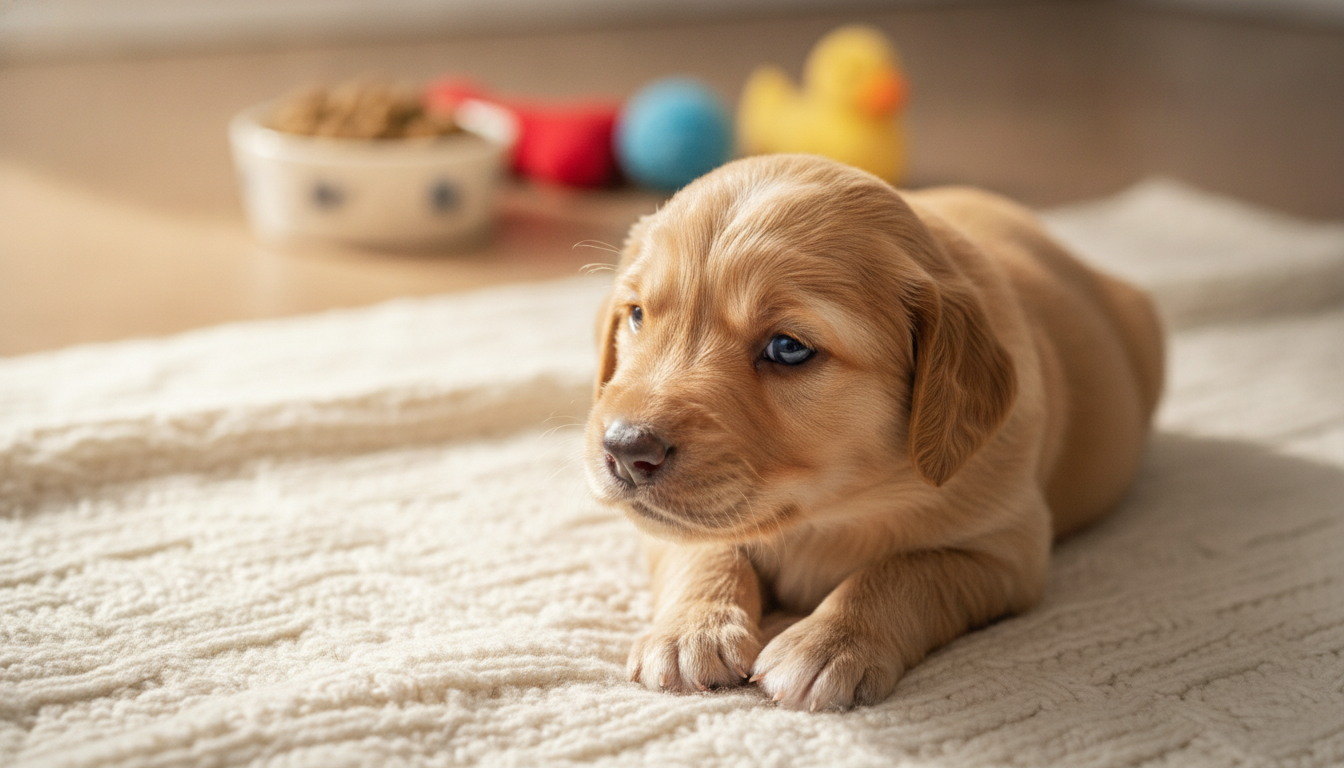
Few moments feel as tender as watching a newborn puppy explore the world. Its tiny eyes stay closed at first, but your care helps it grow strong and safe.
Many owners ask: when do puppies open their eyes? Most puppies begin opening them 10 to 14 days after birth. The puppy eyes opening age can vary, so a few days earlier or later may still be normal.
This milestone shows early development in the brain, nerves, and vision. Until then, your puppy needs warmth, gentle handling, proper nutrition, and a quiet space. Never force the eyelids open; watch for swelling, discharge, or signs of pain.
As you learn what to expect, you can support healthy growth and know when to contact a veterinarian. Careful observation matters during these first fragile weeks.
when do puppies open their eyes: Understanding the Typical Timeline
Most puppies open their eyes 10 to 14 days after birth. The puppy eye opening process varies, so a short delay may not mean a problem. Eyes may first appear as narrow openings before opening fully.
When puppies usually open their eyes
Eyes often open little by little. One eye may open first, and each opening may look like a thin slit. During this stage, keep the puppy in a calm, clean area with soft light.
Why puppy eye opening can happen earlier or later
Breed, birth size, health, nutrition, and personal growth can affect timing. Puppies born early may need more time. If the eyelids stay closed well after two weeks, ask your veterinarian for guidance.
What to expect during early puppy vision development
Early puppy vision development is limited. Your puppy may see shapes and light, but movement may look blurry. Bright light can cause discomfort, so avoid direct sunlight and strong lamps.
Never force the eyelids open. Do not press, pull, or clean beneath them without veterinary advice. Gentle care gives the eyes time to open as the puppy grows.
Puppy Development Timeline and Early Dog Growth Stages
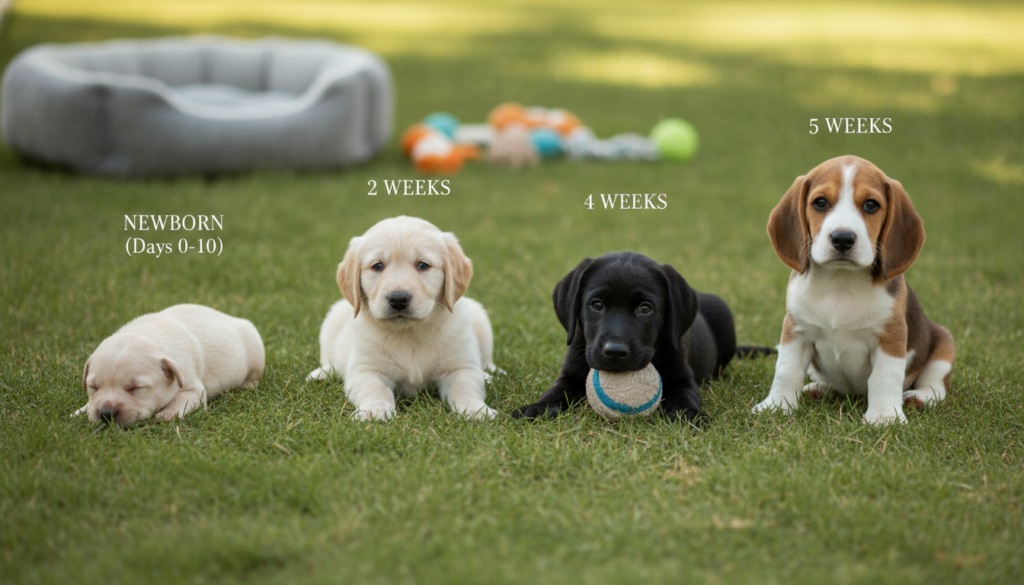
The first days begin the puppy development timeline. From birth through about two weeks, puppies need touch, smell, warmth, and nursing. Their eyes stay closed, while their mother provides most daily care.
During this early period, puppies crawl toward their mother and littermates. They spend much of each day sleeping and nursing. Steady weight gain and regular nursing show that growth stays on track.
At about two to three weeks, hearing and vision begin to develop. Their eyes may open during this period, though timing varies among puppies. Sounds become easier to notice, and movement grows more controlled.
Crawling slowly changes into standing and walking. During the following weeks, your puppy becomes more mobile and interactive. Balance improves, the senses grow stronger, and simple play begins.
These early dog growth stages support learning and social behavior. Puppies respond to littermates, their mother, gentle handling, and new surroundings. Each puppy follows a personal pace, so small timing differences are normal within a healthy litter.
Newborn Puppy Care Before and After the Eyes Open
Newborn puppy care starts with a warm, quiet nesting area. Keep bedding clean, dry, and free from loose threads or strong scents. Wash your hands before handling puppies, especially near their faces.
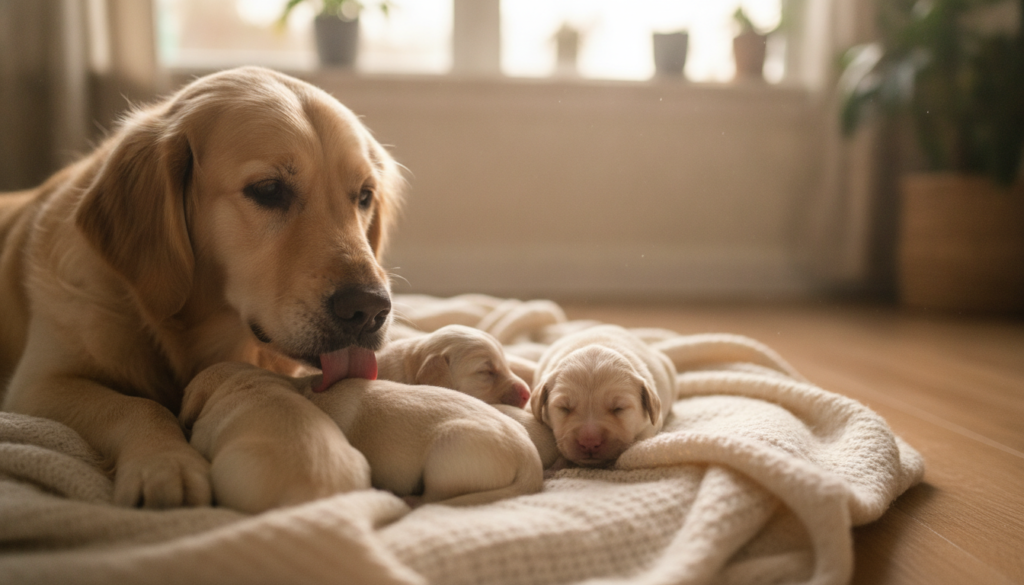
Watch each puppy nurse often, and check that the mother stays calm and attentive. Check each puppy’s weight daily to spot trouble early. Healthy puppies should gain weight steadily.
How to care for puppies before their eyes open
Keep the nest warm, but never place a heating pad directly beneath the puppies. Make sure they can move away from the heat. Replace wet bedding right away, and keep traffic near the nest low.
- Watch for regular nursing and strong sucking.
- Check weight at the same time each day.
- Observe the mother for milk, grooming, and close contact.
- Call a veterinarian if a puppy feels cold, seems weak, stops nursing, or fails to gain weight.
How to protect your puppy’s developing eyes
Use soft, dim lighting when checking the litter. Keep dust, smoke, air fresheners, cleaning sprays, and other irritants away from the nest. Choose smooth bedding that will not rub the eyelids.
Limit handling around the face as the eyes begin opening. Gentle puppy care tips include supporting the body with both hands and keeping visits brief. Let the mother comfort and groom the litter when she provides good care.
What you should not do when a puppy’s eyes begin opening
Never pry the eyelids apart. Do not use human eye drops, leftover medicine, or home remedies. If discharge appears, avoid scrubbing the area, and ask a veterinarian about safe cleaning and treatment.
Do not separate a puppy from its mother without a clear reason. Seek prompt veterinary guidance if the eyelids swell, the puppy shows pain, or nursing and weight gain decline. Careful newborn puppy care protects the litter during this sensitive stage.
Puppy Eye Health Warning Signs and When to Call a Veterinarian
A puppy’s eyes should open slowly over several days. Healthy opening usually causes little swelling, mild clear moisture, and no strong odor. The eyelids may look delicate as vision develops.
Signs of a healthy puppy eye opening process
Check your puppy each day in soft, natural light. Healthy eyes look calm, move gently, and show no pain. A little clear moisture can be normal.
Keep the area clean and dry. Never pull apart eyelids that stay closed. Ask your veterinarian for guidance if opening seems slow.
Eye problems that require veterinary attention
Contact a veterinarian promptly if you see redness, marked swelling, thick yellow or green discharge, or trapped pus. Cloudiness, bulging, pain, and frequent squinting need quick attention.
Eyelids that stay sealed after the expected opening time may signal infection, injury, or another eye condition. Do not use human eye drops or drain the eye at home. Newborn eye problems can worsen quickly and may threaten vision.
Practical puppy care tips for raising healthy puppies
Good daily care supports puppy eye health and steady growth. Use this simple routine to monitor each puppy:
- Record each puppy’s weight at the same time every day.
- Keep bedding dry, warm, and free of waste.
- Arrange an early veterinary examination for the litter.
- Provide proper nutrition for the mother and growing puppies.
- Follow professional advice for parasite prevention and vaccinations.
Clean hands, safe bedding, and regular checks make raising puppies easier. Call your veterinary clinic if a puppy stops nursing, loses weight, or seems weak.
Conclusion
Most puppies open their eyes between 10 and 14 days old. The puppy eye opening age can vary, so do not worry if yours opens them early or late. Keep the area quiet, clean, and softly lit as vision develops.
Gentle newborn puppy care helps support healthy growth. Never force the eyelids open, avoid bright light, and do not touch the eyes. Each day, watch for normal nursing, movement, and changes in puppy eye health.
Contact your veterinarian if you notice swelling, discharge, pain, cloudiness, poor nursing, unusual behavior, or delayed development. Patient monitoring and early professional support can protect healthy vision and help your puppy grow well.