
Why Do Dogs Lick Each Others Ears Learn the Reasons.
Learn why do dogs lick each others ears and what it means for their health, bonding, and behavior. Get tips to understand their bond and spot problems early.
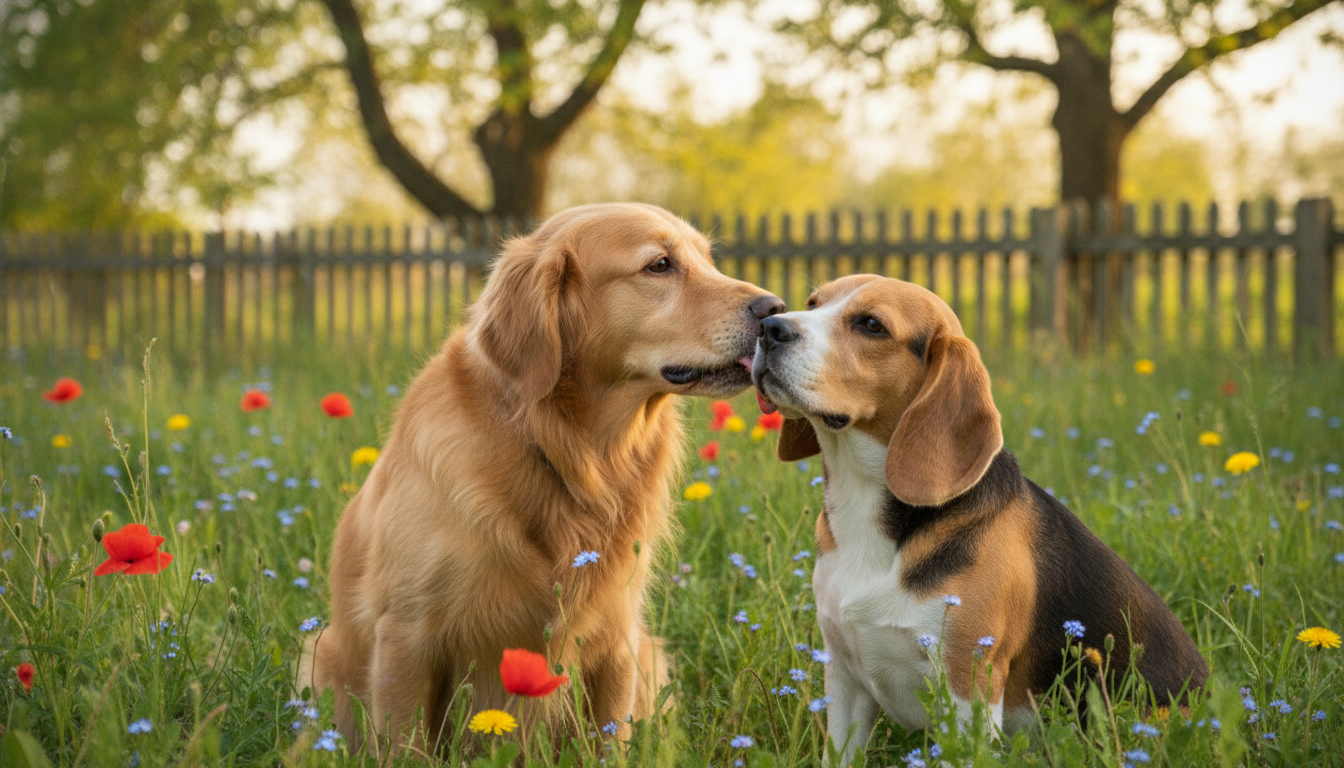
Have you ever asked why do dogs lick each others ears, grooming each other quietly? It’s a touching sight that makes pet parents curious about what it means. Understanding your canine’s social language strengthens your bond with them.
This guide dives into the world of dog interactions. We’ll look at why they lick each other’s ears, from showing love to sending signals. It could be a sign of trust or a way to stay clean. You’ll understand these special moments better.
It’s also important to know when this behavior is not normal. We’ll show you how to tell if it’s just bonding or if there’s a health issue. Learning these signs helps keep your pets happy, healthy, and comfortable.
Key Takeaways
- Grooming is a key way for pets to bond.
- It’s often about showing love and relieving stress.
- Too much attention to the head might mean a health problem.
- Watching their body language tells you if it’s play or submission.
- If you see a lot of scratching or redness, see a vet.
why do dogs lick each others ears
Understanding dogs starts with their subtle interactions. This behavior is not just a habit; it’s a social action. By watching your pets, you can see their true intentions.
Canine ear licking behavior is key for interaction. Dogs use scent, posture, and touch to show their mood. This closeness helps them get along in their world.
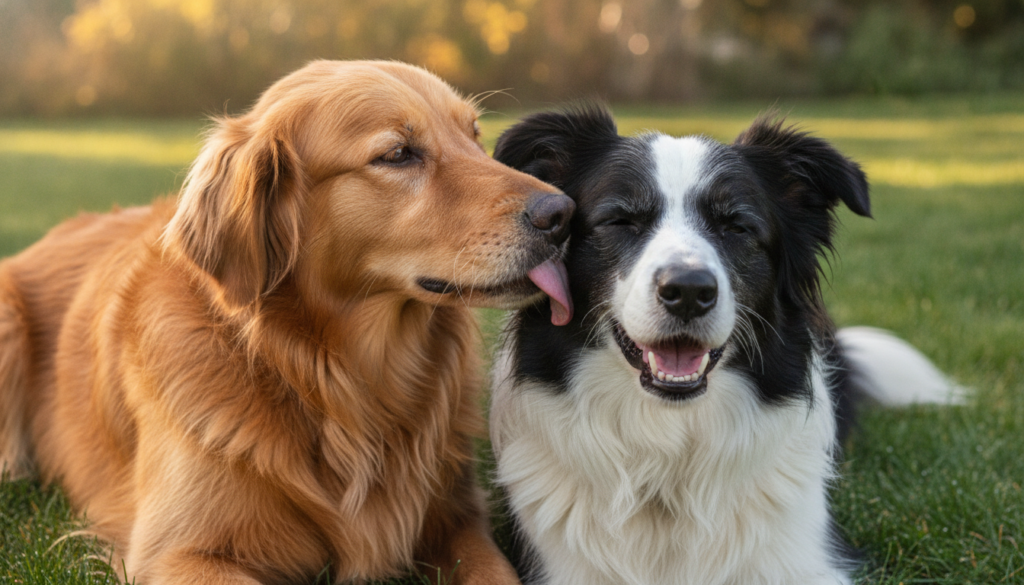
Identify Ear Licking as a Form of Canine Communication
Dogs can’t talk, so they use body language. Licking ears is a way to say they’re comfortable or interested. It’s a non-verbal message for peace in their group or home.
Dog communication through ear licking changes with the situation. A dog might lick to please a leader or to show friendship. Watching the scene helps you understand what they’re saying.
Recognize Affection, Trust, and Social Bonding
This act shows deep emotional connection. When a dog grooms another, it shows trust and comfort. This act strengthens their bond, acting as a soothing mechanism.
Seeing this as a sign of a strong social bond is good. It means your dogs feel safe to be close and intimate. The meaning of this interaction depends on the dogs’ relationship and how they respond to each other.
Common Reasons Dogs Lick One Another’s Ears
Have you ever wondered why dogs lick each other’s ears? It’s not just a sign of love. There are many reasons behind this behavior. By understanding dog social behavior, you can tell if it’s healthy or just a sign of boredom.
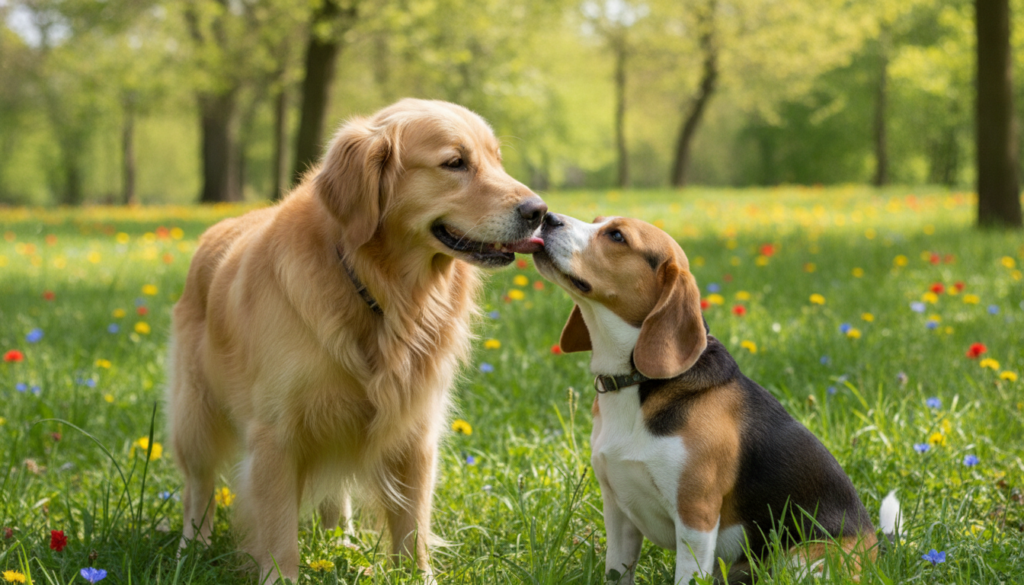
Separate Social Grooming From Attention-Seeking
Social grooming helps dogs bond and show trust. When one dog licks another’s ears, it’s a calming signal. This behavior is usually quiet and accepted by both dogs.
But, if a dog is bored or wants to play, they might lick ears to get attention. You can tell if it’s attention-seeking by seeing if the other dog seems annoyed or if there’s playful pouncing.
Consider Grooming Habits and Ear Hygiene
Many think a dog’s tongue can clean ears well enough. But, their saliva can’t replace professional cleaning. Licking can make ears wet, leading to irritation or infections.
It’s important to keep your dog’s ears clean with vet-approved products. Don’t count on your pets to keep each other’s ears clean. If you see a strong smell, redness, or too much dirt, take your dog to the vet.
Understand Learned Behavior and Individual Preferences
Every dog is different, and their personalities shape how they interact. Some dogs love grooming, while others find it too much. They might move away or growl to set boundaries.
This behavior starts in puppyhood. If a dog gets positive attention from licking, they’ll keep doing it. It’s important to respect each dog’s preferences to keep your home peaceful and happy.
How to Tell Whether Ear Licking Is Healthy or Concerning
It’s important for pet owners to know when ear licking is just a sign of love and when it might mean something more serious. The role of ear licking in canine social structure is often about showing affection. But sometimes, it can mean there’s a problem. Learning to understand your pets helps you know when to let them be and when to step in.
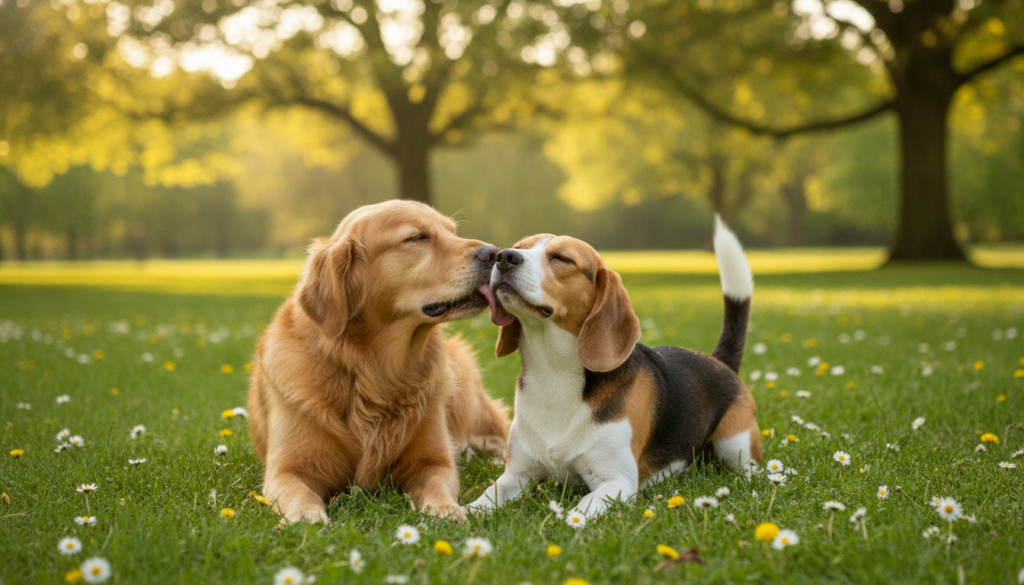
Observe the Dogs’ Full Body Language
By watching how both dogs act, you can tell if ear licking is a sign of friendship or not. A good sign is when both dogs seem relaxed and move freely. If the dog being licked stays still or leans in, it’s probably okay.
But watch out for signs of trouble. If the dog being licked tries to get away, stiffens, or looks stressed, it’s not good. Look for these warning signs:
- Tucked tails or flattened ears.
- Low growling or lip curling.
- Persistent avoidance or hiding.
- Excessive tension in the neck or shoulders.
Check for Ear Problems That May Attract Licking
At times, a dog might lick another’s ears because they sense a problem. Keeping your dog’s ears clean is key to avoiding these situations. If one dog keeps going after the other’s ears, check them out fast.
Look for signs of irritation or infection:
- Strong or unpleasant odors coming from the ear canal.
- Visible discharge, such as dark wax or pus.
- Redness, swelling, or heat around the ear flap.
- Frequent head shaking or scratching at the ears.
Apply Safe Interruption and Management Techniques
If the licking is getting too much or stressing the dogs, it’s time to step in. Use positive methods to distract them with a toy or a game. This stops the behavior from becoming a bad habit and keeps things calm.
Don’t yell at your dogs. It can make them confused or scared. Instead, call them by name and reward them for coming to you. This way, their social time stays positive and balanced.
Use a Veterinarian’s Perspective
Getting a vet’s opinion is crucial if home efforts don’t work. If you see signs of infection or the licking doesn’t stop, see a vet. They can check for allergies, parasites, or moisture problems.
“Early detection of ear discomfort can prevent chronic issues and ensure your dog remains comfortable and happy in their social environment.”
It’s especially important to get a vet’s help if the licking changes your dog’s behavior. Your vet can give a clear diagnosis and a treatment plan just for your dog. Getting expert advice helps you fix the real problem, not just the symptoms.
How to Manage Ear Licking and Support Healthy Dog Relationships
Managing your dogs’ interactions is key to a peaceful home. Stay alert to keep your pets happy and stress-free together.

Establish a Safe Observation Routine
Watch how your pets interact to understand their social dynamics. Look for dog behavior cues through ear licking to see if it’s friendly or not.
Make sure both dogs can walk away anytime. If one looks trapped, calmly call them or give a toy to stop the session.
Maintain Appropriate Ear Care
Keeping ears clean is crucial to avoid irritation. Always follow vet advice to avoid harming their ears.
If you see redness, bad smell, or discharge, get a veterinarian perspective on ear licking behavior. A vet can check for infections that might cause the licking.
Encourage Positive Social Behavior
Support healthy relationships by giving each dog their own space. This helps them relax and prevents one from feeling overwhelmed.
Use positive reinforcement for calm play. This way, you create a safe space where both dogs are happy and secure.
Conclusion
Ear licking is a complex behavior in dogs that shows deep affection, clear communication, or simple grooming. It can also mean they want attention or have learned certain ways to interact. This behavior is a key part of their social world.
It’s important to watch for changes in body language when your dog licks their ears. Look for signs of ear odor, discharge, or redness. If they scratch a lot or show pain, it could be a sign of a health problem.
By observing calmly, you can keep your home peaceful. Make sure to take good care of your dog’s ears and teach them safe ways to interact. If you see any unusual changes, talk to your vet. This way, your dogs can stay happy and healthy for a long time.