
How to Potty Train Puppies Using Pads Successfully
Learn how to potty train puppies using pads successfully with practical steps, timing tips, and cleanup advice to build good bathroom habits in your home.
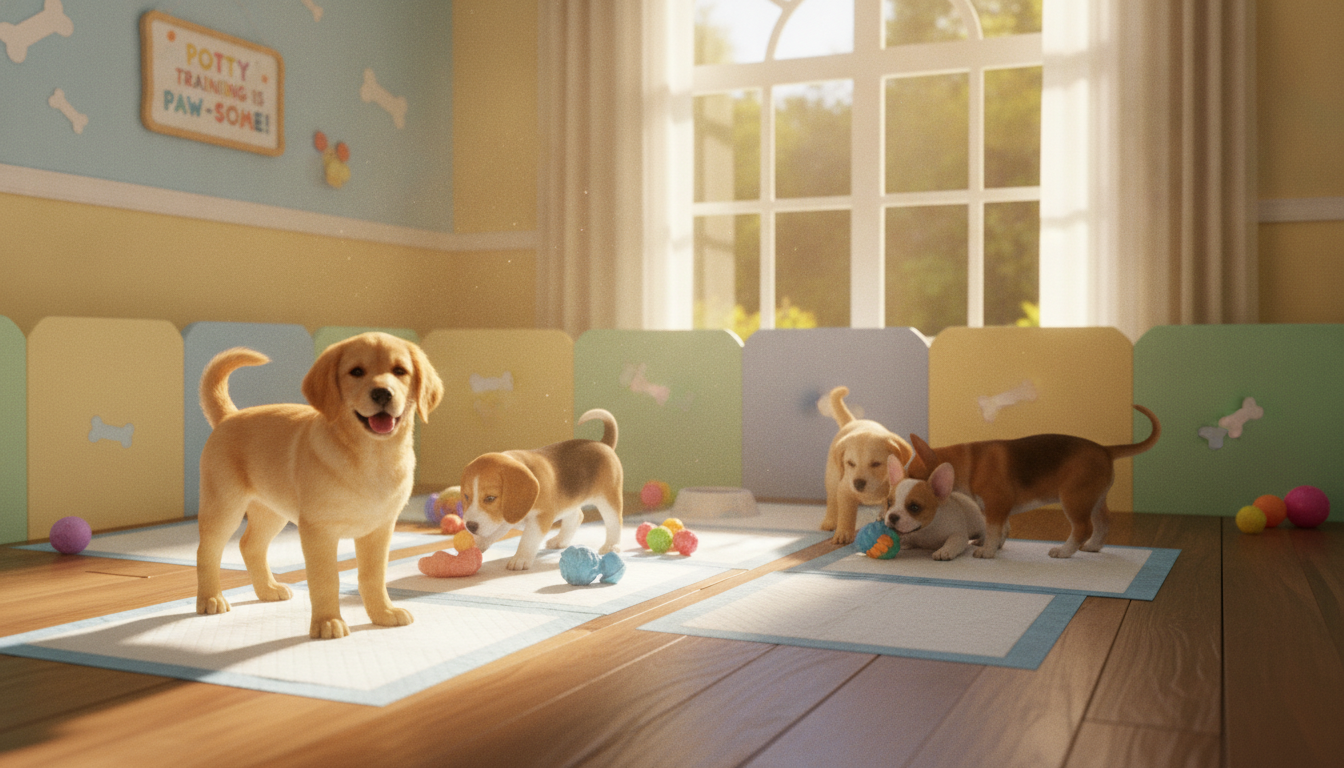
Learning how to potty train puppies using pads comes down to consistency, supervision, good timing, and rewarding the behavior you want
This guide will help you keep your home clean. We’ll talk about the best times to take your puppy out, how to clean up accidents, and keeping a consistent routine. Training your puppy takes patience, constant watching, and positive feedback.
Creating a special indoor area helps your puppy learn good habits. Let’s see how you can start these habits together. This way, you and your puppy can live happily together.
Prepare Your Puppy and Home for Pad Training
Getting your home ready for puppy pad training is key. It makes learning easier for both you and your puppy. A well-prepared home helps avoid accidents and sets clear expectations for your pet.
Choose a Consistent Indoor Potty Area
Pick a quiet spot in your home that your puppy can easily find. It’s important to keep this spot the same to avoid confusion. A laundry room, kitchen corner, or bathroom works well.
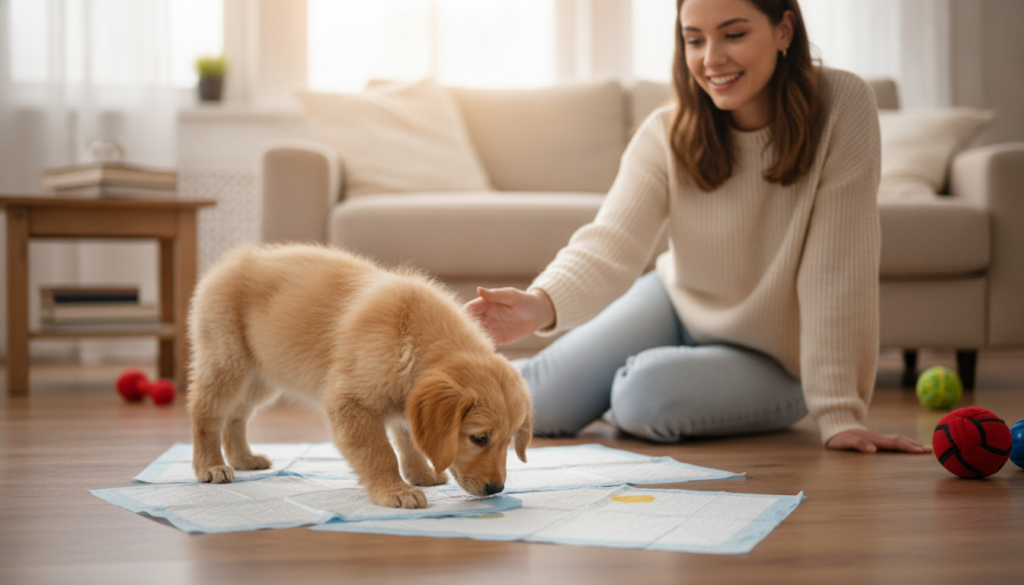
Gather Puppy Pads and Essential Cleaning Supplies
Having the right supplies ready helps when accidents happen. Make sure you have high-quality items to keep your home clean and fresh. This makes training easier and more effective.
- Absorbent puppy pads with leak-proof backing
- Enzymatic cleaner to neutralize odors
- Paper towels for quick cleanup
- Waste bags for sanitary disposal
- Disposable gloves for hygiene
Set Up a Safe, Manageable Training Space
Keep your puppy in a small area at first. Use a playpen or baby gates to create a safe space. This area should have the pad and keep your puppy focused.
Identify Your Puppy’s Potty Signals and Schedule
Watch your puppy to learn their potty signals. They might sniff, circle, or stop playing. If you see these signs, take them to the pad right away.
Stick to a regular schedule for potty breaks. Take your puppy to the pad after waking up, eating, or playing. This helps them learn faster and avoids accidents in other parts of your home.
How to Potty Train Puppies Using Pads Successfully
Training puppies to use pads is all about timing and positive feedback. A consistent routine helps them learn where to go. By managing their space and what they expect, you guide them to indoor success.
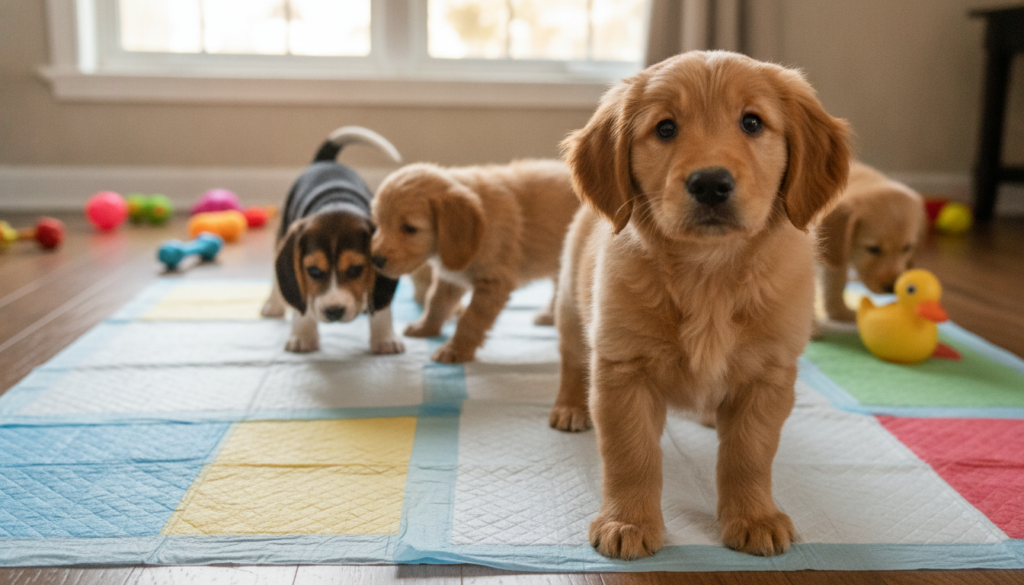
Take Your Puppy to the Pad at the Right Times
Timing is key when training puppies to use pads. Take them to the pad right after waking up, eating, or drinking. This helps them learn to go there at the right times.
Also, after playtime or a nap, take them to the pad. These are times when they need to go the most.
Guide Your Puppy to the Pad and Wait Quietly
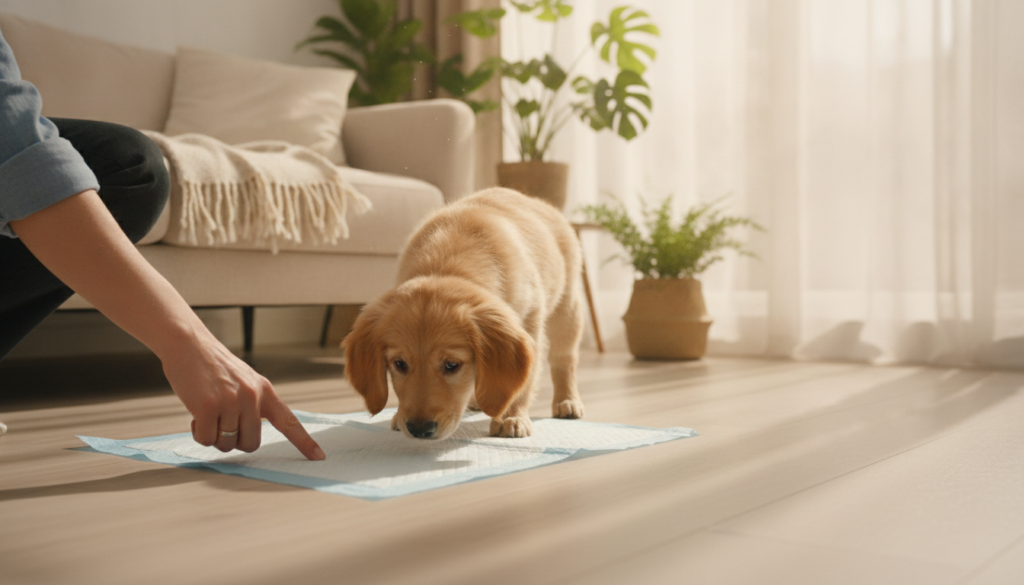
When your puppy starts sniffing or circling, guide them to the pad calmly. Speak softly and don’t make it a game. This helps them focus.
Stay quiet while they explore the pad area. Talking too much or playing can distract them and make them forget why they’re there.
Reward Correct Pad Use Immediately
Right after they use the pad, praise them or give a treat. This positive feedback links the pad to good things.
Being consistent is crucial. Rewarding them every time they use the pad correctly makes the habit stronger.
Use Supervision and Confinement to Prevent Accidents
Watching your puppy closely is the best way to prevent accidents. Keep an eye on them when they’re free in the house.
When you can’t watch, use a crate or a small playpen. This limits their space and keeps them in the potty area when needed.
Troubleshoot Common Puppy Pad Training Problems
Indoor training can be tough, but with patience and smart changes, you can overcome it. Even the most careful owners face setbacks. But these moments are chances to improve your training methods.
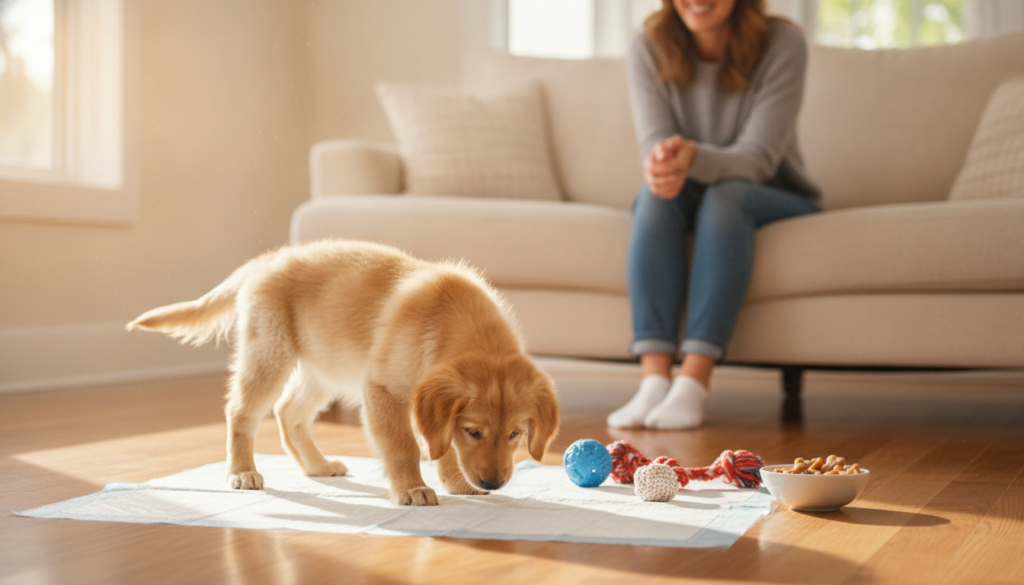
Help a Puppy Who Misses the Pad
If your puppy keeps missing the pad, it might be too small or too far. Here are some tips to help:
- Make the target area bigger by taping pads together.
- Put the pad closer to where your puppy likes to go.
- Clean up any accidents with an enzymatic cleaner to remove smells.
- Make sure the pad is on a flat, stable surface to prevent it from slipping.
Respond to Chewing, Tearing, or Playing With Pads
Puppies often see pads as toys, not places to go potty. If they start chewing or tearing them, you need to redirect them calmly. Never scold them for this, as it can make them anxious about going to the potty.
Keep a close eye on your puppy when they’re near the pad. You might also use a pad holder with a mesh grate to keep them from chewing. If they still chew, give them a tough chew toy after they go potty to satisfy their urge to chew.
Address Regression and Inconsistent Habits
Regression is common when a puppy forgets what they’ve learned. If this happens, go back to the basics and stick to your routine. Make sure to take your puppy to the pad at regular times during the day.
Check if any changes, like new visitors or loud noises, are stressing your puppy. Keeping a regular schedule can help fix these problems. Being consistent is key during tough times.
Know When to Contact a Veterinarian or Trainer
Accidents can sometimes be health issues, not just bad behavior. If your puppy shows signs of pain, like straining or blood in the urine, get help right away. These could be signs of a urinary tract infection or other health problems.
If your puppy’s regression is serious or doesn’t get better, talk to a certified dog trainer. They can give you advice based on your home and situation. Getting help early keeps your puppy healthy and confident while they learn.
Maintain Pad Training or Transition to Outdoor Potty Training
When your puppy gets the hang of it, you might think about keeping up the pad training or moving to outdoor potty. The key is to stay consistent. Clear signals and positive feedback help your pet feel secure in their routine.
Keep Indoor Potty Habits Reliable
Good indoor potty training for puppies needs a predictable environment. Make sure your puppy can easily find their spot, especially after meals, naps, or play. A strict schedule helps your puppy know where to go.
Watching your puppy closely is as important as the spot itself. Catching them in the act and guiding them to the pad helps. Always give a treat or praise when they finish on the pad to encourage good behavior.
Move the Pad Gradually Toward the Door
When moving to outdoor potty, don’t change things too fast. Start by moving the pad a little closer to the door each day. This slow move helps your puppy get used to the idea of going outside.
As the pad gets closer to the door, begin opening it for them to go outside. This method reduces stress and prevents accidents inside.
Teach Your Puppy to Potty Outdoors
When you’re ready to go outside, take your puppy to the same spot every time. Their scent will help them remember where to go. Keep them on a leash to keep them focused.
Give your puppy a treat or lots of praise right after they go outside. This makes going outside a positive experience. Keep an eye on them inside to prevent going back to old habits.
Conclusion
Your dedication to a routine changes how you care for your pets. Success comes from having one place for your pet to go, a set schedule, and rewards for good behavior. These steps help your pet learn where to go.
Training puppies to use pads needs patience and watching them closely. You help your dog feel safe at home. Every success boosts your confidence and your dog’s.
Following practical steps, timing, and cleaning tips helps your pet learn to use the bathroom. You can choose to keep your pet indoors or start outdoor training. This lets you adjust to your lifestyle and your dog’s needs. Begin your journey today and enjoy the rewarding process of toilet training puppies with pads.