
Dog Training Border Collie: Friendly Tips That Work
Learn dog training border collie tips that build focus, manners, and trust—simple steps for a smarter, happier herding companion at home
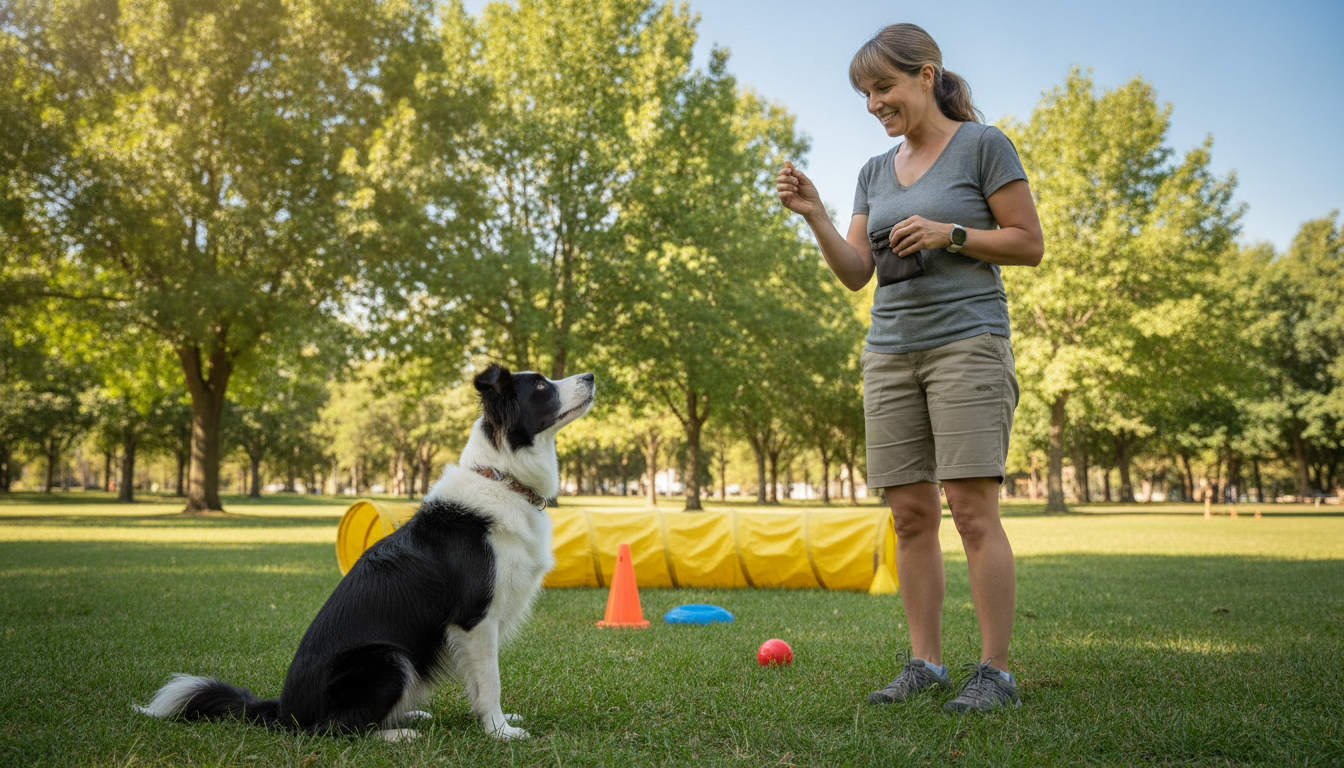
Few things warm an owner’s heart like an eager pup watching every move, tail wagging, mind three steps ahead. That quick, curious spirit defines this remarkable breed and makes raising one different from raising most pets.
This breed’s legendary intelligence and strong herding instinct come from long days on the farm. A cookie-cutter approach rarely works. Dog training border collie owners need creative methods, patience, and activities that keep its sharp mind busy.
This guide offers border collie training tips for every stage, from puppy basics to advanced skills and daily behavior fixes. Each section builds on the last, giving you clear steps to use right away.
With proper guidance, you’ll turn boundless energy into teamwork and gain a devoted companion who trusts you completely. That bond grows one session at a time and remains the true reward of this journey.
Understanding the Border Collie Breed Before You Start Training
Border Collies became the world’s top herding breed through generations of careful breeding. Farmers along the England-Scotland border bred them to manage sheep across rugged, open terrain. This work created dogs with sharp intelligence, endless energy, and an uncanny ability to read human body language.
Most Border Collies now live as family pets rather than working farm dogs. Their genes still reflect their old work. An effective dog training border collie plan must respect these instincts, or both ends of the leash may feel frustrated.
Why Border Collies Are Unique Among Working Dogs
Border Collies rank among the world’s smartest dog breeds. Canine researchers often compare their problem-solving skills with those of a young child. Studies place them ahead of Poodles, German Shepherds, and Golden Retrievers in intelligence.
This intelligence goes beyond book learning. They process movement, sound, and body language at lightning speed. They may notice a change in your tone or posture before you notice it yourself.
This sensitivity makes them highly responsive to training. They also notice tension, frustration, and inconsistency just as quickly. A calm, patient handler gets better results than someone who trains under stress or forces obedience.
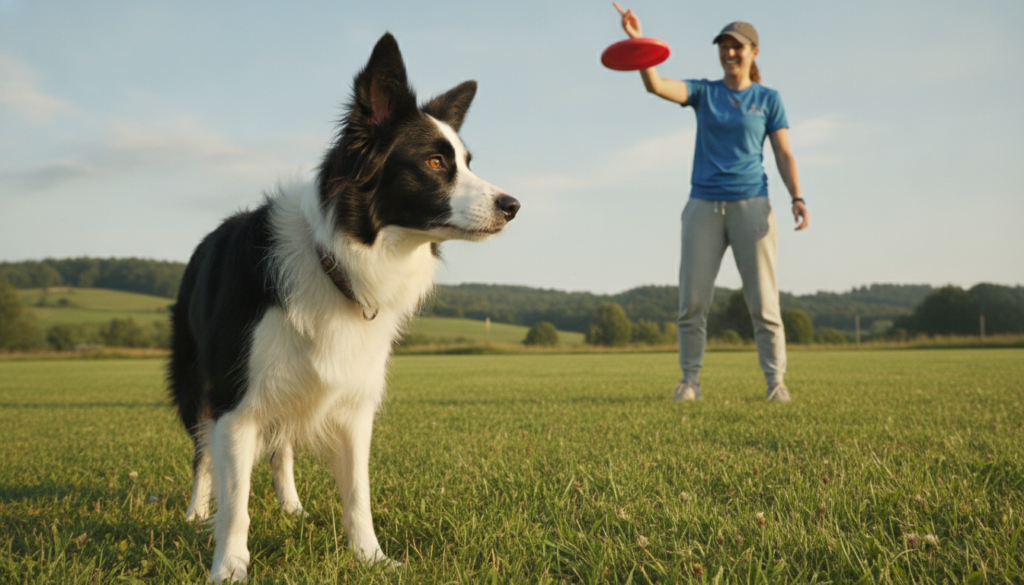
Key Traits That Influence Your Training Approach
Knowing these traits before lessons begin helps set realistic goals for you and your dog.
- High energy levels – Most Border Collies need one to two hours of vigorous activity daily to stay balanced and focused.
- Intense focus – This breed locks onto tasks, movement, and even distant objects with laser-like attention.
- Strong herding drive – Many Border Collies instinctively try to herd kids, joggers, cars, or other pets.
- Fast learning speed – They pick up new commands quickly, but they’ll also learn bad habits just as fast.
- Sensitivity to correction – Harsh discipline tends to backfire, causing anxiety instead of better behavior.
These traits should guide dog training border collie sessions from day one. Short, engaging lessons work better than long, repetitive drills. Positive reinforcement builds trust faster than punishment ever could.
Keep this breed profile in mind through every training stage. It is the foundation that helps every technique in this guide work.
Essential Tools and Setup for Dog Training Border Collie Success
Great results with your Border Collie rarely happen by accident. They begin with smart preparation before you ask for a single “sit.” Having the right gear and a planned training space makes each session smoother and more productive.
These border collie training tips help you build a setup that supports your dog’s natural energy instead of fighting it.
Must-Have Training Equipment
Border Collies learn quickly, but the wrong equipment can slow even the smartest dog. A few basic items help your pup learn new skills faster.
- A properly fitted collar or harness that won’t slip during quick movements
- A sturdy 6-foot leash for teaching loose-leash walking and basic obedience
- A treat pouch that clips to your waist for fast, hands-free rewards
- A clicker for clear, consistent marker training
- Durable toys that double as both play items and training rewards
Keep several high-value treats ready during sessions. Small pieces of chicken or cheese quickly grab attention and maintain motivation. Border Collies respond best when rewards match the effort, so save the tastiest treats for difficult tasks.
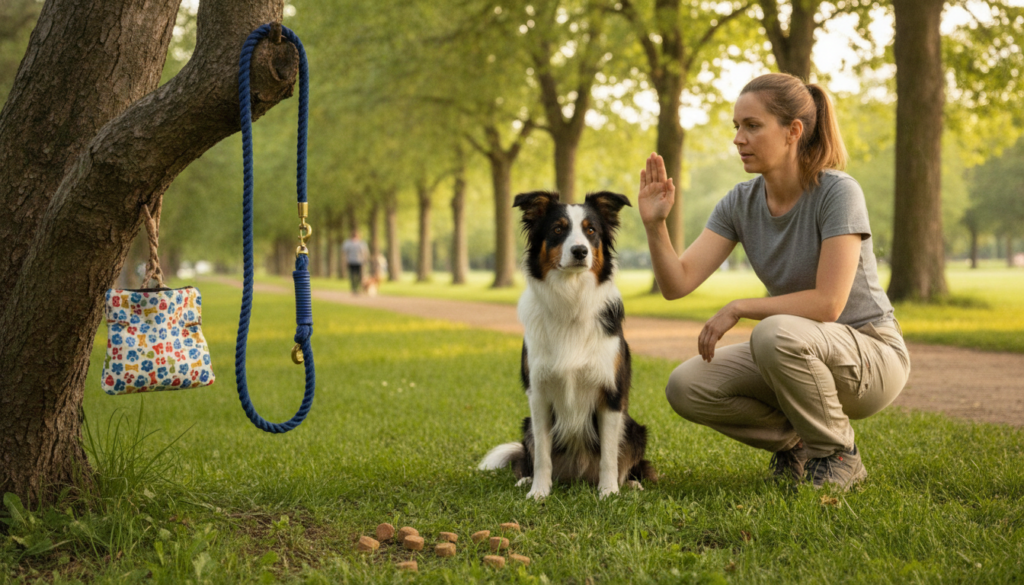
Creating the Right Training Environment at Home
Your Border Collie’s brain stays busy, so distractions can quickly break focus. Begin in a quiet backyard or calm indoor room without pets, loud noises, or foot traffic. This helps your dog focus on you instead of nearby activity.
After your dog masters a command in a quiet setting, increase the difficulty. These border collie training tips build real-world reliability, not skills that work in one spot.
- Practice in a distraction-free space until commands feel automatic
- Add mild distractions, like a family member walking nearby
- Move outdoors to a fenced yard with more sights and sounds
- Test commands in busier areas, such as a quiet park
Short sessions matter as much as location. Border Collies focus best in 5 to 10-minute bursts, so keep training brief and end positively. This approach, combined with proper equipment and setup, creates a strong start for specific commands and routines.
Training Border Collie Puppies: Building a Strong Foundation
Bringing home a Border Collie puppy begins one of the most important training periods. Early lessons shape the dog your puppy becomes for years. Success in training border collie puppies starts with trust, curiosity, and good habits.
This breed learns fast, often faster than new owners expect. That quick mind is a gift, but early mistakes can last as long as good lessons. Simple structure now can save you months of frustration later.
Step 1: Socialization During the Critical Puppy Window
Puppies have a short, powerful socialization window, roughly between three and sixteen weeks old. Their brains are ready to accept new experiences as normal, not threatening. Missing this window does not ruin a dog, but it makes later training harder.
Border Collies tend to be watchful and sensitive. Without positive early exposure, they may become wary or reactive toward strangers, noises, or unfamiliar places.
Offer many experiences while keeping them calm and positive. Consider including the following:
- Meeting different people, including children, older adults, and people wearing hats or uniforms
- Walking on various surfaces like grass, gravel, tile, and metal grates
- Hearing everyday sounds such as vacuums, car horns, and thunder recordings at low volume
- Interacting with vaccinated, friendly dogs and other calm animals
- Riding in the car for short, pleasant trips
Keep each new experience short and rewarding. Treats, praise, and a relaxed tone help your puppy link new situations with good feelings instead of fear.
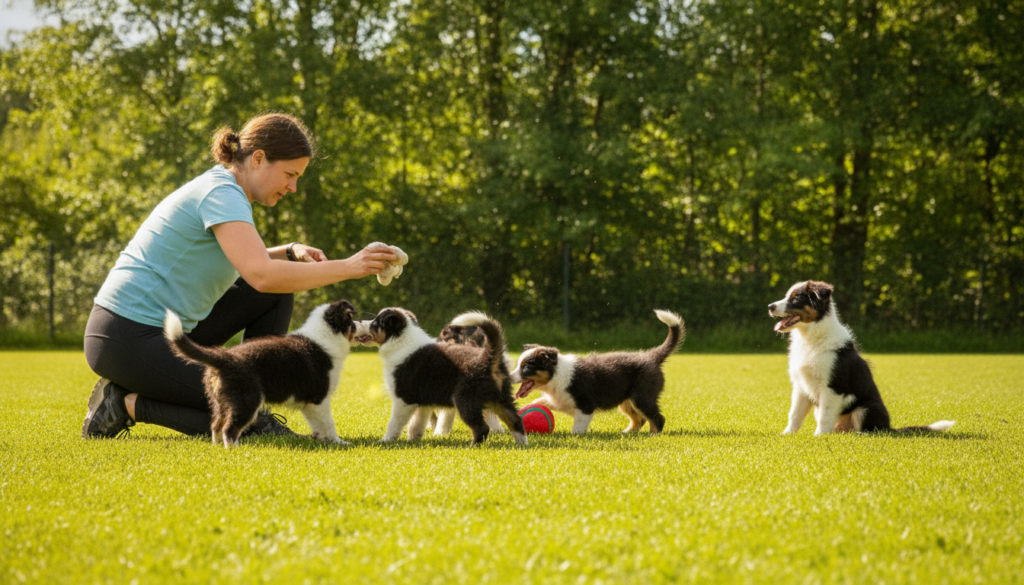
Step 2: Teaching Basic Commands Early
Border Collie puppies have short attention spans, like all puppies. That is normal and does not mean training is failing. Five-minute sessions several times daily work better than one long, tiring practice.
Reward-based methods work best for this smart, food-motivated breed. Use small treats, a happy voice, and clear timing to mark the moment your puppy does something right.
Start training border collie puppies with these foundational commands, introducing one at a time:
- “Sit” – lure with a treat above the nose, moving it back toward the tail
- “Stay” – build duration slowly, starting with just one or two seconds
- “Come” – practice indoors first, using an excited tone and a treat reward
- “Name recognition” – say your puppy’s name and reward instant eye contact
End every session with a success, even a small one. This keeps puppy training fun and builds enthusiasm for future lessons instead of frustration.
Step 3: House Training and Crate Training Basics
Consistency matters more than speed during house training. Border Collie puppies usually learn quickly once routines begin, because predictability suits their orderly minds.
Set a potty schedule around meals, naps, and playtime. Take your puppy outside after waking, eating, napping, and before bed.
Crate training works naturally with house training and gives your puppy a safe, den-like space. Most puppies avoid soiling where they sleep, making the crate useful for housebreaking.
Keep these crate training basics in mind:
- Introduce the crate gradually, using treats and toys to build positive associations
- Never use the crate as punishment
- Keep initial crate sessions short, gradually increasing duration
- Place the crate in a quiet but not isolated part of the home
Patience during this stage pays off. Consistent routines and positive lessons help when training border collie puppies for advanced work.
Border Collie Obedience Training: Core Commands Every Dog Needs
Strong obedience skills help create a well-behaved Border Collie, whether your dog is young or adult. Border collie obedience training gives your dog needed structure and helps keep everyone safe each day. These steps build basic commands into skills your dog can use in real situations.
Step 1: Teaching Sit, Stay, and Come
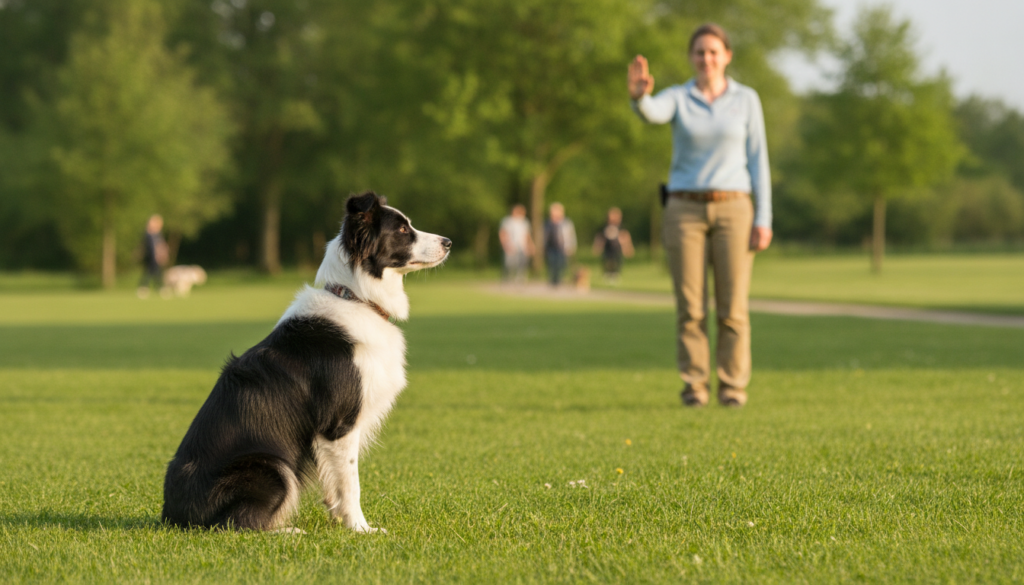
Your Border Collie may know sit, stay, and come from puppyhood. Now, make each command reliable. Start with duration by asking your dog to hold sit or stay longer before release.
Next, practice distance. Give commands from farther away, and slowly increase the space between you and your dog. This builds trust and reliability when you are not standing nearby.
Finally, add distractions. Practice near other dogs, in busy parks, or beside tempting toys. A dog that listens despite distractions has truly mastered the command.
Step 2: Mastering Loose-Leash Walking
Border Collies are fast, energetic, and often pull on the leash. The “stop and stand” method works well for this breed. Stop when your dog pulls, then wait for a slack leash before moving again.
This teaches your dog that pulling stops progress, while a loose leash keeps the walk moving. Consistency matters, so every family member should use the same technique.
Over time, your Border Collie learns that calm walking brings rewards. Short, frequent practice sessions work better than long, frustrating ones.
Step 3: Building Impulse Control
Impulse control exercises matter for a breed known for quick reflexes and sharp instincts. Teaching “leave it” helps your dog ignore tempting items, from dropped food to other animals. “Wait” at doorways or before meals teaches patience and respect for boundaries.
These skills stop your dog from darting through open doors or grabbing food from the counter. They also make border collie obedience training a natural part of daily life, not a chore.
Practice these simple impulse control drills at home:
- Ask your dog to “wait” before exiting the front door
- Practice “leave it” with treats placed on the floor
- Require a calm sit before placing the food bowl down
- Use “wait” before releasing your dog from the car
Daily repetition builds trust and reliability. A dog with strong impulse control is safer, calmer, and easier to manage anywhere.
How to Train a Border Collie for Natural Herding Instincts
A Border Collie does not need a farm to show its herding roots. These instincts can appear in living rooms, parks, and backyards. Understanding this drive helps you learn how to train a border collie well.
Border collie herding training does not turn your pet into a working farm dog. It gives that instinct a healthy outlet and helps prevent behavior problems.
Step 1: Recognizing Natural Herding Behaviors
You must spot an instinct before you can manage it. Herding behaviors may appear early, sometimes before a puppy turns six months old.
- Circling family members, kids, or other pets
- Nipping at heels during play or walks
- “Eyeing,” a low and intense stare used to control movement
- Crouching low while stalking a moving target
- Barking to redirect people or animals
These actions are not misbehavior. They are hardwired responses passed down through generations of dogs bred to move livestock across open fields. Knowing how to train a border collie starts with respecting these habits and their source.
Step 2: Introducing Herding Basics Safely
After you spot these signs, structured exposure can help. A certified herding instructor provides safe, controlled contact with livestock, such as sheep or ducks.
Many training centers across the U.S. offer instinct tests for young dogs. These short sessions show how strong your dog’s drive is without overwhelming the dog or livestock.
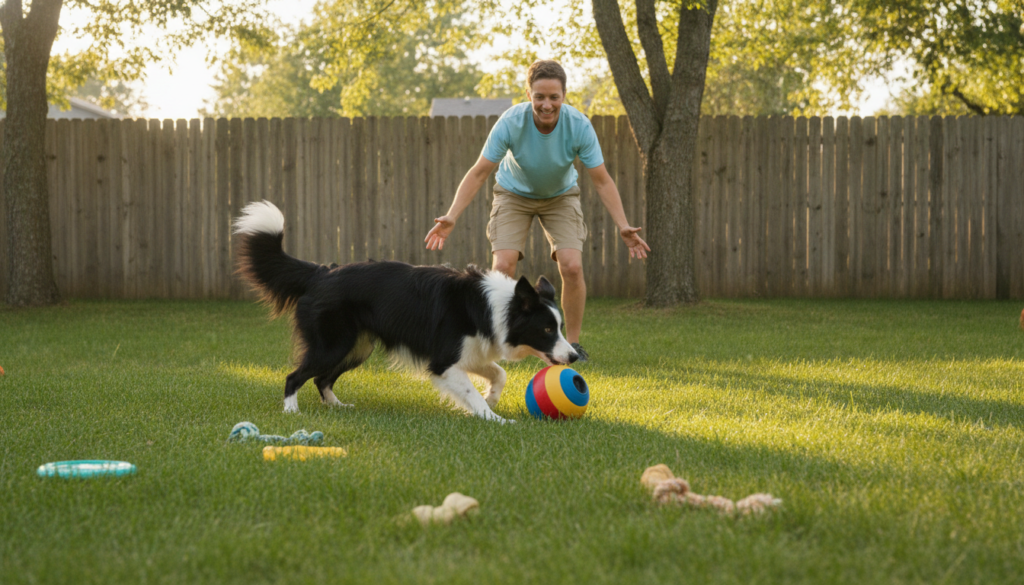
No access to sheep? Herding balls work well at home. These large, sturdy balls mimic livestock movement and help your dog practice focus and control in the backyard.
- Always supervise sessions involving livestock
- Keep early exposures short, around 10 to 15 minutes
- Use a long lead for control near animals
- Reward calm focus rather than chasing
Step 3: Channeling Herding Drive into Structured Activities
A Border Collie without an outlet for its herding drive often finds one alone. It may herd children, chase cars, or nip at joggers. Structured activities can solve this problem before it starts.
- Herding clinics led by experienced trainers
- Treibball, a sport that uses large balls to mimic herding
- Sanctioned herding trials through the USBCHA
- Community herding classes open to beginners
These outlets meet the mental and physical needs linked to a strong herding instinct. Your dog may work real sheep or push balls across a course. Border collie herding training gives this ancient drive a healthy, modern job.
Border Collie Agility Training for Mental and Physical Stimulation
Border collie agility training channels a dog’s natural energy into focused, useful action. This breed loves problem-solving, speed, and precise movement, making agility a strong workout for body and brain. Unlike walks or fetch, an agility course makes dogs plan ahead while racing through obstacles.
Owners who add agility to their weekly routine often see calmer behavior at home. A tired mind rests as easily as a tired body, and Border Collies need plenty of both.
Step 1: Introducing Basic Agility Equipment
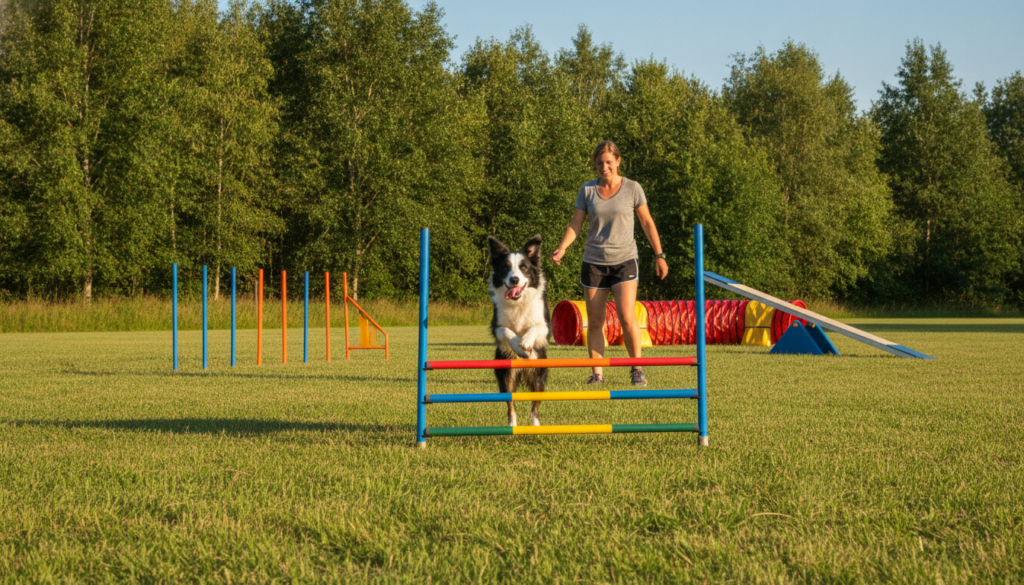
Begin border collie agility training with simple, low-pressure equipment before building a full course. Tunnels, weave poles, and low jumps let a Border Collie explore new shapes and textures at its own pace.
Let the dog sniff and study each piece before giving commands. Reward curiosity with treats or praise, because forcing unfamiliar equipment can cause later hesitation.
Starter equipment often includes:
- A collapsible or rigid tunnel for crawling practice
- Six to eight weave poles spaced for easy movement
- Low jump bars set just above ground level
- A stable pause table for control exercises
Step 2: Building Confidence Through Obstacle Courses
When a dog feels comfortable with each piece, connect two or three obstacles. Keep each sequence short at first, so success comes quickly and often.
Home setups work well for casual border collie agility training. Agility classes offer expert guidance and social time with other dogs. Both settings should reward exploration instead of demanding perfection.
Celebrate every completed obstacle course attempt, including a single weave pole pass. This builds trust between dog and handler as challenges become more complex.
Step 3: Progressing to Timed Agility Drills
After a dog masters basic sequences, add timed runs that resemble real competition formats. Organizations such as the AKC and NADAC use standard courses to test speed, accuracy, and handler communication.
Timed drills sharpen a Border Collie’s focus under pressure. Start with generous time limits, then tighten them gradually as confidence and skill improve.
Many owners find structured border collie agility training leads to local competitions and dog sport clubs. These activities give dogs a lifelong outlet for athletic drive and sharp working instincts.
Advanced Border Collie Training Techniques for Experienced Owners
A well-trained Border Collie wants new challenges. Advanced border collie training helps experienced owners meet its need for mental work. After your dog follows basic cues reliably and handles agility obstacles with confidence, raise the bar to build trust and communication.
These skills give your Border Collie a useful outlet for endless energy. Your dog can solve problems and work with you. This reduces mischief and creates a calmer, more focused companion at home.
Step 1: Off-Leash Reliability Training
Off-leash reliability is a major milestone in advanced border collie training. It requires patience, consistency, and a gradual approach. Rushing it can undo months of hard work.
Start in a secure, fenced area with few distractions. Practice recall with a long training line before removing it. Reward each successful return with high-value treats or a favorite toy.
After your dog masters recall in a quiet space, add distractions slowly. Try these settings in order:
- A fenced backyard with familiar sounds and smells
- A quiet park during off-peak hours
- A dog-friendly trail with light foot traffic
- A busier public space with other dogs and people
Never rush this progression. If your dog struggles, go back one step and rebuild confidence before moving forward.
Step 2: Trick Training and Advanced Commands
Trick training and complex commands are natural next steps in advanced border collie training. Border Collies enjoy puzzles, which provide a strong mental workout. These tasks also strengthen your bond through shared focus and teamwork.
Teach commands that go beyond the basics. These skills challenge your dog’s memory and problem-solving abilities:
- Directional cues like “left,” “right,” or “back”
- Retrieving specific items by name from a group of objects
- Multi-step sequences, such as “sit, spin, then lie down”
- Closing doors, turning off lights, or other useful household tasks
Break each trick into small steps. Reward progress often, and keep sessions short to hold your dog’s attention.
Step 3: Exploring Dog Sports Like Flyball and Disc Dog
Competitive dog sports offer an exciting outlet for a Border Collie’s speed, agility, and drive. Flyball uses relay-style racing over hurdles to retrieve a ball, matching your dog’s love of chasing and fetching. Many dogs find its fast pace and team energy highly motivating.
Disc dog, or competitive Frisbee, suits the breed’s athleticism. It rewards precise timing, jumping ability, and a strong handler-dog connection. Both sports lead to local clubs and competitions, where you can meet enthusiastic owners.
Joining a club adds structure and support to your training routine. It also makes advanced border collie training a shared community experience that benefits you and your dog for years.
Border Collie Behavior Training: Solving Common Issues
Owning a Border Collie can mean managing behaviors linked to its working-dog DNA. These traits are not flaws; they are instincts passed down through generations of herding work.
Most issues improve with consistent border collie behavior training. Patience and proper techniques can guide these instincts toward healthy outlets.
Managing Excessive Herding of People or Objects
Many Border Collies try to herd children, joggers, cars, or bicycles. Their brains are wired to control movement, so this instinct is not aggression.
Start by teaching a strong “leave it” command. Practice it in quiet places first, then add moving triggers gradually. For example, have a family member jog in place.
Give your dog another job. A weighted backpack during walks or a flirt pole session can satisfy its herding urge before it targets something unsafe.
Addressing Barking and Separation Anxiety
Border Collies form deep bonds with their people. That closeness can cause barking or anxiety when they are left alone.
Gradual desensitization works best. Begin with absences lasting a few minutes, then slowly increase the time. Reward calm behavior when you return.
Enrichment toys also help fill this gap. Puzzle feeders and snuffle mats occupy their minds and reduce stress during alone time. This supports effective border collie behavior training through prevention and mental engagement.
Correcting Nipping and Overstimulation
Nipping often occurs during play, especially with children or other dogs. It usually signals overexcitement, not aggression.
Watch for early warning signs before nipping begins. Recognizing these cues helps you intervene before your dog crosses the line.
- Stiff body posture or a fixed stare
- Rapid, shallow panting during calm activities
- Circling or crouching low to the ground
- Ears pinned back with intense focus
When you spot these signs, pause the activity at once. A brief time-out and calm cue, such as “settle,” can reset your dog’s energy.
Consistency matters most. Every training session, whether it covers herding, barking, or nipping, helps build a calmer, more balanced companion. With steady effort, border collie behavior training turns instinct-driven challenges into manageable daily moments.
Conclusion
A well-trained Border Collie starts with understanding this special breed. Sharp intelligence, boundless energy, and deep-rooted herding instincts shape every learning process. Dog training border collie success depends on working with these natural traits, not against them.
Consistency and patience matter more than any single technique. Short, focused sessions and clear communication build trust faster than long, repetitive drills. Border Collies thrive with a job, such as agility courses, herding exercises, or advanced trick work.
Physical exercise alone cannot satisfy a Border Collie’s needs. Structured activities provide mental stimulation, preventing boredom and destructive habits. Owners who combine obedience work with breed-specific outlets often see calmer, happier dogs at home.
Every dog learns at its own pace. Some learn commands within days, while others need extra repetition before concepts click. Adjusting methods to each personality can greatly improve progress.
The border collie training tips in this guide offer a strong starting point. They help owners build good habits early and correct problem behaviors as they arise. Using these methods with patience and consistency builds a foundation for a well-behaved, mentally satisfied companion.
Training a Border Collie takes ongoing effort, but the payoff is a loyal, responsive partner. That partner is ready to tackle whatever activity comes next. Start small, stay consistent, and watch your bond grow stronger with every session.