
How to Train a Rescue Dog A Friendly Step-by-Step Guide.
Learn how to train a rescue dog with gentle, practical steps for building trust, teaching good manners, easing anxiety, and creating a lasting bond today.
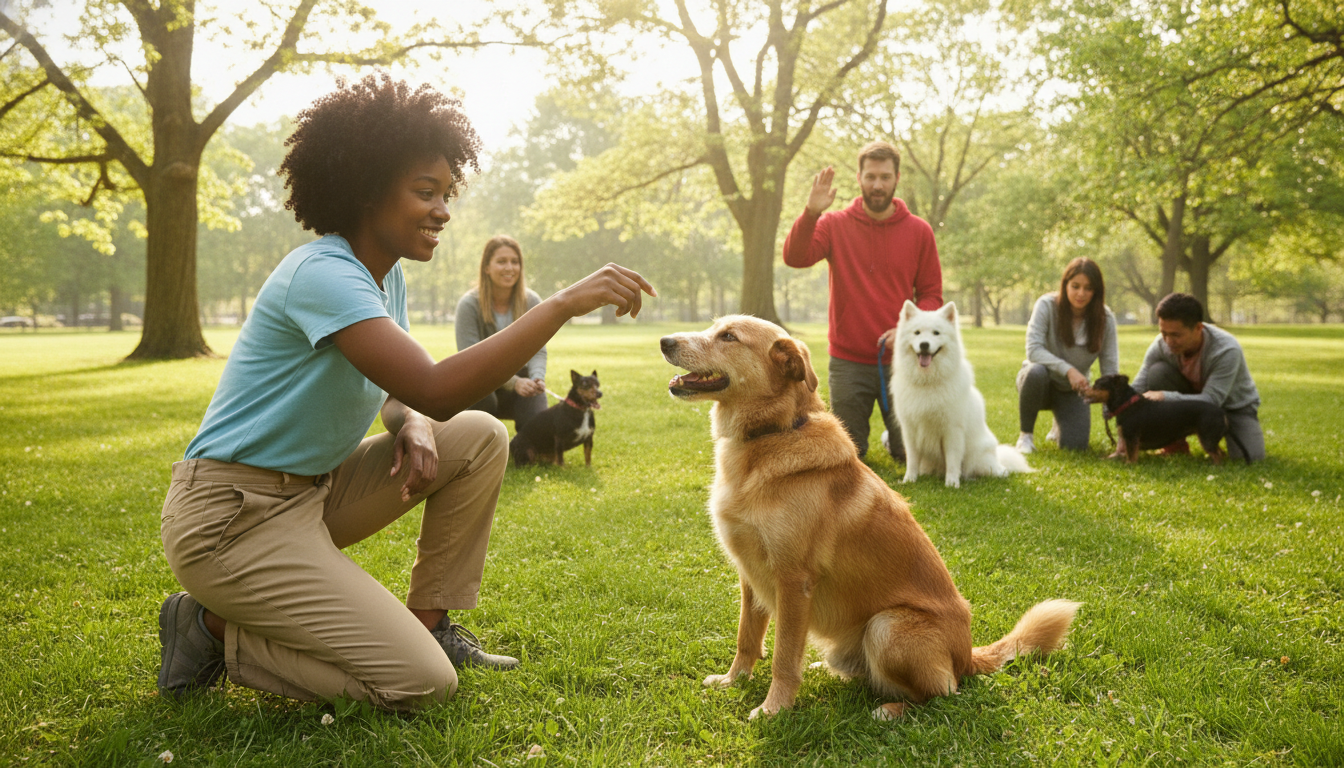
When a rescue dog comes home, quiet moments may feel uncertain. Your dog needs time to learn your home is safe, your voice is kind, and daily life is predictable.
Learning how to train a rescue dog begins with patience, trust, and a steady routine. Before teaching commands, consider your dog’s history, temperament, health, and comfort level. These details shape how your dog responds to new people, sounds, rooms, and tasks.
This guide offers practical rescue dog training tips for families across the United States. Start by creating a calm space and using rewards. Then build basic commands, leash skills, house training, socialization, and calm behavior.
Progress may come in small steps. That is normal.
Your goal is not quick perfection. It is helping your dog feel secure while building reliable skills for a happy life together.
how to train a rescue dog: Start With Trust and a Safe Routine
Your rescue dog needs time to feel safe before training starts. Create a quiet home base with soft bedding, fresh water, safe enrichment toys, and a calm resting place. A crate or gated area can help; introduce it with treats and leave the door open.
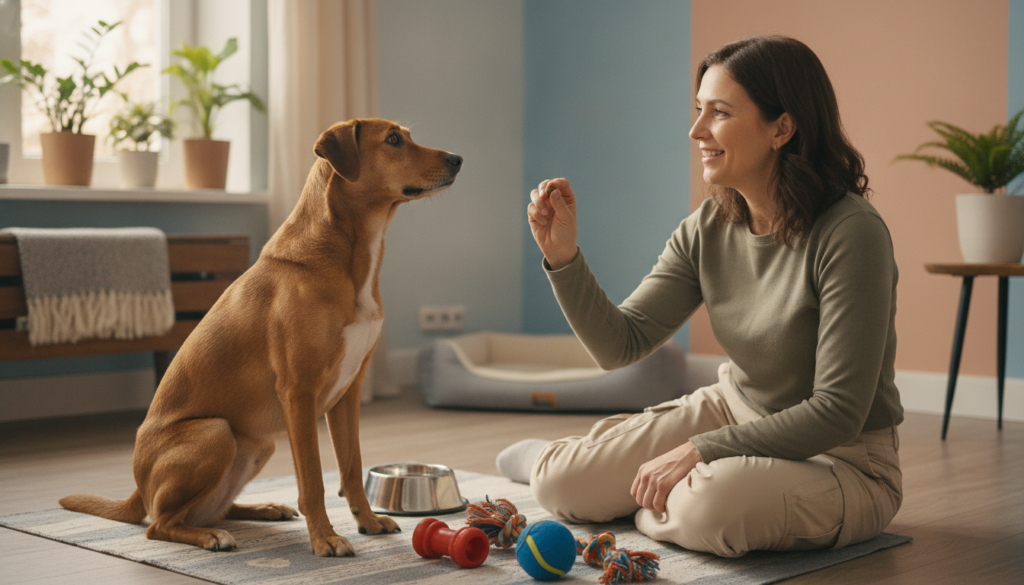
Limit visitors, loud corrections, and extra demands during the first days. A safe routine for a rescue dog includes regular meal, walk, bathroom, rest, and gentle play times.
Prepare a Calm, Dog-Friendly Training Environment
Keep training in a quiet area with few distractions. Let your dog explore at a comfortable pace. Remove loose wires, small objects, and harmful foods.
Watch your dog’s body language. Turning away, licking the lips, hiding, or lowering the body can signal stress. Give your dog more space when you see these signs.
Use Building Trust With a Rescue Dog Techniques
Let your dog approach you by choice. Sit nearby, use a calm voice, and pair your presence with small treats. Avoid reaching over the head or forcing physical contact.
Building trust with a rescue dog takes patience and steady care. Respect signs of fear or discomfort. Feed, walk, and rest your dog on a consistent schedule so each day feels easier to understand.
Set Realistic Training Goals
Start with small goals your dog can reach. Responding to a name, making eye contact, accepting a harness, or relaxing near you are useful early skills.
- Reward calm behavior right away.
- Practice one skill for a few minutes.
- Track small improvements each day.
Do not expect immediate obedience. Progress may come in small steps, especially while your dog adjusts to a new home.
Positive Reinforcement Techniques for Rescue Dogs
Positive reinforcement techniques for rescue dogs teach skills without adding fear. Mark the behavior you want, such as sitting or looking at you, then reward it at once. This clear pattern helps your dog understand which actions earn good outcomes.
Choose Effective Rewards
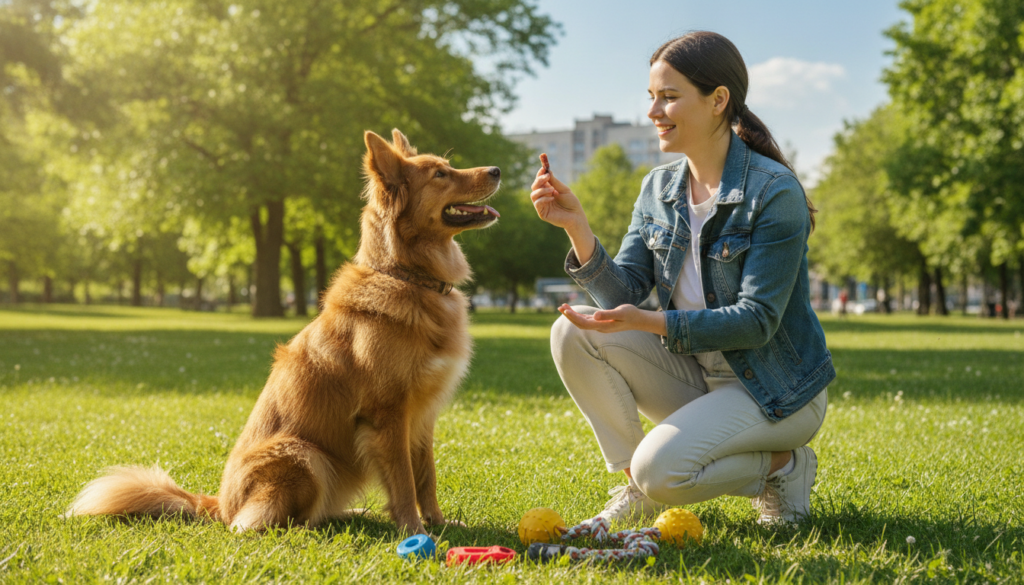
Use small, high-value treats while your dog learns a new skill. Soft chicken, cheese, or training treats work well for many dogs. Keep each piece tiny, so your dog stays focused and does not fill up.
Praise, play, and access to a favorite toy can serve as rewards. Let your dog investigate a safe scent if exploring feels rewarding. In reward-based dog training, the best reward depends on your dog’s motivation.
Give the reward within one or two seconds of the desired behavior. Say a calm word such as “yes” to mark the action before giving the reward. Reduce treat frequency only after the skill stays steady in several settings.
Keep Training Sessions Short and Consistent
Plan sessions that last about three to five minutes. Repeat them several times throughout the day when your dog feels calm. Short practice periods help prevent stress, boredom, and mental fatigue.
Use simple instructions and say each cue once. A steady routine makes learning easier for a rescue dog. Add a consistent release cue, such as “free,” so your dog knows when the exercise ends.
Reward small steps toward the goal. If your dog cannot hold a sit for five seconds, reward one second first. Reward-based dog training works best when you increase challenges at a manageable pace.
Avoid Punishment and Build Confidence
Yelling, leash jerks, intimidation, shock collars, and physical punishment can increase fear. A frightened dog may freeze, hide, bark, or react defensively. These methods can weaken trust and make new skills harder to learn.
Use management to prevent problems before they start. Create distance from triggers, offer safe choices, and redirect your dog with a calm cue. Protecting your dog’s comfort supports learning and builds confidence.
Positive reinforcement techniques for rescue dogs give your dog a clear path to success. Notice calm behavior and reward it before your dog asks for attention. With steady practice, your dog can learn that cooperation brings safety, praise, and choice.
Commands for Rescue Dog Training and Everyday Skills
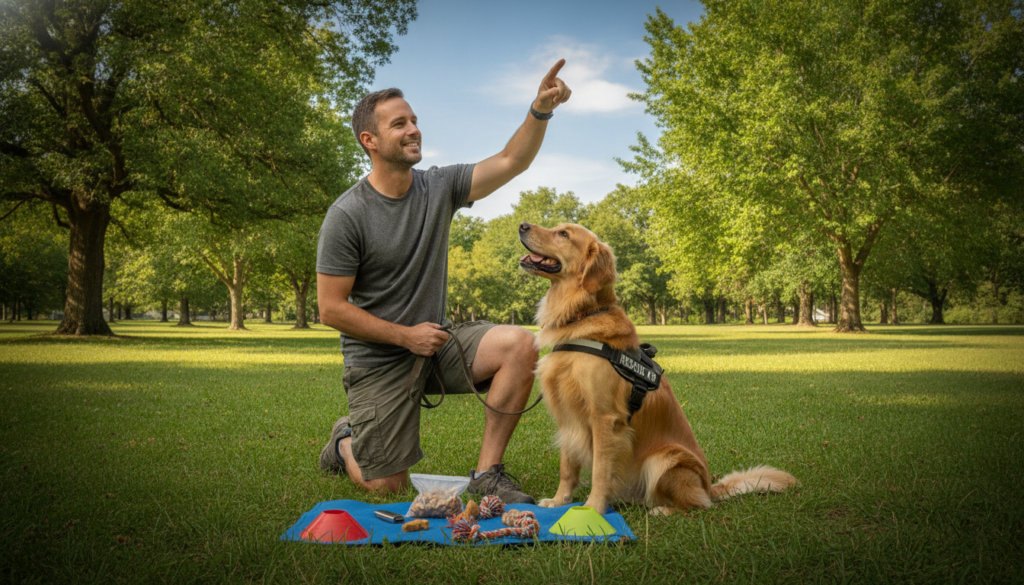
Rescue dogs learn best when lessons feel safe and clear. Start in a quiet room with few distractions. Teach one behavior at a time, reward small steps, and use the same cue words with every household member.
Teach Essential Basic Commands
Begin with your dog’s name. Say it once in a warm voice, then give a treat when your dog looks at you. Add a marker word, such as “yes,” to show the exact moment your dog chooses correctly.
- Use the name, marker word, and reward for attention.
- Lure your dog into “sit,” mark the movement, and give a treat.
- Guide your dog into “down” with a treat close to the floor.
- Call “come” from a short distance, and reward your dog for reaching you.
- Build “stay” with one second of stillness before adding time.
- Teach “leave it” with a closed hand and reward your dog for looking away.
- Use “drop it” during gentle play by trading the toy for a treat.
- Add a release cue, such as “free,” so your dog knows when the exercise ends.
Practice each cue in short sessions. Add distance, movement, and mild distractions one at a time. Keep these commands for rescue dog training calm and upbeat; never call your dog to punish or grab them.
Begin Leash Training Rescue Dogs
Start by pairing the harness and leash with food. Let your dog sniff each item and reward relaxed behavior. Clip the leash on indoors or in a secure yard for brief practice.
Reward your dog for looking at you and walking with a loose leash. If the leash tightens, stop and wait for slack. Avoid pulling your dog toward people or forcing greetings, and choose quiet routes before busy sidewalks.
Keep early walks short and predictable. Leash training rescue dogs takes patience, especially when new sights cause worry. Give your dog space from traffic, unfamiliar dogs, and crowded areas.
Practice House Training and Calm Behavior
Take your dog outside often, including after waking, eating, playing, and sleeping. Supervise closely indoors. Praise your dog right after they eliminate in the correct place, and offer a small reward.
Clean accidents with an enzymatic cleaner. Regular household cleaners may leave odors that draw your dog back to the same spot. Avoid scolding because fear can slow house training.
For calm behavior, place a mat or bed in a quiet area. Toss treats onto it when your dog steps over. Reward lying down, soft eyes, and relaxed breathing. Add a few seconds between rewards as your dog learns to settle.
Behavior Training for Rescue Dogs and Socialization
Rescue dogs need time to feel safe in new settings. Good behavior training for rescue dogs uses calm practice, clear limits, and rewards. Move at your dog’s pace, and let trust grow through steady routines.
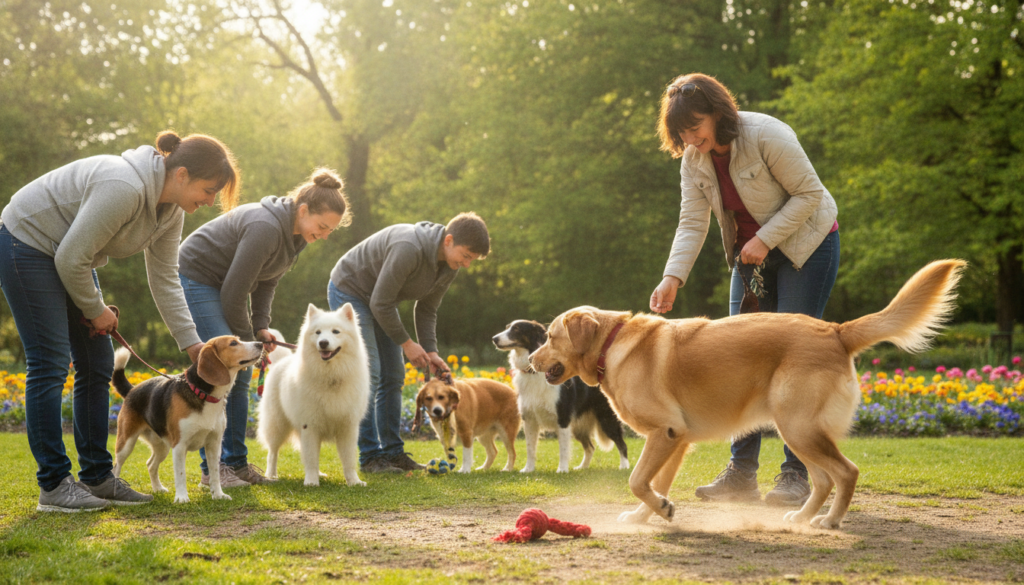
Use Safe Socialization for Rescue Dogs
Socialization for rescue dogs means giving your dog controlled, positive experiences. These experiences may include people, animals, surfaces, sounds, vehicles, gentle handling, and new places. Never force your dog to greet everyone.
Work below your dog’s fear threshold. Keep enough distance from a trigger so your dog can notice it and still take treats. Watch for stiff posture, hiding, lip licking, growling, barking, or escape attempts.
End each session before your dog feels overwhelmed. Use short walks, quiet rooms, and calm exits. After repeated success, slowly reduce the distance or add a mild new challenge.
Address Common Behavior Issues
Start by identifying what happens before the behavior. A visitor, a closed door, a food bowl, or a passing dog may trigger the response. Prevent your dog from practicing it while you teach a safer choice.
- For separation distress, use brief absences and return before panic starts.
- For resource guarding, trade valued items for better rewards. Never grab them by force.
- For fear-based barking or reactivity, add distance and reward quiet attention.
- For jumping or mouthing, pause play and reward four paws on the floor.
- For accidents, keep a regular bathroom schedule and reward outdoor success.
Solving behavior issues in rescue dogs takes patience and careful management. Teach an alternative behavior, such as looking at you, moving to a mat, or dropping an item. Reward that choice right away.
Know When to Get Professional Help
Ask your veterinarian to check sudden behavior changes. Pain, illness, appetite changes, and sleep changes can affect behavior. Serious aggression requires prompt attention, especially when someone has been bitten or your dog cannot settle.
A qualified positive-reinforcement trainer can guide daily practice. A veterinary behaviorist or certified behavior professional can help when safety is at risk or progress has stalled. Choose support that uses humane methods and avoids fear, pain, and intimidation.
Conclusion
Training a rescue dog builds an ongoing relationship based on safety, patience, and clear communication. A steady rescue dog training plan shows your dog what to expect each day. Keep routines predictable, use rewards, and practice useful skills during walks, meals, and quiet time.
Celebrate small gains instead of rushing the process. Set goals based on your dog’s age, health, temperament, and past experiences. Provide daily exercise, mental challenges, rest, and safe social experiences through lifelong training and enrichment.
Trust grows through repeated positive experiences, not pressure. If fear, anxiety, or aggression cannot be managed safely at home, contact a qualified veterinary behaviorist or certified dog trainer. With steady care and support, you can help your rescue dog build confidence and enjoy a secure life with you.