
Can Puppies Have Pork What You Need to Know Before Feeding.
Can puppies have pork? Learn how to serve it safely, which cuts and preparations to avoid, and when pork should stay off your puppy’s menu.
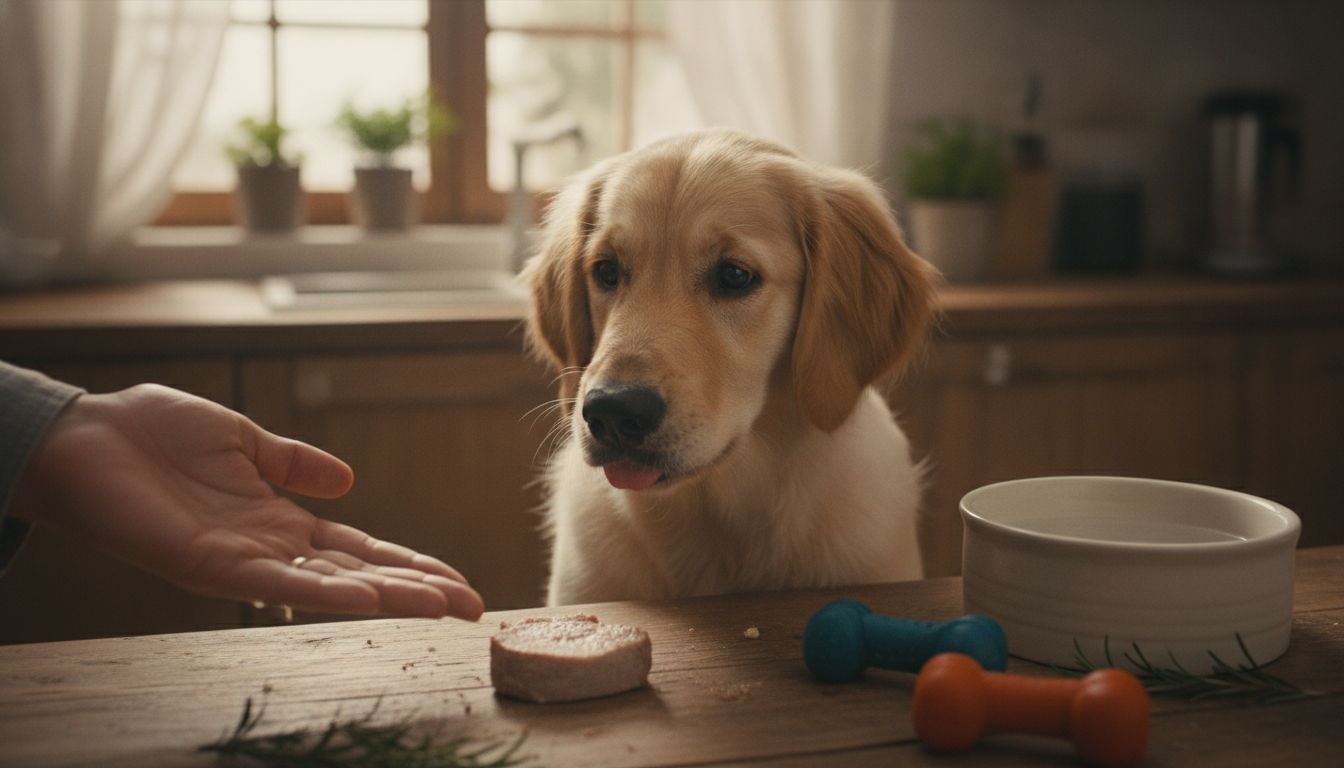
When your puppy watches you during dinner, sharing a bite may feel like a small act of love. But a young dog’s stomach is still developing, so not every human food makes a safe treat.
So, can puppies have pork? Plain, fully cooked, lean pork may be safe for some puppies in small amounts. Offer it only as an occasional treat, never instead of complete and balanced puppy food.
Age, preparation, and portion size matter when you offer pork for puppies. Avoid seasoned pork, fatty cuts, bones, raw pork, and processed products such as bacon, ham, and sausage. Ask your veterinarian before adding pork, especially if your puppy has health or digestive concerns.
can puppies have pork
Feeding pork to puppies can be safe when served with care. Choose a lean, plain, fully cooked, boneless cut as an occasional treat. Your puppy should get most calories from a complete diet made for growth.
When pork may be safe for puppies
Plain pork provides high-quality protein for muscle development. It also contains vitamin B12, zinc, and selenium. These are some of the benefits of pork for puppies.
However, balanced puppy food supplies more dependable nutrition each day. Start with a tiny amount and watch for loose stool, vomiting, or itching. If your puppy tolerates it, offer small pieces from time to time.
Why preparation and portion size matter
Cook pork until it is no longer pink in the center. Remove visible fat, bones, and tough pieces before serving. Cut the meat into small bites your puppy can chew easily.
Large portions can add too many calories and upset your puppy’s nutrient balance. Keep treats, including pork, to a small share of daily food. This lets you enjoy the benefits of pork for puppies without replacing essential meals.
When you should avoid feeding pork
Do not give pork cooked with onions, garlic, heavy spices, sauces, or excess salt. Avoid bacon, sausage, ham, pork rinds, and other processed products. These may contain too much fat, sodium, or added ingredients for a young dog.
Raw or undercooked pork can carry harmful germs and parasites. Skip it, along with pork bones, which can splinter, cause choking, or block the intestines.
Is pork safe for puppies at every age?
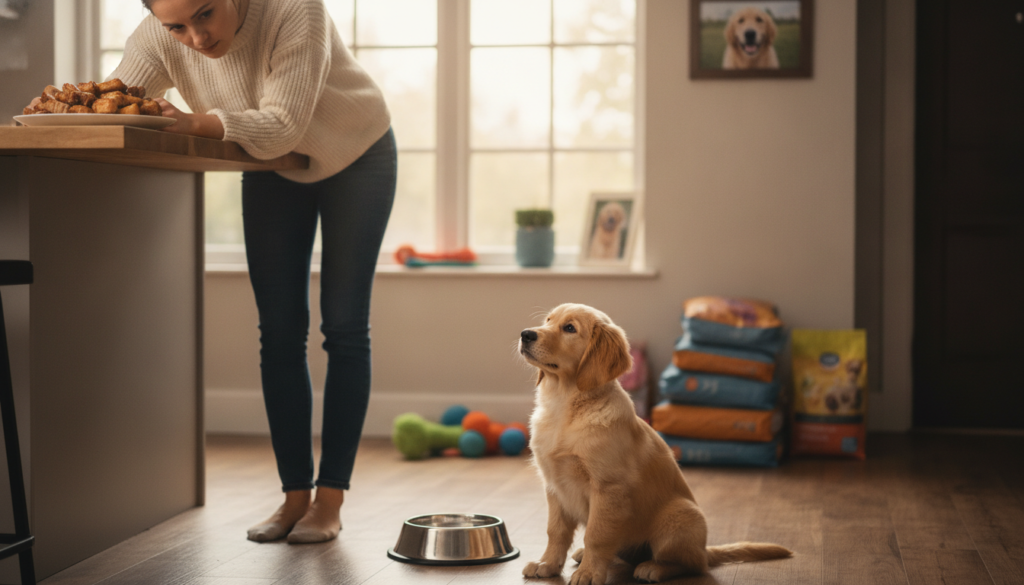
Age, size, health, and weaning stage affect how your puppy handles new food. Very young puppies should have their mother’s milk or a veterinarian-approved formula. Wait until your puppy is fully weaned and eating a complete puppy diet before offering optional foods.
Is pork safe for puppies with vomiting, diarrhea, food sensitivities, or medical conditions? It may not be. These puppies may react poorly to rich foods or new proteins. Ask your veterinarian before adding pork to the bowl.
Growing puppies need balanced protein, fat, calcium, phosphorus, and calories. Pork should remain a small extra, not a main part of the pork and puppy diet. Too much pork can replace nutrients found in complete puppy food.
When introducing pork, start with a tiny portion. Offer no other new foods during the next few days. Watch your puppy for loose stool, vomiting, itching, or changes in energy.
Stop feeding pork and contact your veterinarian if concerning signs appear.
How to prepare pork for puppies
Choose a lean cut, such as pork tenderloin or trimmed pork loin. Cook it fully without oil, salt, or seasoning. Let it cool before offering your puppy a small portion.
Choose plain, fully cooked pork
Choose fresh pork with little visible fat. Cook it until the center is fully done, with no raw or pink areas. Never serve raw or partly cooked pork to your puppy.
Wash your hands, cutting board, knife, and other surfaces after handling raw meat. This helps limit the spread of harmful bacteria during meal preparation.
Remove bones, fat, and seasoning
Check the cooked meat closely and remove every bone, piece of skin, gristle, and layer of fat. Bones can splinter or cause an intestinal blockage. Fat may trigger loose stools, vomiting, or stomach pain.
Keep feeding pork to puppies simple. Avoid garlic, onions, chives, salty marinades, spicy rubs, and rich sauces. These ingredients may harm dogs or upset your puppy’s digestive system.
Cut pork into safe, bite-sized pieces
Cut the cooled pork into pieces that match your puppy’s mouth size. Small, soft pieces are easier to chew and swallow. Watch your puppy eat to lower the risk of choking.
Use plain pork for puppies as an occasional treat, not a replacement for a complete puppy diet. Start with a tiny amount and watch for signs of stomach upset.
Risks of giving puppies pork
Puppies have sensitive stomachs, so pork needs careful handling. The risks of giving puppies pork depend on the cut, cooking method, serving size, and added ingredients. Fatty or unsafe pork can cause more than a mild stomachache.
High Fat Content and Digestive Upset
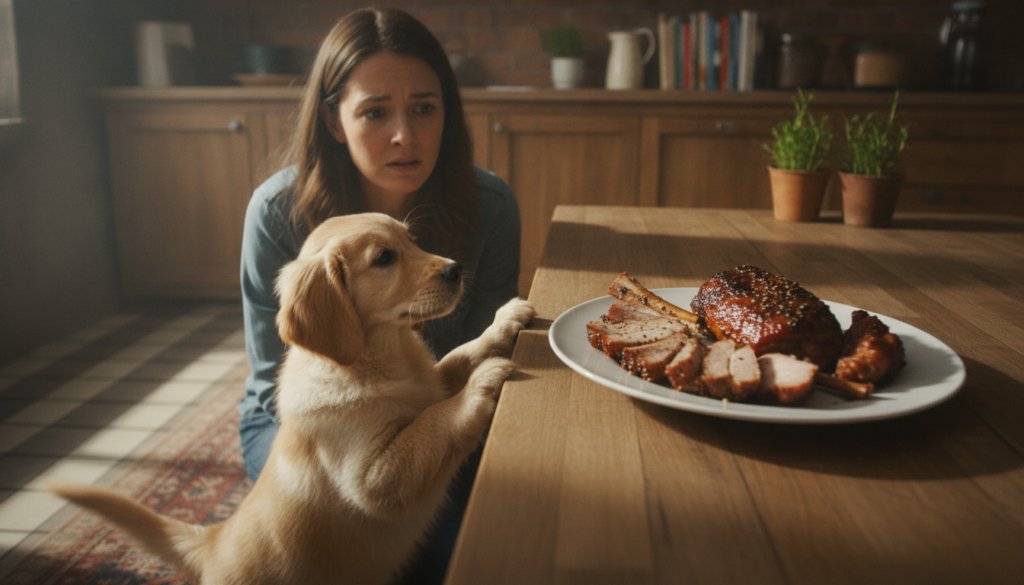
Fatty pork may cause vomiting, diarrhea, gas, or painful cramps. Large amounts can cause weight gain and raise pancreatitis risk in susceptible dogs. Watch for a swollen belly, repeated vomiting, weakness, or signs of pain.
Bacon, sausage, pork belly, and greasy scraps often have too much fat and salt for puppies. Processed pork may contain preservatives, garlic, onion, or strong spices. These ingredients can upset your puppy’s stomach and may harm puppies in larger amounts.
Raw or Undercooked Pork and Foodborne Illness
Raw or undercooked pork may carry harmful bacteria and parasites. These germs can cause vomiting, diarrhea, fever, poor appetite, or low energy. Your puppy may become ill after eating contaminated meat or licking unsafe juices.
Food safety matters during preparation. Wash your hands, knives, plates, and cutting boards after handling raw pork. Keep the meat away from your puppy’s food and water bowls. Puppies and pork consumption require extra care because young dogs can dehydrate quickly.
Choking, Intestinal Blockage, and Bone Hazards
Cooked bones can splinter into sharp pieces. Bones of any type may cause choking, mouth injuries, intestinal blockage, or a tear in the digestive tract. Small bone fragments can be hard to spot in meat scraps.
Keep skewers, wrappers, string, and large chunks away from your puppy. If your puppy eats unsafe pork, do not induce vomiting unless a veterinarian or animal poison control professional tells you. Follow their directions closely and seek help for trouble breathing, severe pain, repeated vomiting, or sudden weakness.
How much pork can your puppy eat?
Give pork only as an occasional treat, not as a regular puppy meal. A common guideline limits treats and other extras to 10 percent of daily calories. Complete and balanced puppy food should provide at least 90 percent.
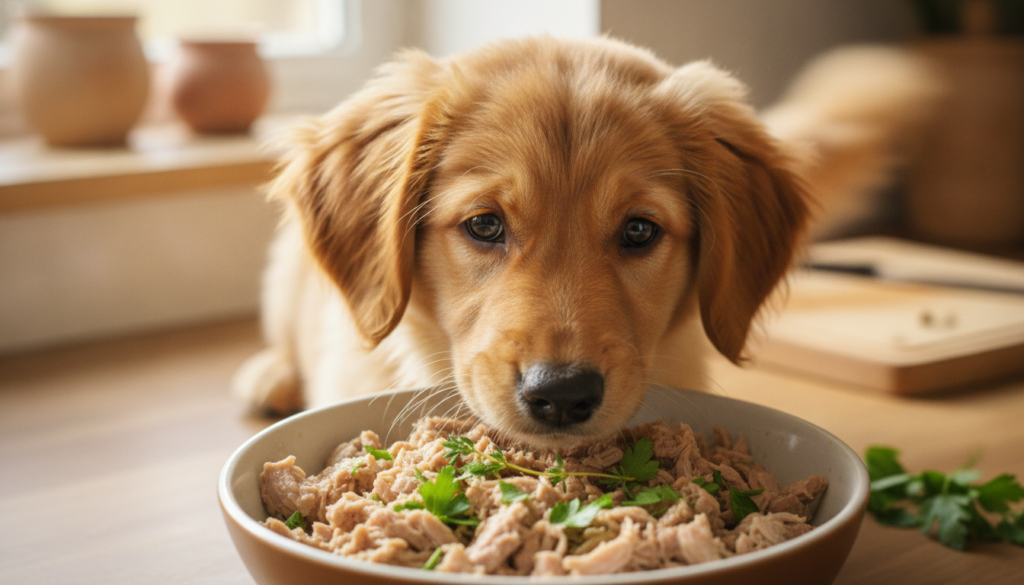
Calorie needs differ by breed, age, weight, activity level, and health. Ask your veterinarian to choose a safe portion for your puppy. Small breeds may need an even smaller serving.
When giving pork for puppies, start with one tiny piece. Watch for loose stool, vomiting, gas, or a change in appetite. Avoid adding pork on the same day as several other new foods.
Keep the pork and puppy diet plan simple and measured. Never use pork to replace a meal or nutrients from balanced puppy food.
Pork treats for puppies and healthier alternatives
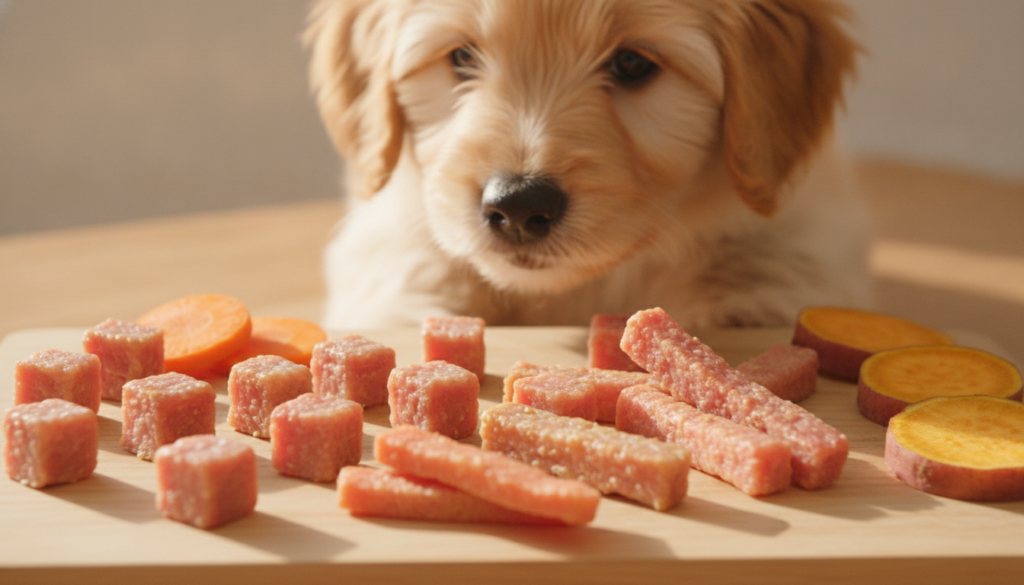
When shopping for pork treats for puppies, read the label before buying. Look for identifiable pork, moderate fat, low sodium, calories per piece, and clear feeding directions. Choose treats that fit your puppy’s mouth and daily calorie needs.
Check quality standards; reliable manufacturers explain ingredient testing and production practices. Jerky and dehydrated treats can hide extra calories, so offer small portions. The benefits of pork for puppies are limited when treats replace balanced puppy food.
How to choose commercial pork treats
Choose treats with a short ingredient list and plain preparation. Products made with pork, rice, or one simple vegetable are easier to assess. Follow package directions and reduce meals if treats add extra calories.
Ingredients to avoid in pork-based treats
Avoid treats with onion, garlic, xylitol, very high salt, rich coatings, heavy preservatives, or greasy sauces. These ingredients may upset your puppy’s stomach or cause serious health risks. Skip treats containing bones or large, hard pieces that could cause choking.
Other protein options for puppy rewards
Use tiny pieces of plain, cooked chicken, turkey, lean beef, or egg. Veterinarian-approved training treats can work well, too. Keep rewards within your puppy’s daily calorie limit, and provide fresh water whenever you offer treats.
What to do if your puppy eats unsafe pork
Remove any remaining pork from your puppy’s reach. Note what your puppy ate, then contact your veterinarian for advice. This matters if the pork was raw, fatty, seasoned, processed, or served with bones.
The risks of giving puppies pork depend on the food, amount, and puppy’s size. Do not give home remedies or human medicine unless your veterinarian directs you.
Signs of digestive problems or food poisoning
Watch your puppy for vomiting, diarrhea, excessive drooling, loss of appetite, or belly discomfort. Weakness, fever, and unusual behavior may signal a serious problem.
Even if you wonder, “is pork safe for puppies,” unsafe preparation can cause illness. Keep fresh water available, but do not force your puppy to eat or drink.
Symptoms that require immediate veterinary care
Seek urgent veterinary care for repeated vomiting, bloody diarrhea, a swollen or painful abdomen, choking, or trouble breathing. Collapse, severe tiredness, pale gums, or suspected bone ingestion need prompt attention.
Information to share with your veterinarian
Tell your veterinarian your puppy’s age, weight, breed, and current symptoms. Share the pork type and amount, its preparation, and when your puppy ate it.
Keep the package or ingredient list if available. Mention bones, sauces, spices, and preservatives. These details help your veterinarian assess the risks of giving puppies pork and choose the safest care.
Conclusion
Can puppies have pork? Sometimes, yes. A healthy, weaned puppy may eat a small piece of plain, lean pork that is fully cooked and boneless. Offer pork only as an occasional treat, never as a replacement for a complete puppy diet.
For safe puppies and pork consumption, avoid fatty cuts, seasoning, sauces, bacon, sausage, ham, raw meat, and undercooked pork. Never offer bones because they can cause choking, broken teeth, or an intestinal blockage.
Introduce pork slowly, and keep the portion small. Watch for vomiting, diarrhea, weakness, belly pain, or other changes after your puppy eats pork. Stop feeding pork if any symptoms develop.
Ask your veterinarian before offering pork to a very young puppy or one with a health condition. Your veterinarian can also guide you if your puppy shows signs of illness after eating pork.