
How Long Are Puppies Pregnant For Tips and Timeline
Wondering how long are puppies pregnant for? Learn the typical dog pregnancy timeline, key stages, and tips to support your dog before birth with confidence.
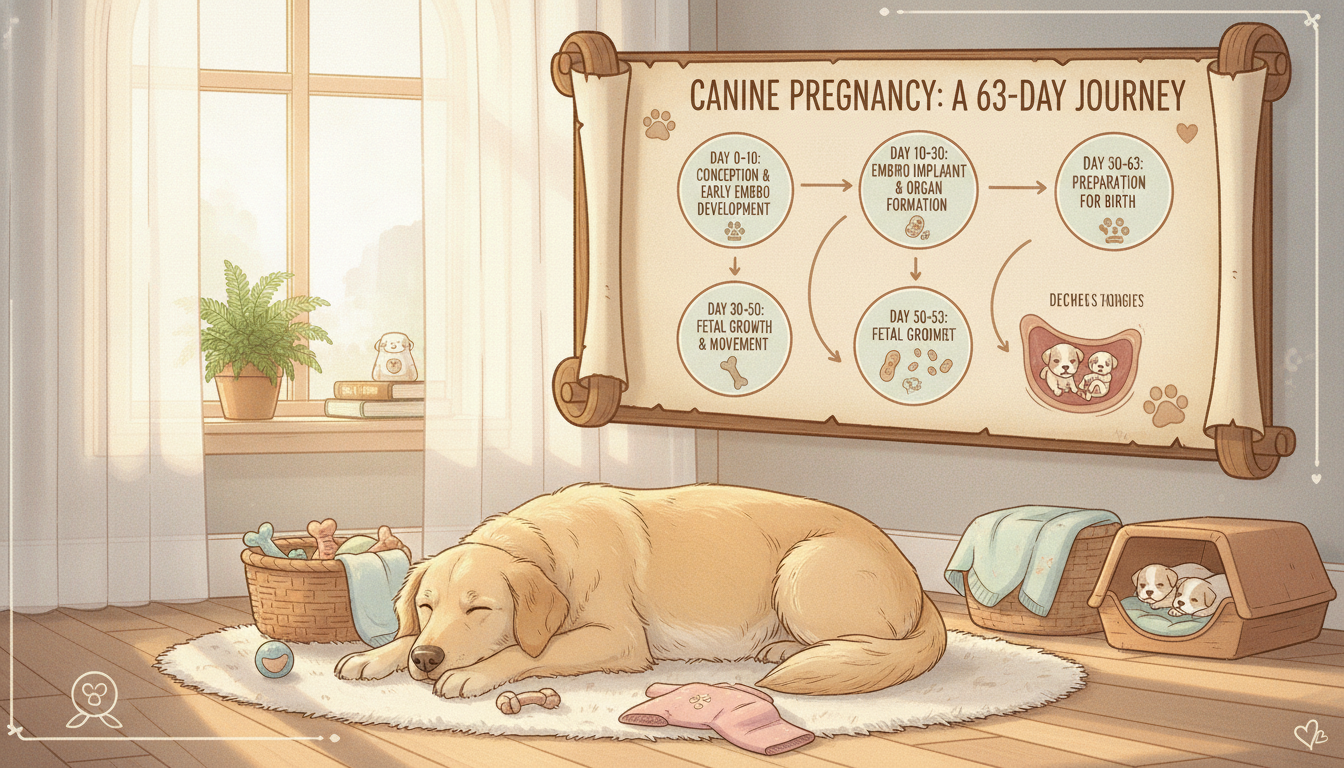
Waiting for a new litter can bring excitement, hope, and plenty of questions. The simple answer to “how long are puppies pregnant for” is about 63 days from ovulation. That equals close to two months, though the expected birth date may shift when breeding dates remain unclear.
This guide gives you a clear timeline in weeks. You will see the three stages of pregnancy, common body changes, and key signs to watch. A dog pregnancy may raise heart rate, breathing rate, and hormone levels as the litter develops.
Your dog may need veterinary exams, imaging, or lab tests during this time. Dr. Jenna Dockweiler and Dr. Aly Cohen stress early veterinary support when health or birth concerns appear. A dog pregnant with a large litter may need closer monitoring.
You will also learn what to prepare before delivery. Difficult labor, called dystocia, needs immediate veterinary care. Do not wait through worsening pain, weakness, or stalled labor. With timely guidance, you can support safer birth and strong newborn care.
How Long Are Puppies Pregnant For?
The usual answer is 63 days, but the full dog gestation period can range from 57 to 72 days. This window reflects natural differences in conception and fetal development. Most dogs deliver near the average, yet your veterinarian should guide any health decisions.
Average Dog Gestation Period
A breeding-date estimate usually falls within 63 days, plus or minus 7 days, from the first mating. This broad range helps explain why a calendar date cannot promise the exact birth day. Your dog may give birth sooner or later while remaining within a normal pregnancy window.
Why Breeding Dates Do Not Predict Birth Exactly
Mating may happen several days before ovulation. Sperm can survive inside the reproductive tract, while the egg needs about 2 to 3 days to mature after ovulation. As a result, conception may not match the breeding date.
How Ovulation Helps Estimate the Due Date
Progesterone testing helps your veterinarian identify ovulation. With that information, the expected birth date often falls within 63 days, plus or minus 1 to 2 days. This method gives you a more useful timeline than mating records alone.
The Dog Pregnancy Timeline
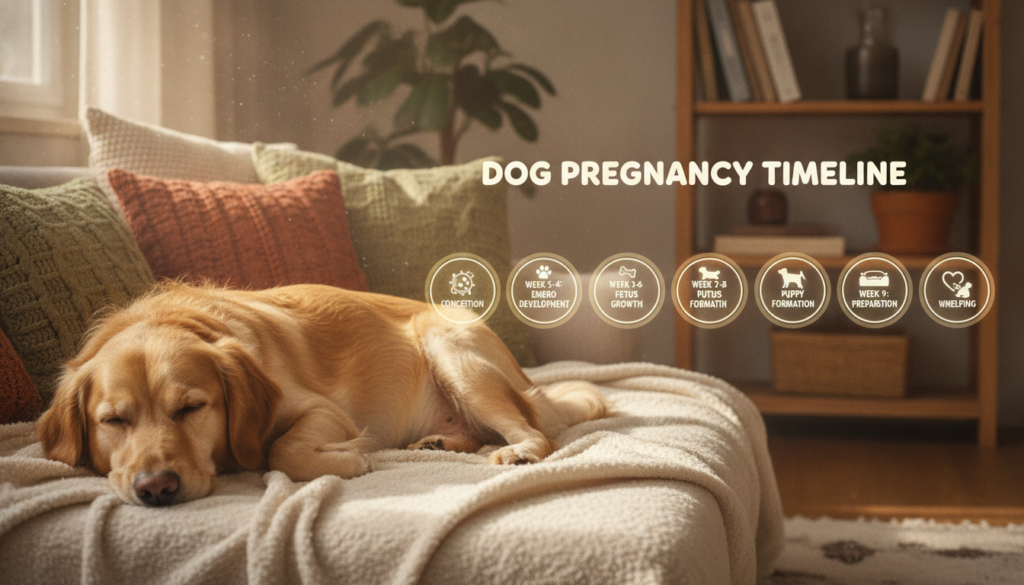
A clear timeline helps you track each stage of pregnancy without guesswork. The gestation period has three trimesters, and each lasts close to three weeks. Fetal development shifts quickly near the end, so your dog’s needs may change with time.
Early Pregnancy and Fetal Development
During weeks one through three, visible signs may stay limited. Your dog may vomit at times, yet appetite and energy often remain steady. Inside the uterus, each fetus begins early development.
By about 40 days, the fetus enters a rapid growth phase. This stage places greater demands on the mother’s body. Your veterinarian can advise on nutrition, rest, and safe activity.
Mid-Pregnancy Body and Appetite Changes
From weeks four through six, abdominal swelling may become easier to notice. Appetite changes can also appear as the litter grows. The developing puppies need more space and nutrients.
- Early signs may remain subtle.
- Growth speeds up after 40 days.
- Abdominal changes become clearer.
- Near the end, your dog prepares for birth.
Signs Your Dog May Be Pregnant
Your dog may show small clues before a litter becomes visible. Some signs appear within the first few weeks, while others develop near birth. Dog pregnancy symptoms can also resemble stress, illness, or a normal heat cycle.
Early Signs of Dog Pregnancy
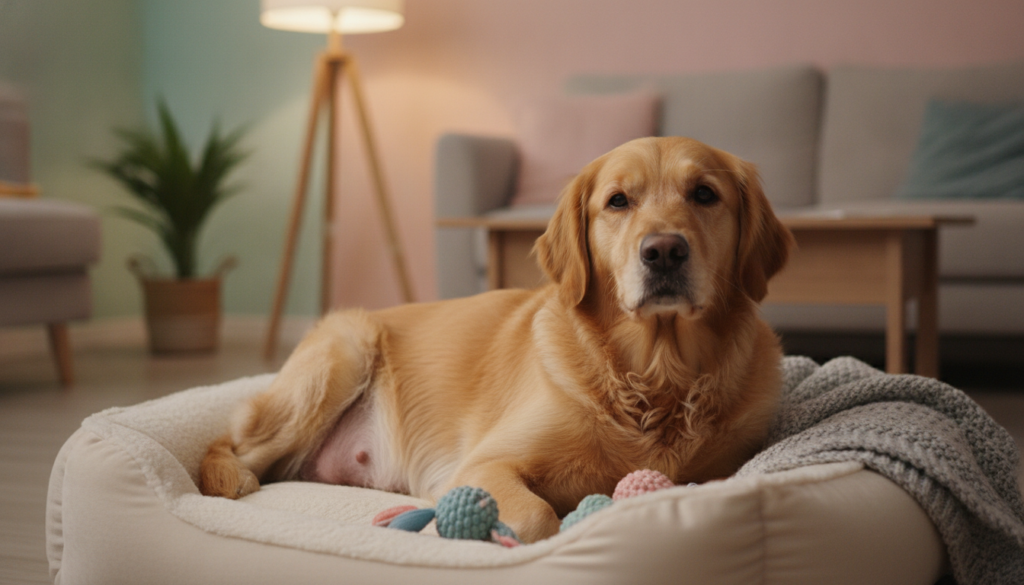
Vomiting, tiredness, enlarged nipples, appetite shifts, clear discharge, and extra affection may occur early. Behavior can change too. Your dog may seek more contact or rest instead of joining usual activities.
Late Pregnancy Changes to Watch For
As the body changes, weight gain and a wider abdomen may become clear. Darker teats, visible movement, and nesting can follow. Nesting behavior may include digging, blanket dragging, clinginess, or irritability.
- Watch appetite, energy, and daily behavior.
- Note discharge, weight, and abdominal growth.
- Keep the resting area calm and clean.
- Record unusual signs before a veterinary visit.
Pseudopregnancy can create similar signs without developing puppies. A dog pregnant with a litter still needs professional assessment. Contact your veterinarian if appetite loss, weakness, pain, or unusual discharge appears. Symptoms alone cannot confirm pregnancy.
How a Veterinarian Confirms Pregnancy
Clinical testing gives you clearer answers than behavior or body changes alone. Your veterinarian can select a test based on breeding dates, health history, and the expected gestation period. This approach also helps protect the dog and developing litter.
Ultrasound, Hormone Testing, and X-Rays
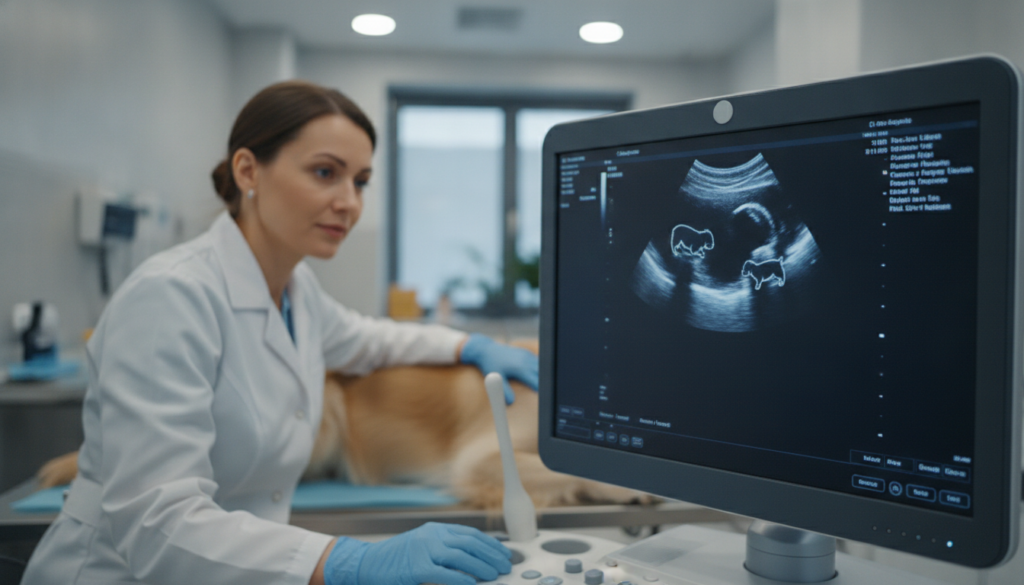
Your veterinarian may use an abdominal ultrasound near 21 days after breeding. This scan can identify embryos, assess each fetus, and check early development. A blood test may detect the hormone relaxin between 22 and 27 days. Small litters can reduce test accuracy.
Late in the period, X-rays can show fetal skeletons and help estimate litter size. Abdominal palpation may also reveal uterine swellings, though skill and timing affect results. These findings help your veterinarian plan safe delivery support for your dog pregnant with a litter.
- Ultrasound checks development.
- Blood testing detects relaxin.
- X-rays help count puppies.
- Your veterinarian reviews every result.
Dr. Jenna Dockweiler brings veterinary genetics experience from Embark Veterinary, Inc. Dr. Aly Cohen works with Cornell’s Richard P. Riney Canine Health Center, with interests in surgery and emergency medicine. Their fields reflect the value of expert care for dogs.
How to Care for Your Pregnant Dog
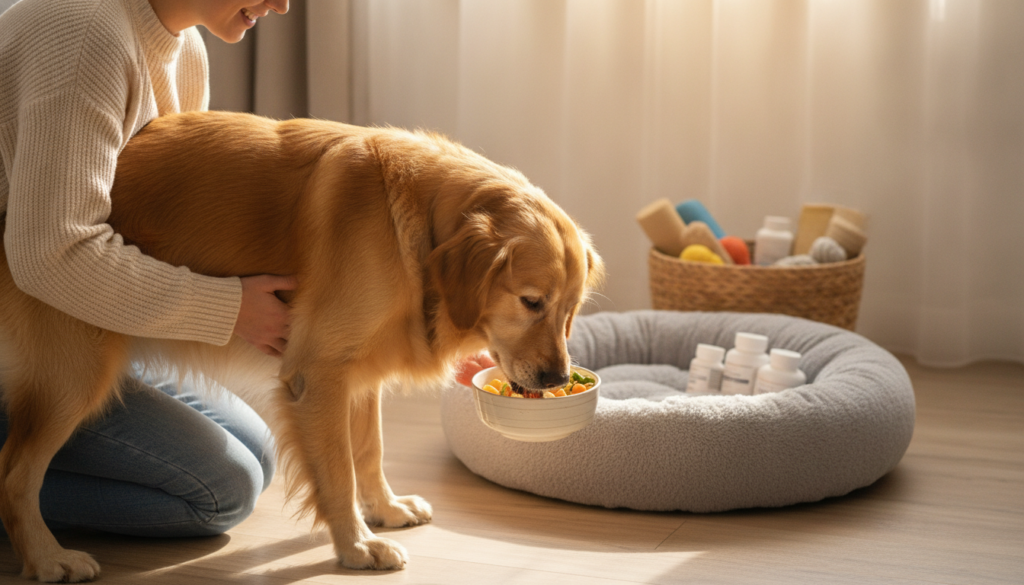
Steady nutrition and gentle care help protect your dog’s health during pregnancy. A healthy weight should rise by about 15% to 25% from breeding to birth. Track body condition, appetite, and energy each week instead of relying on weight alone.
During the first two trimesters, an appropriate adult diet often meets daily needs. After about 40 days, calorie needs may increase by 25% to 50%. Your veterinarian may suggest a growth or puppy diet. Change from the current dry dog food over 7 to 10 days to reduce stomach upset.
Offer several small meals as the abdomen expands. After birth, nursing dogs may need two to four times their usual calories. Fresh water should remain available at all times.
- Choose balanced dry dog food with veterinary guidance.
- Do not add supplements or switch dry dog food without approval.
- Confirm parasite control is safe during pregnancy.
- Delay modified live vaccines unless disease risk outweighs concern.
- Call your veterinarian when health, appetite, or energy changes sharply.
Preparing for Your Dog to Give Birth
A calm setup can make delivery safer and less stressful. Prepare the whelping space several days before your pregnant dog is ready to give birth. Choose a quiet room away from heavy traffic, children, and other pets.
Setting Up a Comfortable Whelping Area
Use a low-sided whelping box with enough room for the mother to turn, stretch, and rest. The sides should support the newborn puppies while allowing easy entry and exit. Introduce the space early so it feels familiar during giving birth.
Layer the box with newspaper, thin sheets, or puppy pads. These materials make cleanup easier when fluids and soiled bedding collect. Keep clean towels, blankets, nail scissors, and a puppy carrier within reach.
Planning Supplies and Veterinary Support
Labor often lasts three to 12 hours, based on litter size. Caroline Ward recommends saving emergency contact details and arranging transportation in advance. Keep keys, a phone, and supplies ready.
- Check the whelping box each day.
- Replace damp or dirty bedding quickly.
- Keep the veterinarian’s number visible.
- Watch the mother without crowding her.
The Stages of Dog Labor
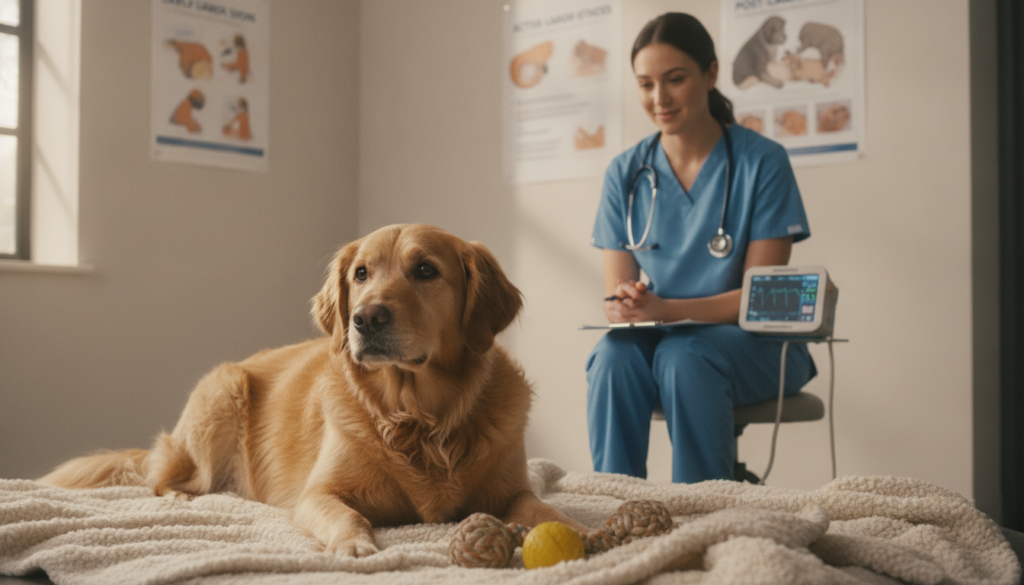
Birth follows three stages, each with signs you can track. Watch your dog closely, but allow quiet space during the whelping process. The three stages include uterine preparation, puppy delivery, and placenta passage.
Contractions and Cervical Dilation
Stage I begins when labor starts with uterine contractions, cervical dilation, nesting, panting, and restlessness. This stage often lasts 6 to 12 hours, but it may continue for 24 to 36 hours. Dogs may show a rectal temperature below 99°F within 24 hours of birth, though this sign does not appear in every case.
Giving Birth to the Puppies
Stage II brings the delivery of each puppy. Puppies may arrive 0 to 30 minutes apart, while gaps near two hours can still fall within a normal pattern. Head-first or tail-first entry can both be normal when all legs extend straight. A clear or white sac may signal that a puppy is near.
Passing the Placenta After Birth
Stage III involves placenta passage soon after each birth. Two uterine horns may deliver two puppies before two placentas appear. Green discharge should be followed quickly by a fetus, since it may signal placental separation.
What to Expect During and After Whelping
Once the final puppy arrives, your focus shifts from active labor to careful recovery. Keep watch from a respectful distance. Some mothers progress more smoothly when the room stays quiet during giving birth.
When to Contact Your Veterinarian
A pause of up to two hours between puppies can occur. Call your veterinarian when more than two hours pass, a puppy appears stuck, or the pregnant dog stops making progress. A mother may give birth again after a short rest, but sudden weakness needs prompt care.
After giving birth, lochia may look green, red, or brown. This discharge usually lasts about three weeks and may continue up to eight weeks. It should gradually darken and decrease. Heavier flow or a foul odor can point to infection.
A retained placenta may go unnoticed because dogs often eat placentas quickly. This can cause mild diarrhea. Contact your veterinarian if your dog shows weakness, ongoing illness, fever, or unusual behavior during pregnancy recovery. These signs matter even when the puppies seem well.
Conclusion
Most dogs finish pregnancy near 63 days from ovulation. Mating dates can widen the expected birth window, so mark each day on your calendar.
Track ovulation, veterinary visits, and body changes to build a reliable plan for the litter and mother. Ultrasound, blood testing, palpation, and late-pregnancy X-rays can confirm pregnancy and help your care team prepare to welcome puppies.
Balanced meals, clean bedding, emergency supplies, and a transport plan support safer birth. Learning the three stages of labor helps you recognize steady progress. If birth stops, a puppy seems stuck, or discharge becomes heavy or foul, contact your veterinarian at once. Prompt action protects dogs, the mother, and the newborn puppy after birth.