
How to Prepare for a New Puppy Tips for First-Time Owners.
Learn how to prepare for a new puppy with practical tips for puppy-proofing your home, choosing essentials, building routines, and starting training today.
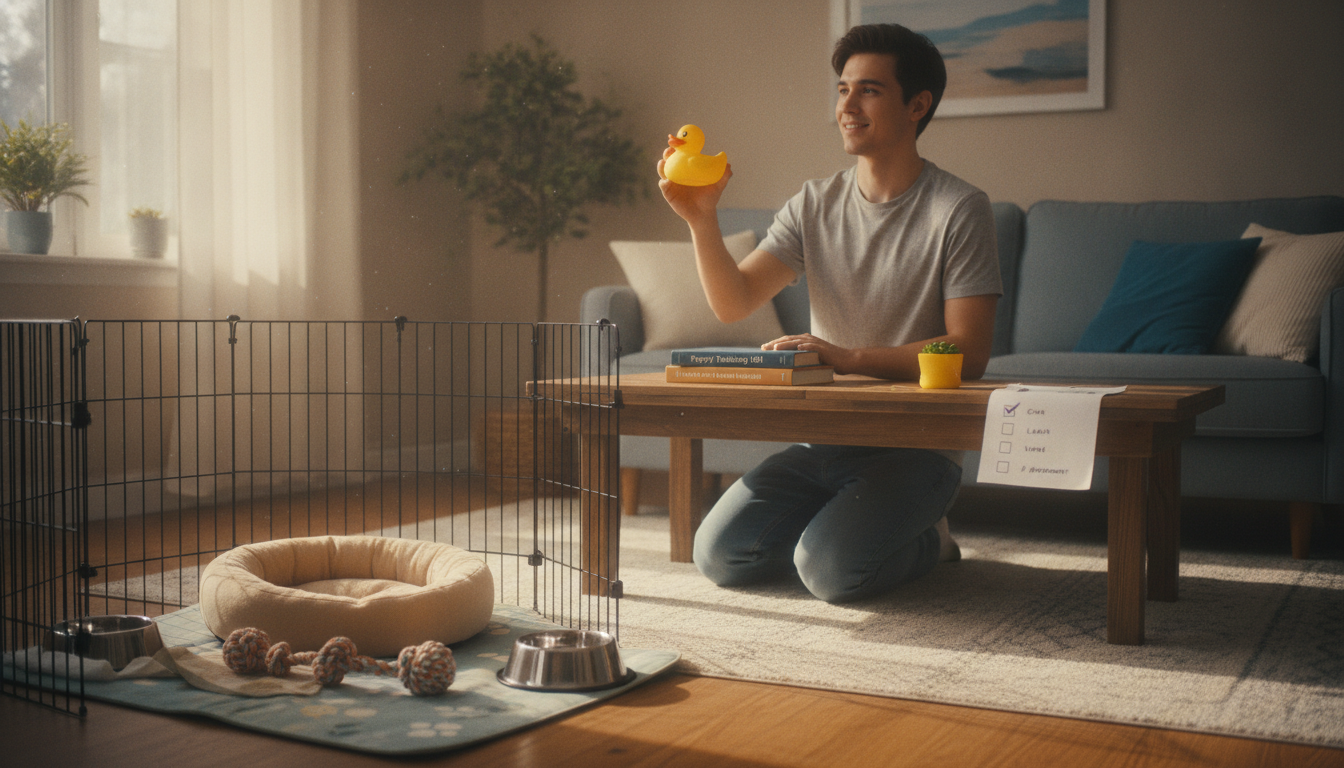
Bringing home a puppy feels exciting, but it also changes your daily routine. Learning how to prepare for a new puppy helps create a safe, calm, welcoming home.
Before your puppy arrives, gather basic supplies and remove household hazards. Plan where your puppy will eat, sleep, and play.
Arrange a veterinary visit and choose a simple schedule for meals, potty breaks, rest, and training.
This puppy readiness guide sets realistic expectations for the first few weeks. Patience, supervision, and consistency support healthy habits and help you build trust. These first-time puppy owner tips can make the change easier for both of you.
How to Prepare for a New Puppy Before Bringing Them Home
Getting ready for a puppy begins before the trip home. Learn what your puppy needs each day, including food, sleep, training, and care. Good planning can make the first weeks calmer for both of you.
Research Your Puppy’s Breed, Size, and Temperament
Begin with careful breed research. Learn your puppy’s expected adult size, exercise needs, coat care, and grooming schedule. Find out whether the breed is calm, alert, playful, or highly active.
Trainability can differ among breeds and individual dogs. Read about health risks, such as hip problems, allergies, breathing concerns, or eye disease. Ask the breeder or rescue group for health records and details about your puppy’s parents.
Schedule Veterinary Care and Pet Insurance
Ask for complete vaccination and deworming records before your puppy arrives. These records help your veterinarian plan future doses and set safe limits for public outings.
Schedule an initial exam within the first few days at home. Your veterinarian can check your puppy’s weight, teeth, heart, skin, and overall growth. Discuss flea, tick, heartworm, and intestinal parasite prevention in your puppy veterinary care plan.
Compare pet insurance plans before your puppy needs treatment. Review deductibles, waiting periods, yearly limits, exclusions, and coverage for hereditary conditions. A clear plan can help you handle unexpected medical costs.
Set Expectations for the First Few Weeks
A young puppy may wake during the night, have accidents, chew furniture, or cry when left alone. These behaviors are common during early adjustment. Your puppy needs close supervision, regular potty breaks, and safe items to chew.
Keep the first days simple. Use steady meal times, short training sessions, and plenty of quiet sleep. Trust grows through repeated care, gentle handling, and clear household rules.
Progress may seem slow at first. Your puppy is learning where to potty, how to rest, and what behavior earns praise. Patience and routine help build strong habits over time.
Preparing Your Home for a Puppy
Preparing your home for a puppy begins before your new pet arrives. Walk through each room at your puppy’s eye level. Find items your puppy could chew, swallow, or pull down.
Puppy-Proof Rooms and Potential Hazards
Store medicines, cleaners, and small objects in closed cabinets. Keep chocolate, grapes, raisins, onions, and products with xylitol out of reach. These foods can cause serious illness in dogs.
Secure electrical cords with cord covers, and keep phone chargers off the floor. Remove toxic plants from rooms your puppy can enter. Use a trash container with a tight lid to block food scraps and wrappers.
Puppy-proofing may require gates at stairs, doorways, and rooms with fragile items. Check window cords, low shelves, and loose rugs. Close cabinets after each use because curious puppies learn fast.
Create a Safe Puppy Zone
Set up a safe puppy area before the first day. A crate or exercise pen offers a calm place for rest and supervised play. Choose washable flooring, such as a vinyl mat, for easy cleanup.
Place fresh water, approved chew toys, and a comfortable bed inside the zone. Keep the crate away from loud appliances and busy walkways. Your puppy should rest without losing sight of you.
Use the area when you need to cook, clean, or step away briefly. Check the space often, and remove damaged toys or loose bedding.
Plan Where Your Puppy Will Eat, Sleep, and Play
Choose one feeding spot in a low-traffic area. Keep food in a sealed container, and wash bowls each day. A fixed location can help your puppy learn a steady meal routine.
Decide where your puppy will sleep each night. Keep the crate near your bed at first to notice whining or restlessness. Select a play area with room for movement and safe toys.
Plan bathroom breaks before your puppy comes home. Take your puppy to the same outdoor spot when possible. Clear access can support early house training and make daily care easier.
New Puppy Checklist: Puppy Care Essentials to Buy
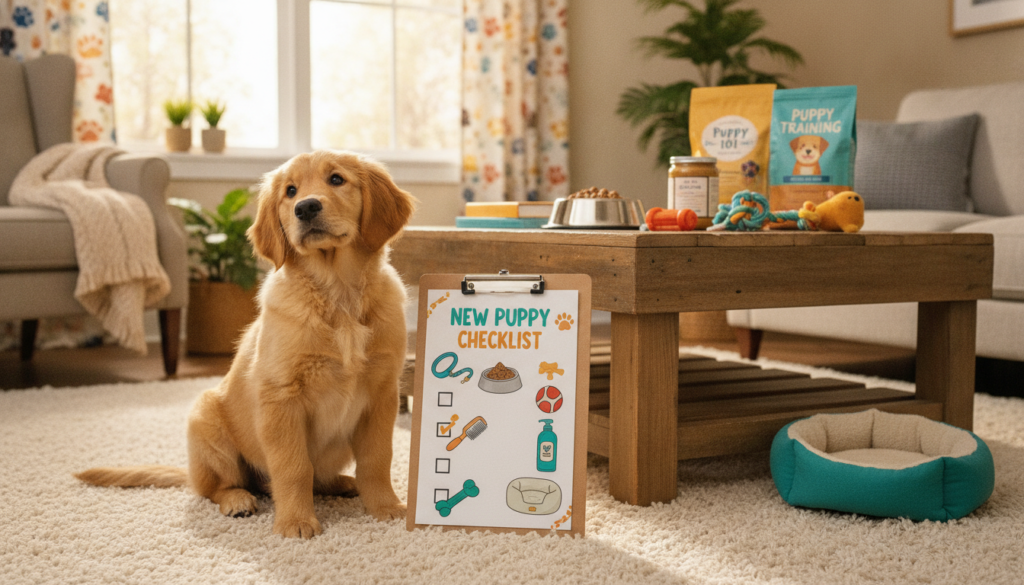
A thoughtful new puppy checklist helps you shop before your puppy arrives. Choose safe items that fit your puppy’s age, size, and daily routine. Focus on puppy care essentials for feeding, sleep, training, hygiene, and safe play.
Food, Water, and Feeding Supplies
Select nutritionally complete puppy food for your puppy’s life stage and expected adult size. Ask your veterinarian if your puppy needs a special formula. Use stainless steel or ceramic bowls because they are durable and easy to clean.
- Measuring cups for accurate portions
- Fresh water bowl with a stable base
- Small training treats with simple ingredients
- Airtight container for storing food
Measured meals can support healthy growth and make house training easier. Keep treats small so they do not replace balanced meals.
Crate, Bedding, and Cleaning Supplies
Choose a crate that lets your puppy stand, turn around, and lie down easily. A divider can adjust the space as your puppy grows. Add washable bedding that feels comfortable without loose parts.
- Washable crate mat or blanket
- Enzymatic accident cleaner
- Paper towels and washable cleaning cloths
- Waste bags and a small disposal container
Enzymatic cleaner removes odors that may draw your puppy back to the same spot. Avoid bedding with strings, foam pieces, or stuffing your puppy can swallow.
Collar, Identification, and Walking Gear
Buy a lightweight collar with room for two fingers between it and your puppy’s neck. Add an identification tag with your phone number. Ask your veterinarian or shelter about microchip registration, and keep the contact details current.
A well-fitted harness can protect your puppy’s neck during early walks. Choose a standard leash for steady control. Skip retractable leashes during early training because they can make distance and safety harder to manage.
Toys and Grooming Tools
Safe chew toys can ease teething and guide your puppy away from furniture. Pick toys made for your puppy’s size and chewing strength. Inspect each toy often, and remove it if it cracks, splinters, or loses small pieces.
- Rubber food-stuffable toy
- Soft toy for supervised play
- Puppy-safe grooming brush
- Nail clippers made for small or large dogs
- Gentle puppy shampoo
- Dog toothbrush and veterinary-approved toothpaste
These puppy supplies support clean teeth, healthy skin, and regular handling. Avoid rawhide, brittle plastic, sharp edges, and items your puppy can swallow.
Getting Ready for a Puppy’s First Day and Night
Welcoming a new puppy should feel calm rather than crowded. Prepare a safe carrier or secured crate for the ride home, plus a towel, waste bags, and paper towels. Keep the trip quiet, and avoid stops where other dogs gather.
When you arrive, take your puppy to the approved potty area before entering the house. Praise any success. During the first day with a puppy, show a few spaces at a time and supervise closely.
- Use the same food your puppy has been eating.
- Provide fresh water in a stable bowl.
- Keep small objects, cords, and unsafe plants out of reach.
- Give your puppy quiet breaks in the crate or safe zone.
Ask friends and family to wait before visiting. A new home has many sights, sounds, and smells for your puppy to process. Short introductions help your puppy feel secure without causing too much stress.
Take your puppy outside or to the approved potty area often. Offer a trip after waking, eating, drinking, playing, and napping. Watch for sniffing, circling, or restlessness, which may signal that your puppy needs to go.
A simple first night puppy routine can ease this change. Let your puppy rest near your bed if that supports calm sleep. If crying starts, check for a potty need and respond with a quiet voice.
Keep nighttime trips brief and boring. Use low lights, avoid play, and return your puppy to the sleeping area after the potty break. Comfort your puppy without giving unrestricted access to the home or teaching that every cry starts an exciting session.
Puppy Training Preparations for the First Weeks
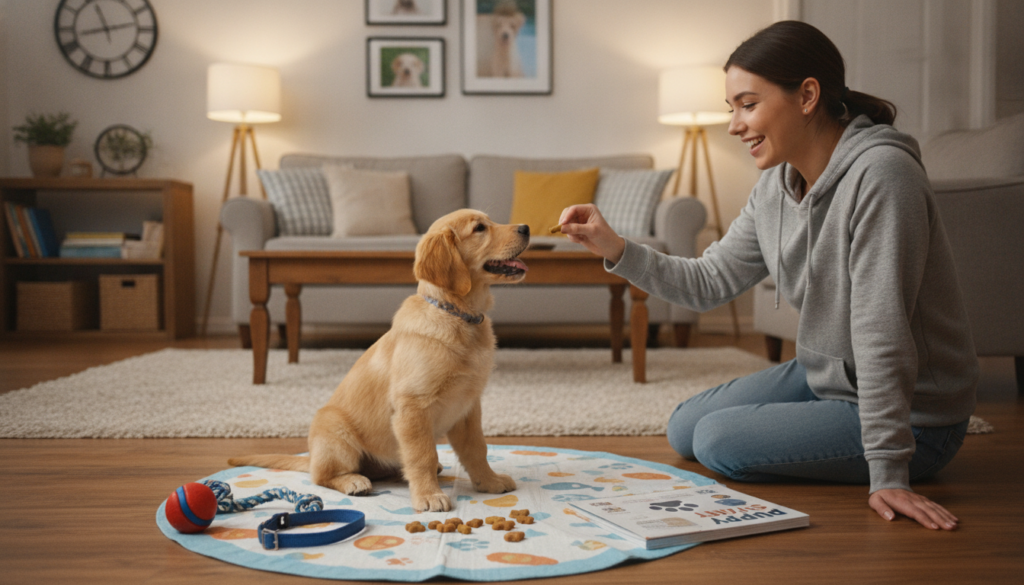
Good puppy training preparations make daily learning easier for you and your puppy. Choose one word for each cue, use small rewards, and keep lessons brief. Practice for three to five minutes, several times throughout the day.
Start House Training With a Consistent Schedule
When house training a puppy, take your puppy outside after waking, eating, drinking, and playing. Offer another potty break before bedtime. Watch closely and guide your puppy outside when they sniff, circle, or seem restless.
Praise your puppy right after they finish in the correct spot. Use a cheerful voice and a high-value treat. Clean accidents with an enzymatic cleaner, and avoid punishment because fear can slow progress.
Teach Basic Cues and Good Manners
Use clear cues such as “sit,” “come,” “leave it,” and “settle.” Everyone at home should use the same words and hand signals. A clicker or verbal marker, such as “yes,” shows the exact moment your puppy makes a good choice.
Reward calm behavior, gentle handling, and suitable chewing. Carefully touch your puppy’s paws, ears, collar, and mouth while offering treats. Trade unsafe items for approved toys instead of pulling them away.
- Keep treats tiny and easy to chew.
- End each session while your puppy is still focused.
- Practice in quiet rooms before adding distractions.
Prepare for Socialization and Safe Experiences
Puppy socialization should include calm, controlled exposure to people, household sounds, floors, grass, grooming tools, and car rides. Pair each new experience with treats and plenty of space. Let your puppy move away if they seem worried.
Well-socialized, healthy, vaccinated dogs can provide safe practice with canine manners. Ask your veterinarian about vaccine timing, local disease risks, and suitable public places. Until your veterinarian approves busy areas, choose clean, low-risk settings for early puppy socialization.
Building a Healthy Daily Routine for Puppy Care
A predictable schedule helps your puppy feel safe and learn what to expect. Your puppy care routine should include meals, bathroom breaks, short training sessions, gentle exercise, play, and plenty of sleep. Keep each activity suited to your puppy’s age, size, and energy level.
Balance Sleep, Meals, Exercise, and Play
Young puppies may sleep for 18 to 20 hours each day. Offer quiet rest after meals, play, and training. An overtired puppy may seem hyperactive, mouthy, or unable to settle.
Feed measured meals at regular times. Take your puppy outside after waking, eating, drinking, playing, and training. Keep play sessions short, with gentle walks only when your veterinarian says outdoor activity is safe.
Use simple training during calm moments. Practice one cue at a time, reward good choices, and end before your puppy loses focus. A steady rhythm makes daily care easier for both of you.
Recognize Common Puppy Health Concerns
Watch your puppy’s appetite, energy, stool, breathing, and behavior each day. Common puppy health concerns can become serious quickly, especially in very young dogs.
Contact your veterinarian for repeated vomiting or diarrhea, refusal to eat, breathing difficulty, extreme lethargy, pale gums, or coughing. Call your veterinarian about a swollen abdomen. Seek urgent advice if your puppy may have swallowed a toxin, medication, household cleaner, or harmful plant.
Keep your veterinarian’s phone number nearby. Do not give human medicine unless your veterinarian directs you to do so. A quick call can help you decide how soon your puppy needs care.
Manage Separation, Chewing, and Biting
Managing puppy behavior starts with prevention and calm guidance. Give your puppy safe chew toys made for dogs, and keep shoes, cords, children’s toys, and small objects out of reach.
When your puppy bites your hands, pause the game and offer a suitable toy. Praise your puppy for chewing it. Avoid physical punishment, yelling, or rough play, since these actions may increase fear or excitement.
Practice brief alone time while your puppy is calm. Step away for a few seconds, return quietly, and slowly extend the time. A crate or puppy zone can support rest when it is introduced as a safe, comfortable space.
Conclusion
Good puppy preparation tips help create a safe, puppy-proofed home before your new companion arrives. Gather essential supplies, plan veterinary care, and set clear spaces for eating, sleeping, playing, and rest. These steps support a calmer and more successful puppy transition.
A steady routine gives your puppy needed structure. Use regular meal, sleep, potty, and play times. Pair positive training with safe socialization, close supervision, and patience as your puppy learns skills and adjusts to your home.
Your plan should change as your puppy grows. Watch for health concerns, behavior changes, and new training needs. If challenges continue, seek guidance from your veterinarian or a qualified reward-based trainer.
With calm care and consistent limits, you build a foundation for safety, confidence, and lifelong good behavior. This approach shows responsible puppy ownership and helps your puppy thrive as a healthy, trusted member of your family.