
Dog Training Golden Retriever: Easy Steps for Success.
Master dog training golden retriever with simple, positive steps for better obedience, stronger communication, and a happier life together at home every day.
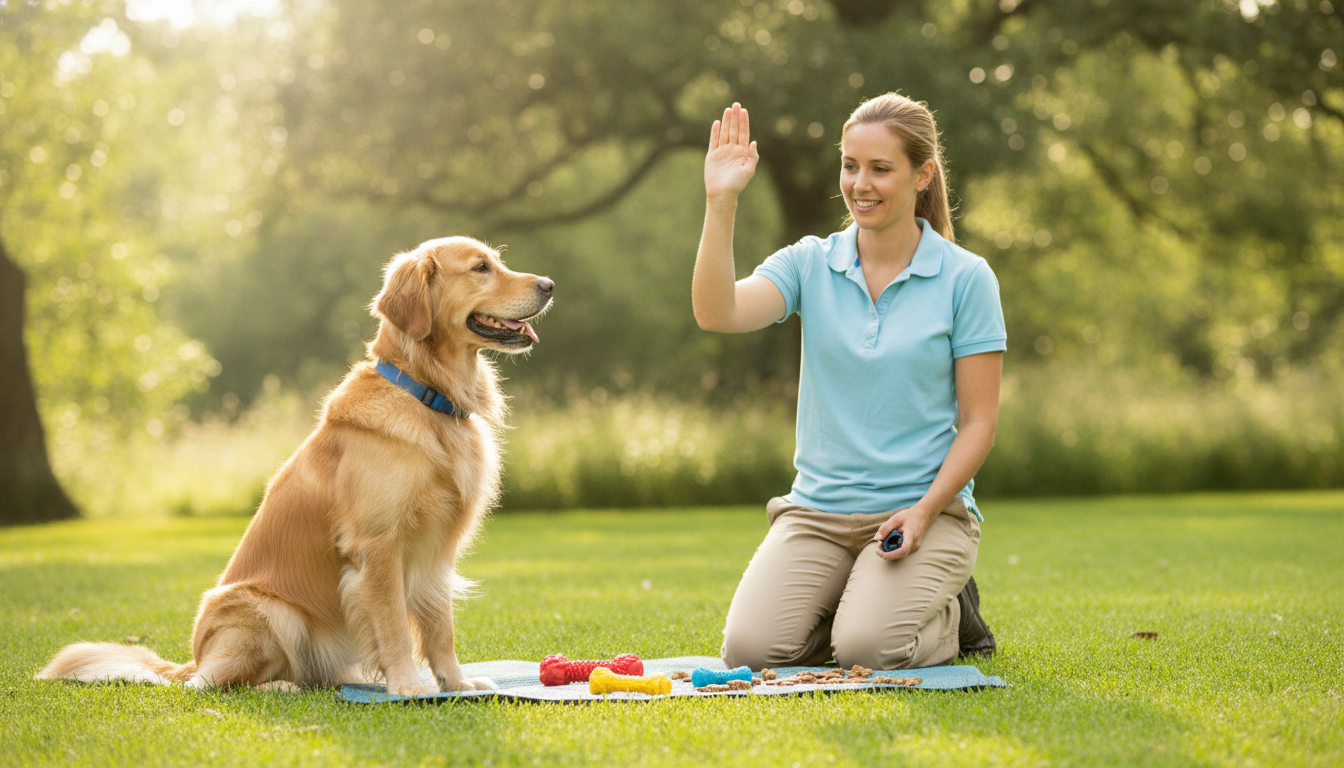
Your Golden Retriever may greet you with bright eyes, a wagging tail, and surprising energy. These joyful moments can also test your patience. Steady guidance makes training a rewarding part of your daily bond.
Successful dog training golden retriever methods use clear cues, fair rewards, exercise, and patience. Short practice sessions help your dog stay focused. A consistent routine helps your dog understand and repeat good behavior.
This golden retriever training guide covers basic skills through advanced work. You will learn to train puppies and adult dogs, build household manners, improve social skills, and solve common behavior problems. Each step builds obedience and strengthens trust between you and your dog.
Dog Training Golden Retriever: Easy Steps for Success
Golden Retrievers learn well when training feels clear, safe, and rewarding. Their social nature helps you build a strong bond through daily practice. Start with simple goals, steady routines, and rewards your dog values.
Why Golden Retrievers Are Highly Trainable
The Golden Retriever temperament is often intelligent, friendly, and eager to please. Many dogs respond well to small food rewards, lively play, and kind human attention. These strengths make basic cues easier when you remain patient and consistent.
Your dog’s enthusiasm can create challenges, too. A young Golden Retriever may jump, mouth hands, chase movement, or lose focus when excited. Calm pauses and short lessons can help your dog learn self-control without losing interest.
What You Need Before Training Begins
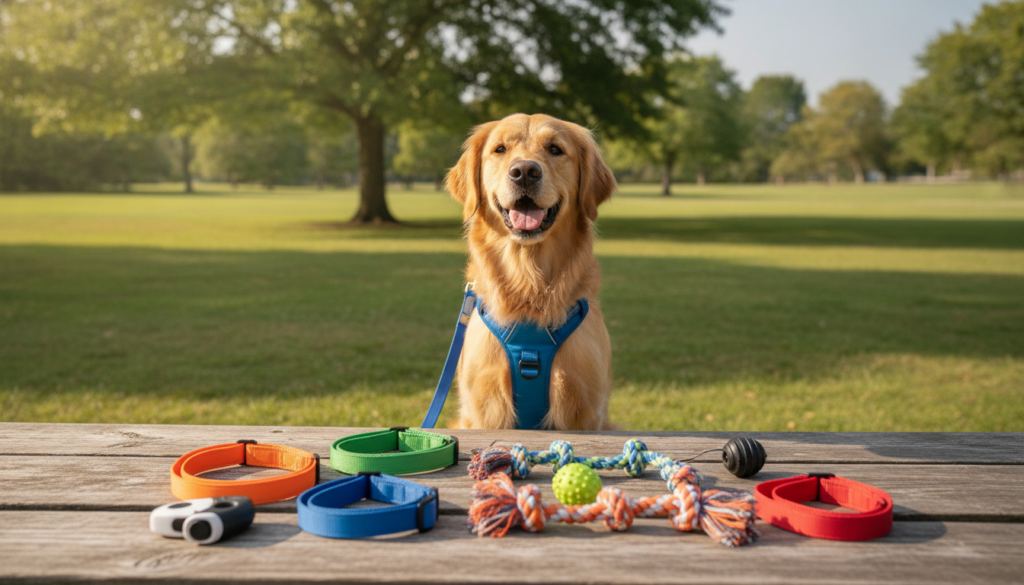
Gather your dog training supplies before the first lesson. Choose small treats, a clicker or verbal marker, a fitted collar or harness, and a standard leash. Keep safe toys, a crate, and a washable mat nearby.
- Use a quiet area with few sounds and distractions.
- Keep treats soft and small enough for quick rewards.
- Check that the collar or harness fits without rubbing.
- Offer a safe toy for play and redirection.
Schedule a veterinary visit before starting a new training plan. Pain, poor hearing, or health concerns can affect behavior and focus. Set realistic goals, such as responding to a name or sitting for a treat. These best practices for training golden retrievers provide a calm start and support steady progress.
Understanding Your Golden Retriever’s Temperament and Learning Style
Every Golden Retriever has a unique personality. One may be calm and careful, while another may be lively and quick to react. Energy, confidence, motivation, and sensitivity can vary, even among littermates.
Your dog’s Golden Retriever learning style becomes clear as you watch daily responses. Notice what captures attention and what causes hesitation. Some dogs work for treats; others prefer toys, praise, movement, or a favorite activity.
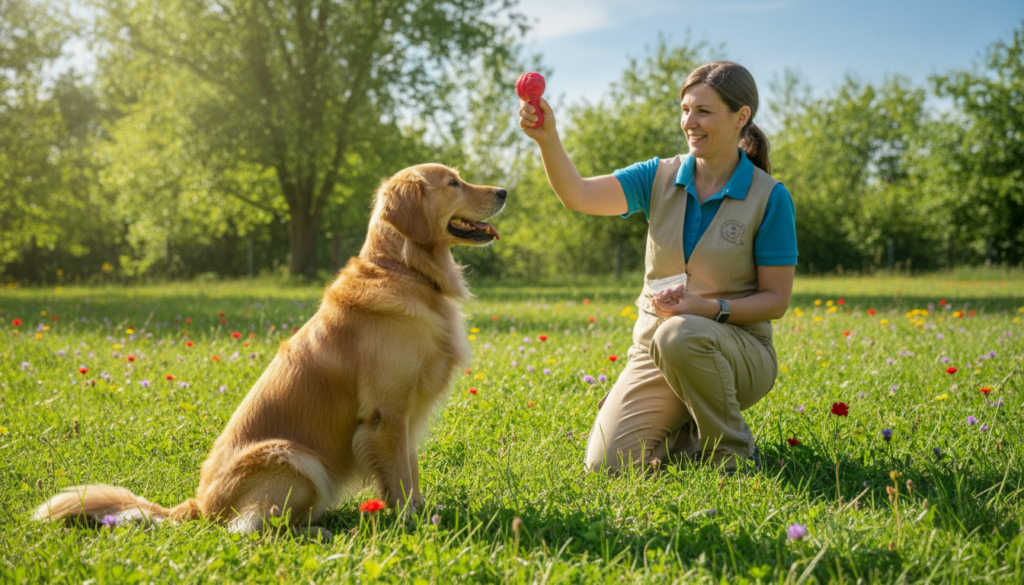
Watch canine body language during every lesson. A loose body, soft face, relaxed tail, and steady attention often show comfort. Lip licking, yawning, turning away, tucked ears, or stiff posture may signal stress.
When you see stress signals, lower the difficulty. Ask for an easier behavior, add space, or offer a short break. This keeps learning safe and helps your dog stay ready to engage.
Individualized dog training lets you match each lesson to your dog’s needs. Start with small steps and reward steady progress. Comparing your Golden Retriever with another dog can create pressure and may hide the skills your own dog is building.
Golden Retriever Training Tips for Building Trust
Trust grows when your Golden Retriever knows what comes next. These golden retriever training tips use calm guidance, clear rewards, and daily practice. They make each lesson feel safe and easy to follow.
Creating a Consistent Training Routine
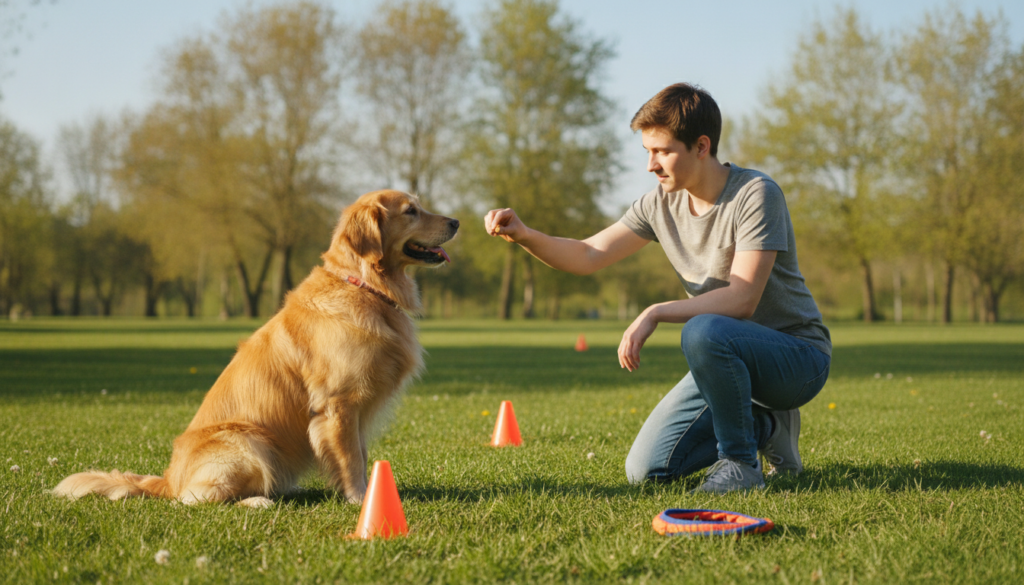
A consistent dog training routine helps your dog understand your expectations. Practice at similar times each day, such as after a walk or before dinner. Repeat simple skills like sit, wait, come, and leave it.
Every family member should use the same cue words, hand signals, and household rules. Keep reward standards steady, too. If jumping is not allowed, everyone should wait for four paws on the floor before offering attention.
Using Clear Commands and Body Language
Choose short cue words and say each one once. Pair “sit” with the same hand signal every time. Give your dog a moment to respond before repeating the cue.
Use a calm voice and steady movements. Face your dog when giving a command, then guide the correct action with a treat or gentle gesture. These golden retriever training tips reduce mixed signals and build confidence.
Keeping Training Sessions Short and Engaging
Keep each session between five and ten minutes. Practice throughout the day instead of working your dog for a long stretch.
- Mix simple exercises with short play breaks.
- Increase distractions one step at a time.
- Reward quick responses with treats, praise, or a favorite toy.
- End while your dog is still interested and successful.
A consistent dog training routine should feel useful, upbeat, and manageable. When your dog enjoys the process, trust grows with every practice session.
Training Golden Retriever Puppies With Age-Appropriate Lessons
Training golden retriever puppies works best when lessons match their age and energy. Start with name recognition, eye contact, and short attention games. Say your puppy’s name once, reward a glance, and repeat calmly.
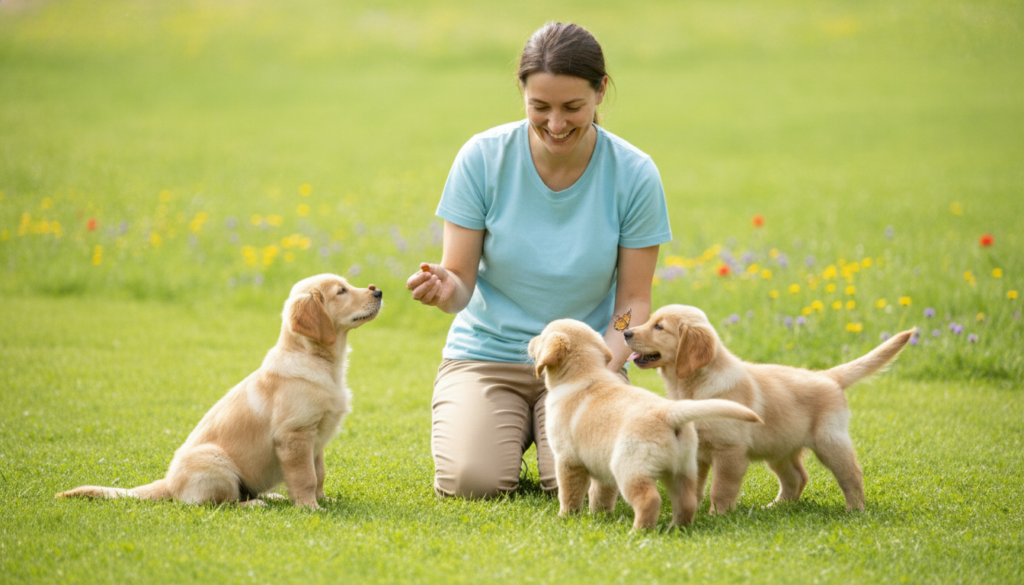
Young puppies have short attention spans and limited bladder control. Keep sessions brief, and repeat them throughout the day. Give an immediate reward for good behavior so your puppy links the action and result.
- Practice gentle handling of paws, ears, teeth, and the coat.
- Build crate comfort with treats, meals, and quiet rest.
- Take your puppy out after sleep, meals, play, and drinking.
- Use gentle play to teach soft mouth skills.
- Introduce safe sounds, surfaces, people, and calm dogs.
During Golden Retriever puppy training, use gates and close supervision to prevent unwanted habits. Keep safe chew items nearby, and trade them for shoes, furniture, or other tempting objects. Do not expect adult impulse control from a young puppy.
Potty training needs a steady schedule and close observation. Watch for sniffing, circling, or sudden wandering. Guide your puppy outside at once, praise success, and clean indoor accidents with an enzymatic cleaner.
Socialization should feel safe and controlled. Ask your veterinarian when your puppy can visit public areas, meet unfamiliar dogs, or attend group classes. Let vaccination guidance shape each outing and socialization plan.
As your puppy matures, add simple stays, recall games, leash practice, and calm greetings. Keep expectations realistic, use clear cues, and end each lesson while your puppy remains engaged.
Positive Reinforcement Dog Training Techniques That Work
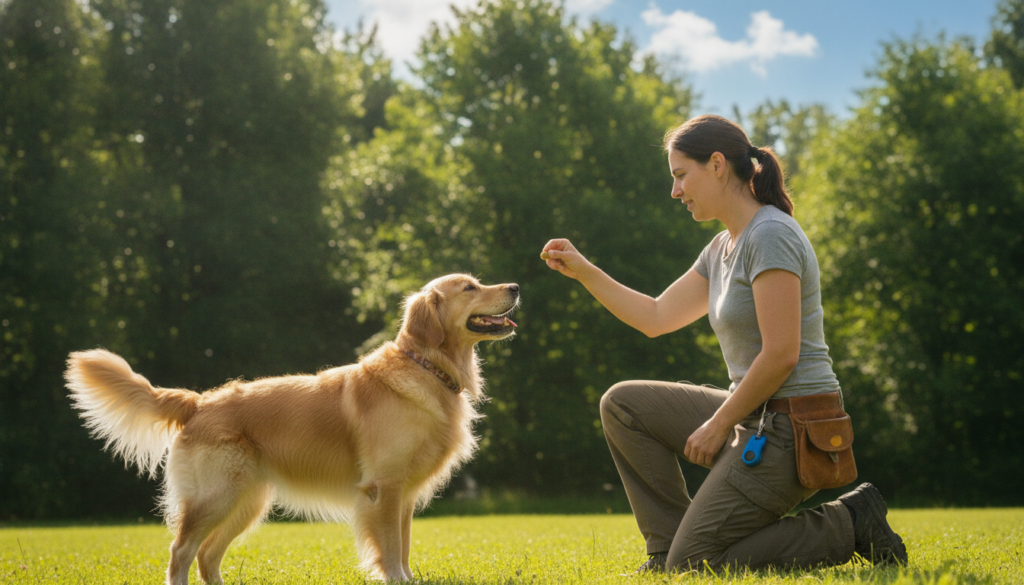
Positive reinforcement dog training techniques help your Golden Retriever repeat useful behaviors. Give a reward right after the desired action. Good timing helps your dog connect that action with a positive result.
Choosing Effective Rewards
Pick rewards that matter to your dog. Tiny food treats work well for many Golden Retrievers because they are quick to eat and easy to deliver. Choose soft treats that break into small pieces.
- Use part of your dog’s daily food allowance to manage calories.
- Check ingredients for allergies and dietary restrictions.
- Offer a favorite toy when food is not a good choice.
- Use warm praise, a sniffing break, or access to play as rewards.
Match each reward to the task. A small treat may suit “sit” in the living room, while a short game may work better after your dog returns outdoors. Reward based dog training works best when rewards fit your dog’s needs and challenge level.
Marking and Reinforcing Desired Behaviors
A marker tells your dog which action earned the reward. Use a clicker or a steady word such as “yes” when your dog performs correctly. Give the reward within a few seconds.
Start in a quiet place with few distractions. Mark simple actions, such as looking at you, sitting, or walking beside your leg. As your Golden Retriever improves, practice in busier settings and reward calm choices.
Keep your timing steady. If you mark too late, your dog may connect the reward with another action. These positive reinforcement dog training techniques work best when everyone uses the same marker and rules.
Avoiding Punishment-Based Training Methods
Yelling, leash jerks, intimidation, and physical punishment can create fear. These methods may damage trust and make your dog avoid you during training. They can hide warning signals, such as growling, without teaching safer behavior.
When a problem occurs, guide your dog toward the action you want. Ask for “sit” before visitors greet your dog. Offer a toy when your puppy mouths your hand, and reward quiet behavior when barking starts.
Reward based dog training gives your Golden Retriever clear information. You show what earns good results and repeat that lesson. Practice builds cooperation while protecting your relationship.
Obedience Training for Golden Retrievers: Essential Commands
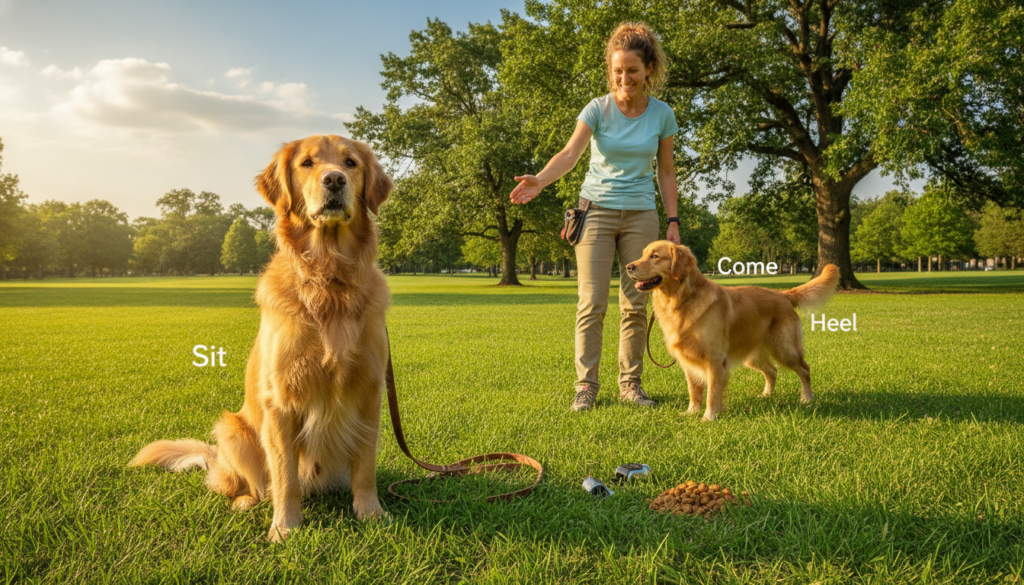
Begin obedience training for golden retrievers in a quiet room with few distractions. Use small treats, a calm voice, and short sessions. Reward every correct step immediately, so your dog connects the action with the treat.
Teach one cue at a time. Say the word once, guide your dog with a treat, and praise the correct response. Add a release cue, such as “free,” to show when the exercise ends.
- Name response: Say your dog’s name in a cheerful tone. Reward eye contact or a turn toward you. Practice from short distances before adding mild distractions.
- Sit: Hold a treat above your dog’s nose and move it over the head. As the hips touch the floor, say “sit” and reward. Build the cue without the hand motion over time.
- Down: Guide the treat from your dog’s nose to the floor. Praise when the chest and elbows reach the ground. Keep the reward close at first to prevent your dog from standing.
- Stay: Ask for a sit or down, show an open palm, and wait for one second. Reward in place, release your dog, and add time in small steps. Increase distance and distractions one at a time.
- Come: Use a bright voice and a high-value reward, such as chicken or cheese. Take a few steps back and reward your dog for moving toward you. Never punish your dog for returning, even after ignoring the cue.
- Leave it: Hide a treat in your closed hand. Reward your dog for moving away from it. Progress to a treat on the floor while keeping your hand ready to block access.
- Drop it: Offer a toy, present a better treat, and say “drop it” as your dog releases the toy. Give the treat and return the toy when safe. This keeps the cue positive.
- Wait: Ask your dog to pause before doors, meals, or car rides. Reward stillness for a brief moment, release your dog, and slowly extend the pause.
- Place: Lead your dog to a mat or bed and reward four paws on the surface. Increase the time spent there before adding movement, visitors, or household noise.
Polite greetings are part of the essential dog commands. Reward four paws on the floor when someone approaches. If your dog jumps, ask for a sit and pause the greeting until calm behavior returns.
Practice each cue across distance, duration, and distraction. Change only one factor at a time. End while your dog remains engaged, then repeat the lesson later in a new setting.
House Training, Crate Training, and Leash Skills
Daily structure helps with Golden Retriever house training. Calm guidance, close supervision, and rewards build lasting habits.
How to Establish a Reliable Potty-Training Schedule
Take your puppy outside after waking, eating, drinking, napping, and active play. Young puppies may need a trip every 30 to 60 minutes. As bladder control improves, slowly extend the time.
- Take your puppy outside first thing in the morning.
- Offer a potty break 5 to 15 minutes after meals and large drinks.
- Go outside after naps, play, and training sessions.
- Provide a calm overnight trip when needed, based on age and progress.
Stay nearby and use the same potty area. Praise your dog within seconds of success. Watch for sniffing, circling, pacing, or sudden stops indoors.
If an accident happens, clean the spot with an enzymatic cleaner. This removes odors that may draw your dog back to that area.
Introducing Your Golden Retriever to a Crate
Make the crate a safe resting space, never a place for punishment. Start with the door open. Toss treats inside, and let your dog choose to enter.
Serve meals near the crate. Move the bowl farther inside as your dog’s comfort grows.
When your dog rests inside, close the door for a few seconds. Open it before stress appears. Increase the time in small steps while staying nearby. Crate training works best with exercise, potty breaks, and calm routines.
Teaching Loose-Leash Walking
Begin loose leash walking in a quiet room, yard, or empty driveway. Reward your dog for looking at you and walking beside you with slack in the leash. Use small treats and a cheerful voice to keep attention.
If the leash becomes tight, stop moving. Wait for slack, or turn and walk another direction. Avoid jerking the leash or using harsh corrections.
Add mild distractions after your dog succeeds in quiet places. Practice near busier sidewalks only when calm walking stays steady.
Socialization and Behavioral Training for Golden Retrievers
Socialization helps your Golden Retriever stay calm and confident during daily life. Your dog should handle people, dogs, traffic sounds, new surfaces, vehicles, gentle handling, and unfamiliar places.
Start with controlled exposure. Keep your dog far enough away to watch without fear or frantic excitement. Give small treats and calm praise during each new experience.
Let your dog move away when overwhelmed. A quiet retreat can prevent fear from growing. Use short sessions, then reduce the distance as your dog relaxes.
Golden Retriever socialization should teach polite greetings. Reward four paws on the floor, a loose body, and calm eye contact. Ask visitors to ignore your dog until the dog settles.
Include calm observation in your routine. Sit near a park, store, or busy sidewalk, leaving enough space for comfort. Reward your dog for watching people, dogs, bikes, and cars without lunging or barking.
Cooperative handling supports grooming and veterinary care. Briefly touch your dog’s ears, paws, tail, and collar. Pair each touch with a reward, and stop before stress appears.
Introduce household experiences in small steps. Practice crossing tile, hearing a vacuum from another room, entering a car, and resting near visitors. This approach makes behavioral training for golden retrievers clear, safe, and useful.
Watch for sudden aggression, severe fear, repeated escape attempts, or major behavior changes. Contact your veterinarian for an evaluation. A qualified behavior professional can help create a safe plan for your dog.
Solving Common Golden Retriever Training Problems
Many Golden Retriever behavior problems improve when you teach a clear replacement action. Stay calm, lower the challenge, and reward the behavior you want. Short sessions often teach more than long, tiring drills.
Reducing Jumping and Excessive Mouthing
Reward your Golden Retriever when all four paws remain on the floor. Ask for a sit before greetings, meals, or play. If your dog jumps, turn away and withhold attention for a few seconds.
Guide puppy mouthing toward a soft toy or durable chew. Praise your dog for biting the toy instead of hands or clothing. Stop rough play when teeth touch skin, wait for calm, and restart gently.
These jumping and mouthing solutions work best when everyone follows the same rules. Keep a toy near busy areas to guide your dog toward the right choice quickly.
Managing Barking, Chewing, and Digging
Find out what triggers the barking. Your dog may react to visitors, windows, other animals, or outdoor sounds. Add distance, reward quiet behavior, and provide daily exercise and enrichment.
- Offer food puzzles, scent games, and short training sessions.
- Supervise chewing and provide safe, approved chew options.
- Block access to shoes, furniture, and other tempting items.
- Set up an approved digging area with loose soil or sand.
Lead your dog to the digging area and praise each visit. If digging begins elsewhere, calmly interrupt it and offer exercise, a toy, or a food puzzle. Supervision helps stop these Golden Retriever behavior problems from becoming habits.
Addressing Pulling, Distracted Walking, and Recall Issues
Make walks easier when your dog pulls or loses focus. Choose a quiet route, shorten the walk, and reward frequent check-ins. A front-clip harness or well-fitted flat collar can support training with calm guidance.
When the leash tightens, stop or change direction. Reward your dog as soon as the leash loosens. Practice near mild distractions before visiting busy sidewalks or crowded parks.
Rebuild recall with short, rewarding games in a secure yard or fenced area. Call once, use an upbeat voice, and reward your dog for coming. Never call your dog for punishment. These jumping and mouthing solutions and recall games make training clear, safe, and rewarding.
Advanced Training Methods for Golden Retrievers
Advanced training gives your Golden Retriever useful skills for real-world control. Start in a secure, permitted area before practicing off-leash work. Reward check-ins, calm movement, and quick responses to your recall cue.
Build advanced Golden Retriever obedience with distance stays, emergency recalls, and steady position changes. Add space in small steps. Increase only one challenge at a time, such as distance, duration, or distraction, to keep your dog successful.
- Practice retrieve and carry tasks with safe, familiar objects.
- Introduce scent work with simple searches and clear rewards.
- Use rally obedience to improve focus, turns, and handler connection.
- Prepare for dock diving with careful water confidence work.
- Teach assistance task foundations through targeting, carrying, or object retrieval.
Therapy preparation should include calm greetings, gentle handling, quiet waiting, and focus around unfamiliar people. Your dog should learn to settle on different floors, near mobility aids, and in busy indoor spaces.
Proof each behavior in new locations, with different handlers, surfaces, weather conditions, and distractions. Keep reinforcement strong, even when the behavior becomes reliable. Short sessions help your dog stay confident and willing to work.
These advanced training methods for golden retrievers should build control without fear. Avoid harsh corrections and too much repetition. Skilled advanced Golden Retriever obedience combines clear cues, thoughtful challenges, safe practice areas, and rewards that keep learning enjoyable.
When to Work With Professional Dog Trainers for Golden Retrievers
Some training problems need more than daily practice at home. Professional dog trainers for golden retrievers can help when behavior affects safety, comfort, or family life.
Seek help early when a problem feels difficult to manage. A clear plan can protect your dog, household, and community.
Signs You Need Professional Training Support
Seek expert guidance if your Golden Retriever shows persistent fear, aggression, or dangerous reactivity. Growling, snapping, lunging, or biting needs careful support. Do not force contact or use harsh corrections.
Separation-related distress may need professional care when your dog panics, damages doors, barks for long periods, or cannot settle alone. An unreliable recall also creates concern near roads, wildlife, or unfamiliar dogs.
Qualified dog training services can help when pulling, guarding, barking, or biting creates daily safety risks. A veterinarian may refer you to a veterinary behaviorist if anxiety, pain, or medical concerns affect behavior.
How to Choose a Qualified Dog Trainer
Find a trainer who explains positive reinforcement clearly. Humane methods should guide every lesson. Ask how the trainer handles fear, aggression, leash reactivity, and recall before booking.
Review credentials, practical experience, and client references. A Certified Professional Dog Trainer credential can show formal study and skill. Ask whether the trainer has worked with Golden Retrievers and your specific behavior concern.
- Ask for a written plan and clear lesson goals.
- Confirm which tools, rewards, and methods the trainer uses.
- Ask when a veterinary behaviorist referral may be needed.
- Choose qualified dog training services with transparent fees and policies.
Preparing for Private Lessons or Group Classes
Record what happens before, during, and after each problem. Note triggers, distance, time of day, body language, and your dog’s response. Safe, short videos can also help.
Write down your main goals before the first lesson. Bring small treats, a secure leash, a properly fitted harness, and requested equipment. Tell the trainer about health issues, medications, past training, and household routines.
Every household member should use the same cues and reward rules. Consistent practice helps your Golden Retriever understand your expectations at home and in public.
Conclusion
Dog training Golden Retriever success starts with clear expectations and simple rewards. Use short, frequent sessions to keep your dog focused and eager to learn. Praise useful choices, manage distractions, and provide exercise suited to your dog’s age and energy level.
Training should continue during walks, play, meals, and quiet time at home. Reward calm greetings, a loose leash, and reliable recall to build daily habits. This steady approach makes lifelong Golden Retriever training feel natural, not like a one-time project.
Adjust each lesson to your dog’s age, health, motivation, and emotional state. Move forward steadily, but reduce the challenge when your dog seems tired, worried, or confused. If behavior creates a safety risk or exceeds your experience, seek help from a qualified, reward-based trainer.