
dog training games: Fun Ways to Teach Your Dog Skills.
Discover dog training games that build obedience, confidence, and focus while keeping your dog engaged with simple, rewarding activities at home today.
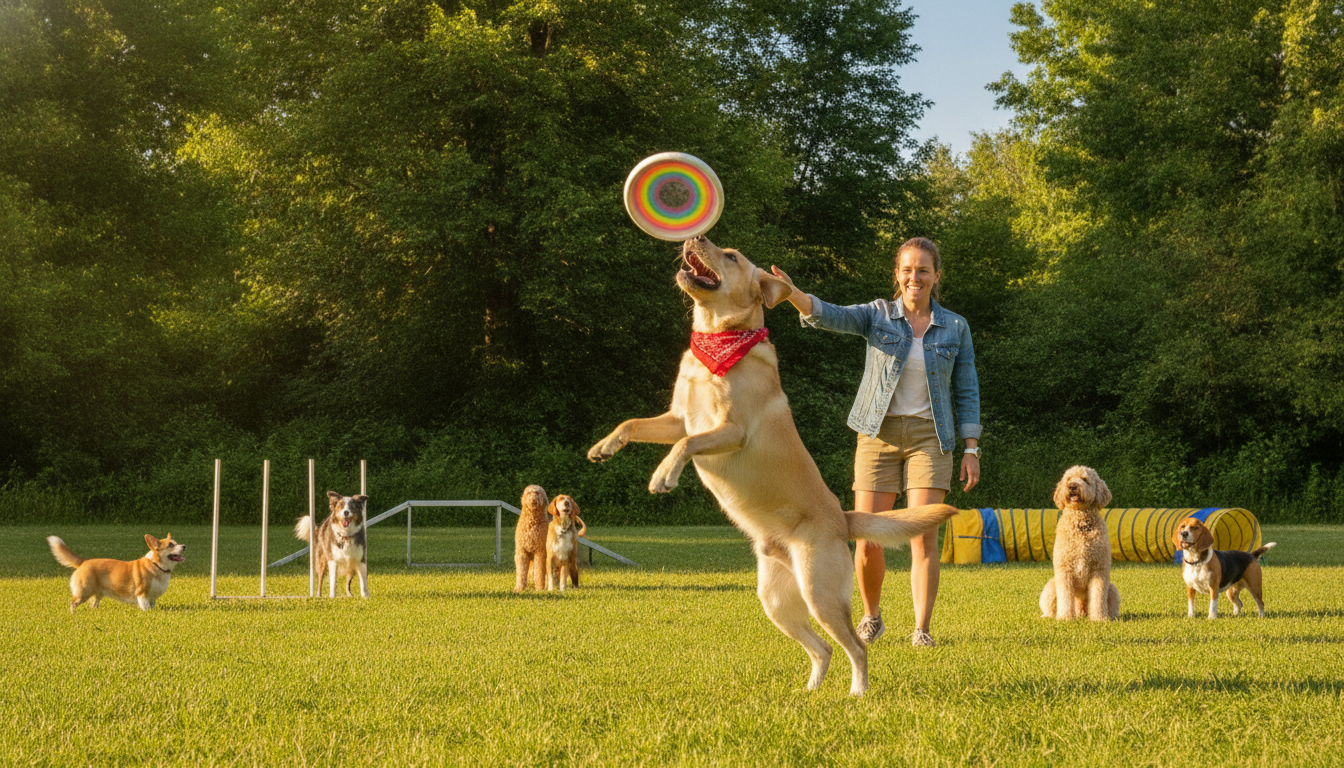
When your dog responds to a cue, it’s a big deal. You see trust grow, and practice becomes fun. Dog training games make these moments part of your daily life.
With reward based dog training, you can teach obedience and more. Short, positive activities help your dog learn. Use clear cues, timely rewards, and steady practice.
This guide covers simple games for basic obedience and more. You’ll learn how to choose safe equipment. Adjust activities for puppies, adult dogs, and senior dogs. These exercises support lasting skill development and keep learning fun.
dog training games for Building Basic Obedience Skills
Short games can make basic dog obedience clear and rewarding. Start in a quiet room with few distractions. Use treats, toys, praise, and a release word to mark each correct choice.
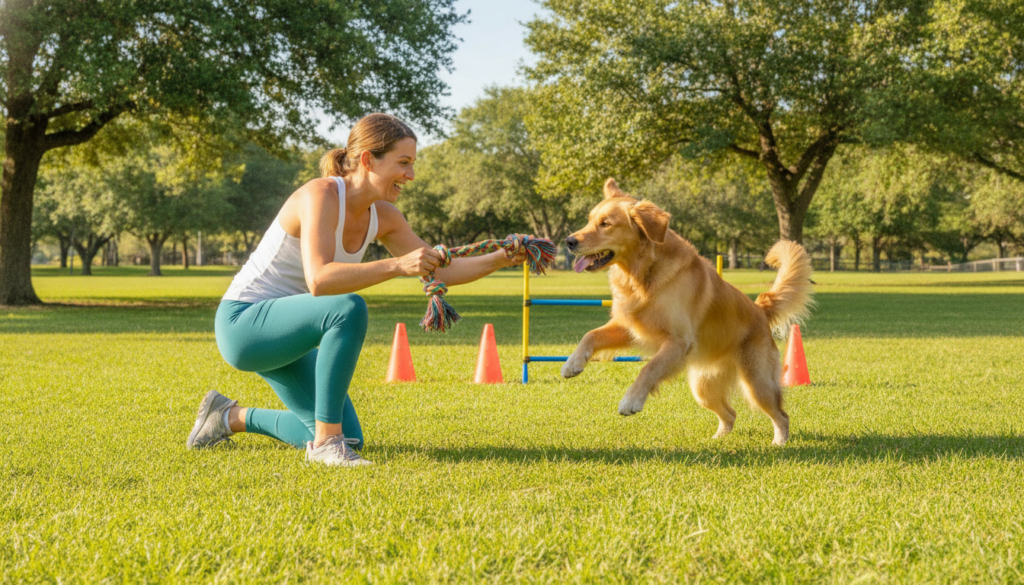
Teach Sit, Stay, and Down With Reward-Based Play
Ask for a sit, mark the moment your dog responds, and give a reward right away. For stay, wait for one second before using a release word such as “free.” Add time in small steps.
Use the same method for down. Keep each round brief and upbeat. As your dog improves, add gentle movement, distance, or mild noise. Return to an easier level if your dog loses focus.
Use Name Recognition Games to Improve Focus
Say your dog’s name once in a calm voice. When your dog looks at you, mark the eye contact and offer a treat or toy. Pause between turns so your dog learns to respond without pressure.
Try this game in different rooms. Keep distractions low at first. This simple part of interactive dog training builds attention for walks, greetings, and new commands.
Practice Recall With Safe Indoor and Outdoor Activities
Begin recall training games indoors. Call your dog from a short distance, reward movement toward you, and use a cheerful release word. Never repeat the cue while your dog is still deciding.
Move outside only in a secure fenced area or with a long line. Increase distance at a steady pace. Avoid unsafe off-leash practice near roads, open gates, or unfamiliar dogs.
Interactive Dog Training Games for Mental Stimulation
Interactive play gives your dog a job and a reason to focus. These activities support mental stimulation for dogs. They build skills like searching, problem-solving, attention, and recall.
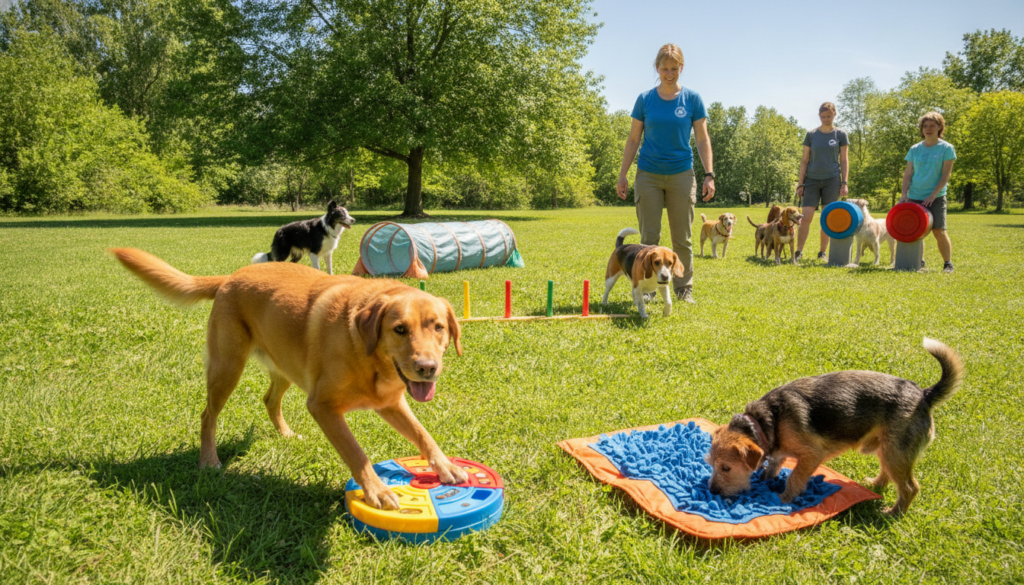
Play the Treat-Search Game
Start with a favorite treat in plain sight. Ask your dog to watch as you place it in an easy spot. Use a release cue, such as “find it,” and praise your dog when the treat is discovered.
As your dog learns the game, hide treats behind a chair or under a light towel. Keep each search simple to avoid frustration. These scent games for dogs turn natural sniffing into focused practice.
Introduce Puzzle-Based Cognitive Dog Games
Food puzzles encourage your dog to slide, lift, or nudge parts to reach a reward. Choose a puzzle that matches your dog’s experience and chewing style. Supervise every session, as your dog learns how the toy works.
Start with an easy setting and show your dog how to earn the food. Increase the challenge in small steps. These cognitive dog games can improve persistence without making play feel like a test.
Use Hide-and-Seek to Strengthen Attention and Recall
Ask your dog to stay while you hide behind a nearby door or piece of furniture. Call your dog with an upbeat voice. Reward your dog with praise, a treat, or a favorite toy after you are found.
Choose easy hiding places at first. Make each search end successfully, and shorten the distance if your dog seems unsure. This game builds attention and recall while adding mental stimulation for dogs to your daily routine.
Fun Dog Obedience Activities for Everyday Manners
Make everyday moments into fun dog obedience lessons. Ask your dog to sit before saying hello, opening doors, or getting attention. Give them treats, praise, or their favorite toy for calm behavior.
If your dog jumps, stop all attention until they sit. Wait for them to put all four paws on the floor. Reward them for being calm. This teaches them that calm behavior gets attention, not jumping.
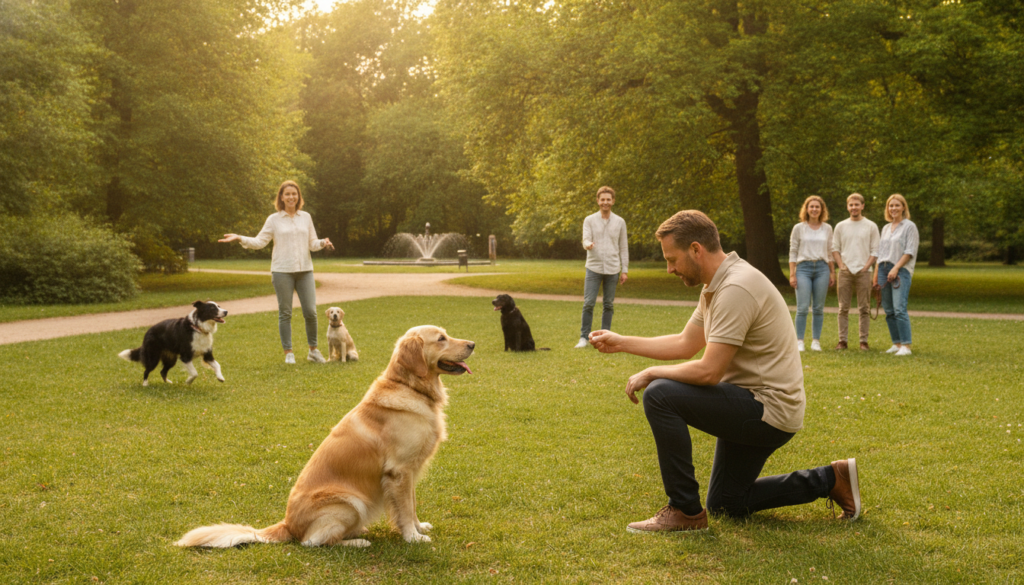
Start training your dog to wait at doors with small steps. Ask them to sit, then open the door a bit. Reward them for staying calm. Only open the door more when they stay relaxed.
On walks, reward them for looking at you quickly. Use treats and simple cues to guide them away from distractions. Short, calm practice sessions help build good manners without stress.
Everyone in the house should use the same cues and rules. Consistent rewards and limits help your dog understand. Keep each game short, calm, and right for your dog’s comfort.
Canine Learning Activities That Improve Impulse Control
Impulse control grows with short, steady practice. Your dog learns to pause and choose a calm response. These activities should be clear and rewarding, not stressful.
Begin with easy steps and gradually increase the challenge. Avoid punishment or long waits. Reward your dog soon after the release cue.
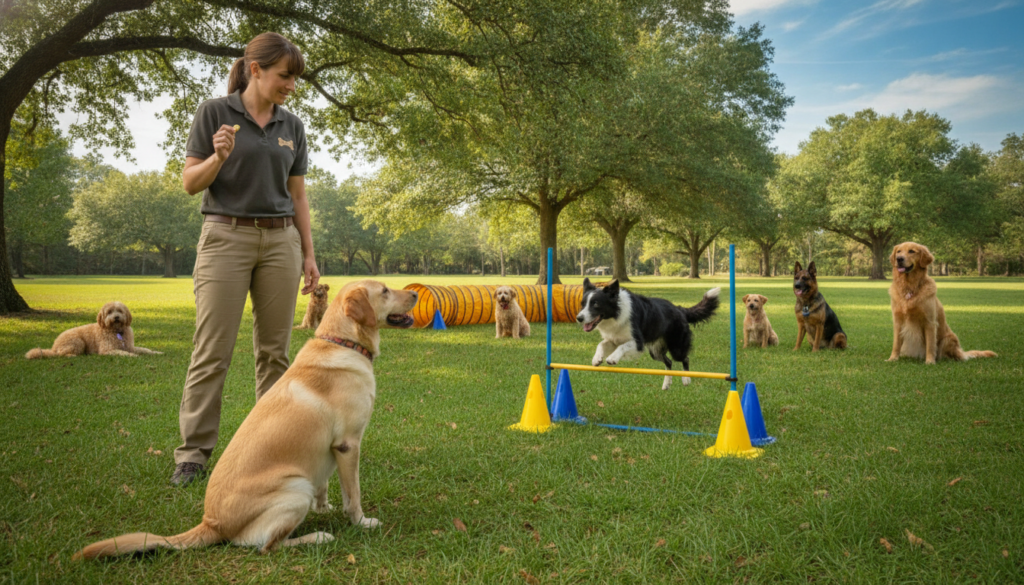
Teach Your Dog to Wait for Food and Toys
Ask your dog to sit before giving food. Hold the bowl still if they move forward. Say “wait” and then “okay” to release.
Use the same pattern with toys. Ask for a brief pause before giving it. Start with just a few seconds and add more slowly.
Use this skill before opening doors or entering yards. Keep rewards prompt after the release cue. If your dog breaks position, make the next pause easier and try again.
Practice Leave It With Interactive Rewards
Start with a boring object on the floor. Cover it with your hand if your dog reaches for it. Mark the choice with praise and offer a better treat.
Repeat until your dog quickly looks away from the object. Add movement only after the first step feels easy. Use a toy, treat, or gentle game as the reward.
Keep your voice calm and your timing quick. “Leave it” should guide your dog toward a better choice, not signal a threat. This approach supports calm dog training during walks, meals, and busy home routines.
Build Calm Behavior Through Mat and Place Games
Place a comfortable mat near you. Reward your dog for stepping onto it, sitting, and lying down. Give small treats while your dog remains relaxed. Use a release cue before your dog leaves.
Practice while you read, prepare food, or watch television. Start with quiet activity and short periods. Add normal household sounds as your dog gains confidence.
If your dog stands up, guide them back with a simple cue. Lower the challenge if they seem restless. These activities teach your dog that settling on a mat leads to rewards, rest, and clear choices.
Entertaining Dog Training Games for Trick Training
Trick games help you communicate better with your dog. Your cues, timing, and rewards guide each step. This playful work can improve coordination, confidence, and enthusiasm. Keep sessions brief and end while your dog still wants more.
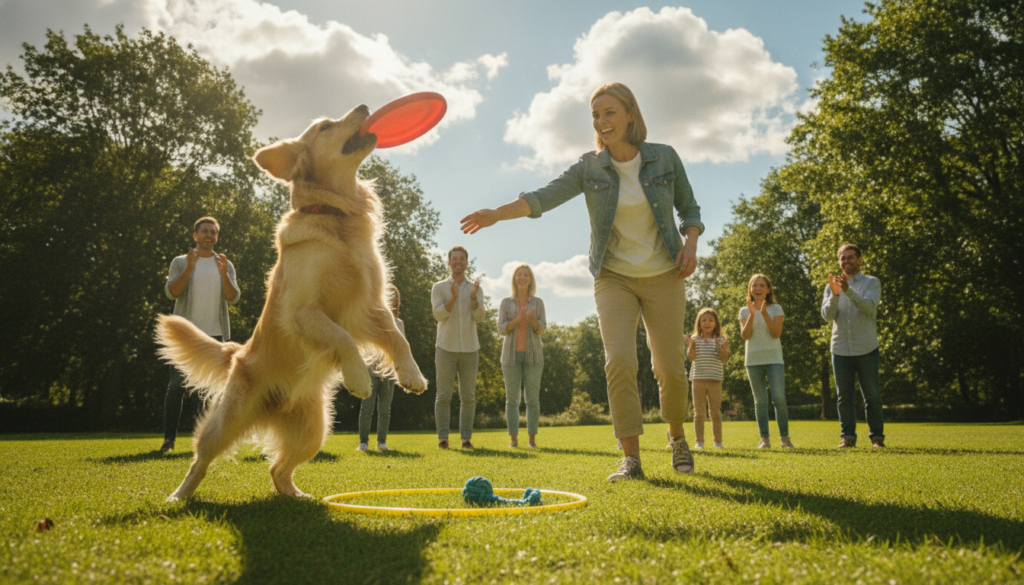
Teach Shake, Spin, and High-Five
Start with one small movement at a time. For shake, hold a treat near your dog’s paw. Reward any lift, touch, or paw movement. Add the cue “shake” once your dog begins to offer the action.
For spin, guide your dog in a slow circle with a treat. Mark the movement with a clicker or a steady word such as “yes.” Reward one turn before asking for a full circle. Use the same method for high-five, rewarding a raised paw before expecting contact with your hand.
- Give the cue once.
- Mark the correct movement at the right moment.
- Reward right away.
- Pause if your dog loses focus.
Turn Toy Retrieval Into a Skill-Building Exercise
Make retrieval more than a chase. Ask your dog to pick up the toy, carry it back, and release it into your hand. Reward each part of the sequence at first. Use a calm cue such as “drop” when your dog brings the toy back.
Choose a soft toy that your dog can hold with ease. Practice in a clear room before moving outside. This form of trick training for dogs builds listening skills, body control, and a reliable return.
Use Shaping Games to Encourage Problem-Solving
Shaping dog behavior means rewarding small actions that move your dog toward a goal. You might teach your dog to touch a box, step onto a mat, or place a toy in a basket. Wait for your dog to offer an action instead of guiding every move.
Mark each useful attempt with your clicker or verbal signal. Give a reward for progress, not perfection. Stop before your dog feels frustrated. These entertaining dog training games let your dog think, test ideas, and gain confidence through success.
Engaging Dog Training Tools and Safe Game Setups
Choose tools that fit your dog’s size, age, and chewing habits. Use soft treats, a clicker, durable toys, and puzzles that dispense food. A washable mat is great for a clean spot during calm games.
A six-foot leash is good for close practice. Use a long line for recall work in a safe area. These tools help you control your dog without limiting their movement.
- Pick interactive dog toys made from strong, pet-safe materials.
- Check for loose seams, cracked parts, and small pieces before each game.
- Remove any toy that becomes damaged or easy to break.
- Use food puzzles that suit your dog’s mouth and chewing style.
Always watch your dog during food-based activities. Make sure treats can’t get stuck in puzzles or swallowed too fast. Introduce new items slowly, letting your dog explore at their own pace.
Play games away from sharp objects, toxic plants, and unstable furniture. Remove slippery rugs or choose a mat with a firm, nonslip base. This setup helps your dog move confidently and keeps training equipment within reach.
Store leashes, toys, and puzzles after each session. Check them before the next game, as wear can develop. With careful setup and steady supervision, interactive dog toys can support learning while keeping play controlled.
How to Keep Playful Pet Behavior Exercises Effective
Good training should feel like play. But, each game must have a clear goal. Watch your dog’s body language and reward good choices. Stop before they lose interest. These steps keep training safe and effective.
Choose Rewards That Motivate Your Dog
Try different rewards to see what your dog likes best. Small treats, tug toys, fetch, praise, sniffing, or favorite activities can all work.
Match the reward to the task. A tiny treat might be perfect for focus exercises. A short game of fetch could be great for recall. This way, you use positive reinforcement without forcing your dog.
Keep Sessions Short, Positive, and Age-Appropriate
Keep most sessions short and end while your dog is still interested. Set simple goals, like holding a sit for three seconds or touching your hand once.
Give praise right away when your dog makes the right choice. Take calm breaks to avoid frustration and keep training fun.
Adjust Games for Puppies, Adult Dogs, and Senior Dogs
Puppies need soft surfaces, gentle exercises, and lots of rest. Choose activities that build control without being too hard.
Adult dogs can handle longer challenges, but consider their health and energy. Senior dogs need low-impact tasks, slower movements, and extra rest.
Change the activity if your dog shows signs of strain or tiredness. The activities should challenge your dog without causing pain or stress.
Conclusion
Dog training games make learning fun and rewarding. They help improve obedience, focus, and confidence. They also enhance communication and keep your dog’s mind active.
Begin with simple games like treat searches or name games. Reward your dog right away for good behavior. Then, gradually make the games harder in small steps.
Make sure training sessions are safe, short, and fun. Use positive training methods and choose rewards your dog loves. Stop when your dog gets tired or upset.
Adjust the games based on your dog’s age, abilities, and how they learn. With patience and practice, your dog will learn useful habits. Focus on progress, not perfection, and always consider your dog’s comfort.