
Types of Dog Training: Methods, Goals, and How to Choose
Explore types of dog training in this beginner’s guide, from basic obedience to positive reinforcement, and learn how to build a happy, obedient pet today.
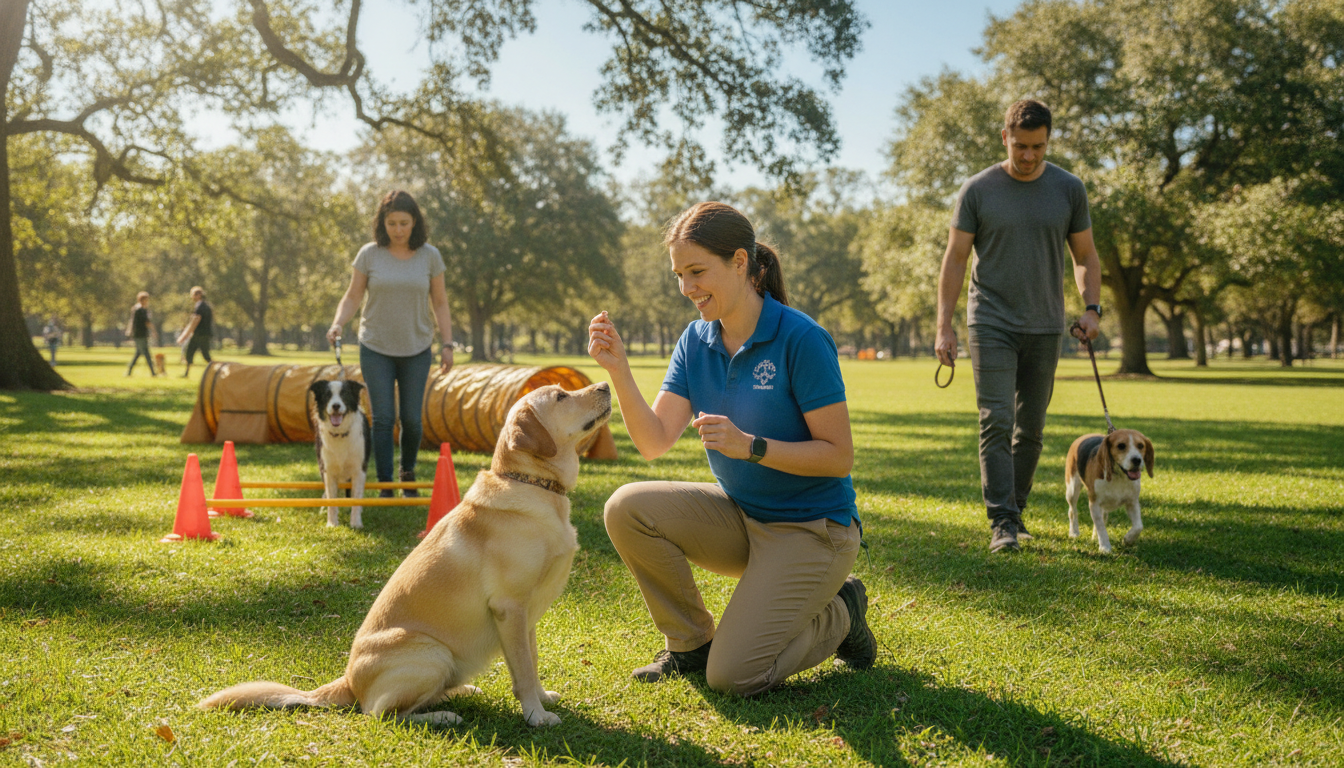
There are several types of dog training, and each one serves a different purpose. Some training focuses on everyday manners and basic commands, while other approaches help with behavior problems, dog sports, or specialized working roles.
The right training approach depends on your dog’s age, temperament, experience, environment, and individual needs. Understanding the main options can help you choose a method that supports good behavior while building trust between you and your dog.
Understanding the Types of Dog Training
Dogs learn through associations, repetition, observation, and the consequences of their actions. Training helps them understand which behaviors are useful and what their owners expect from them.
Different methods may use treats, toys, praise, play, access to activities, or other rewards to encourage desired behavior.
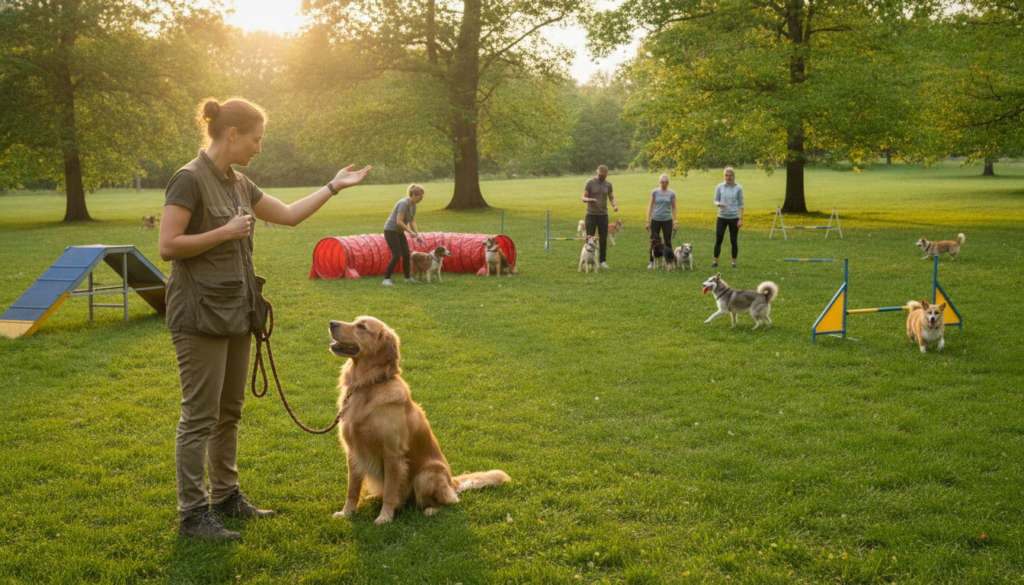
How Dogs Learn Through Associations and Consequences
Dogs learn through associations, repetition, observation, and the consequences of their actions. Training helps them understand which behaviors are useful and what their owners expect from them.
Different methods may use treats, toys, praise, play, access to activities, or other rewards to encourage desired behavior.
How Dogs Learn Through Associations and Consequences
Two common learning concepts used in dog training are classical conditioning and operant conditioning.
Classical conditioning involves creating an association between two events. Operant conditioning focuses on how the consequences of a behavior can influence whether that behavior happens again.
Common training terms include:
- Positive reinforcement: Adding something the dog enjoys after a desired behavior.
- Negative reinforcement: Removing pressure when the desired behavior occurs.
- Positive punishment: Adding an unpleasant consequence after a behavior.
- Negative punishment: Removing access to something the dog values.
These terms describe how consequences work in learning. They are not simply labels for “good” or “bad” training.
For most pet owners, the important thing is to use clear communication, appropriate rewards, and training methods that support the dog’s physical and emotional well-being.
Why Every Dog Needs an Individual Training Approach
No single training method works exactly the same for every dog.
Breed traits, motivation, previous experiences, stress levels, home routines, age, and environment can all affect how a dog responds to training.
Some dogs are highly motivated by food, while others respond better to toys, praise, play, or access to something they enjoy.
Training should also progress at a pace the dog can handle. Short, successful sessions are usually easier to repeat and can help make learning more enjoyable.
Basic Obedience Training for Everyday Life
Basic obedience training teaches dogs the everyday skills they need to live safely and comfortably with people.
This is one of the most common types of dog training and often includes commands such as:
- Sit
- Stay
- Come
- Leave it
- Down
- Loose-leash walking
These skills can make daily activities such as walks, greetings, feeding, and visiting new places easier to manage.
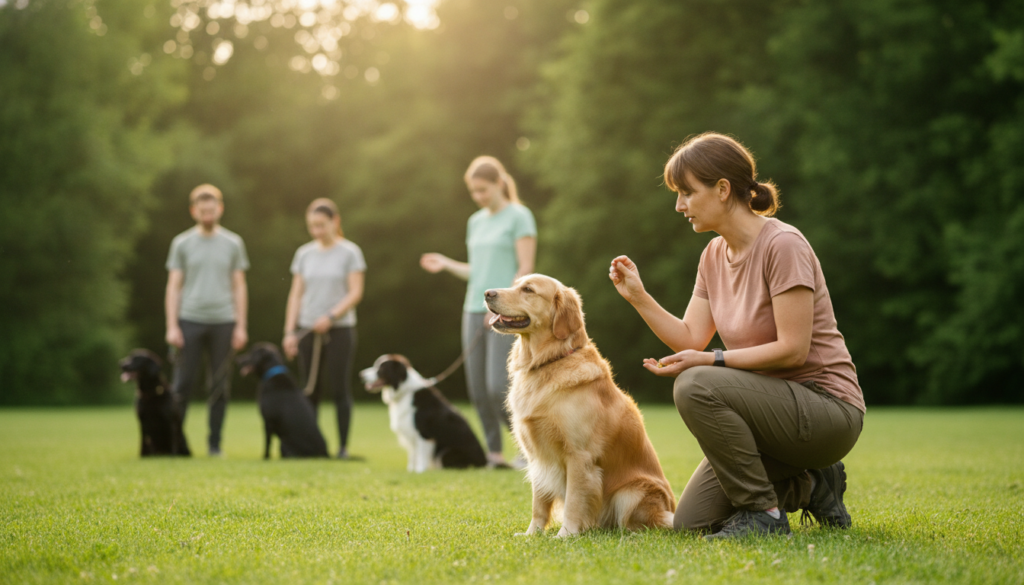
Teaching Sit, Stay, Come, and Loose-Leash Walking
Start training in a quiet environment where your dog can focus.
Use a clear cue and reward the desired behavior immediately when your dog performs it correctly. Once your dog understands the behavior in a quiet setting, gradually introduce mild distractions.
For example, a dog learning to sit may first practice inside the home before practicing in the yard or during a walk.
Loose-leash walking works in a similar way. Reward your dog when the leash is relaxed and gradually practice in more distracting environments.
Building Reliable Cues Through Consistency and Timing
Consistency is an important part of obedience training.
Try to use the same words and signals for each behavior. If several people live in the household, everyone should follow a similar approach.
Reward timing also matters. Giving the reward shortly after the desired behavior helps the dog understand which action earned it.
As training improves, practice the same skills in different locations so your dog learns that the cue still matters outside the home.
Positive Reinforcement Training
Positive reinforcement is a reward-based approach that encourages desired behavior by giving the dog something it values.
For example, if a dog sits after being asked and immediately receives a treat, the dog may become more likely to sit when asked again.
Rewards can include:
- Small treats
- Toys
- Praise
- Play
- Gentle affection
- Access to a favorite activity
- Opportunities to sniff or explore
Different rewards work better for different dogs.
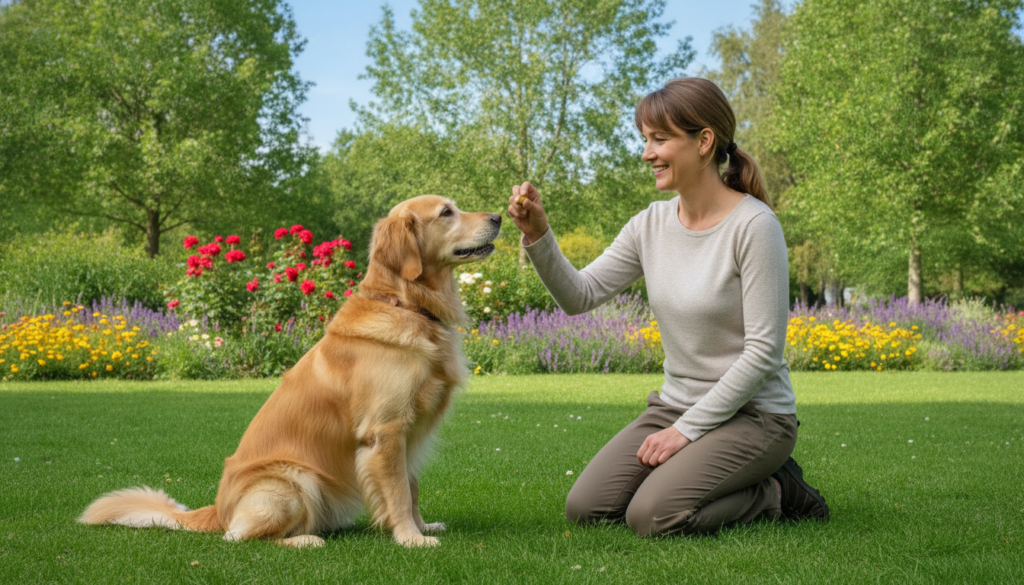
Using Treats, Play, Praise, and Other Rewards
The reward should be valuable enough to keep your dog interested.
Food may work well when learning a new behavior indoors, while a toy or access to play may be more motivating in another situation.
For effective reward-based training:
- Reward the desired behavior quickly.
- Keep training sessions short.
- Use rewards your dog genuinely enjoys.
- Reduce the difficulty if your dog becomes distracted or confused.
- End sessions after a successful repetition whenever possible.
Replacing Unwanted Behaviors With Better Choices
Positive reinforcement can also help teach alternatives to unwanted behavior.
Instead of focusing only on stopping a behavior, teach your dog what to do instead.
For example:
- Ask for a sit instead of allowing jumping during greetings.
- Reward calm behavior around visitors.
- Give appropriate chew toys instead of allowing access to household objects.
- Reward attention during walks instead of waiting until pulling becomes intense.
Managing the environment can also reduce opportunities for unwanted behaviors to develop.
Behavioral Training for Common Challenges
Behavioral training focuses on behaviors that may create problems at home or in public.
Common examples include:
- Excessive barking
- Jumping
- Destructive chewing
- Fear
- Reactivity
- Anxiety-related behavior
- Aggression
Behavior training often looks beyond the visible behavior and considers what may be causing it.
Fear, stress, frustration, boredom, past experiences, and physical discomfort can all influence behavior.
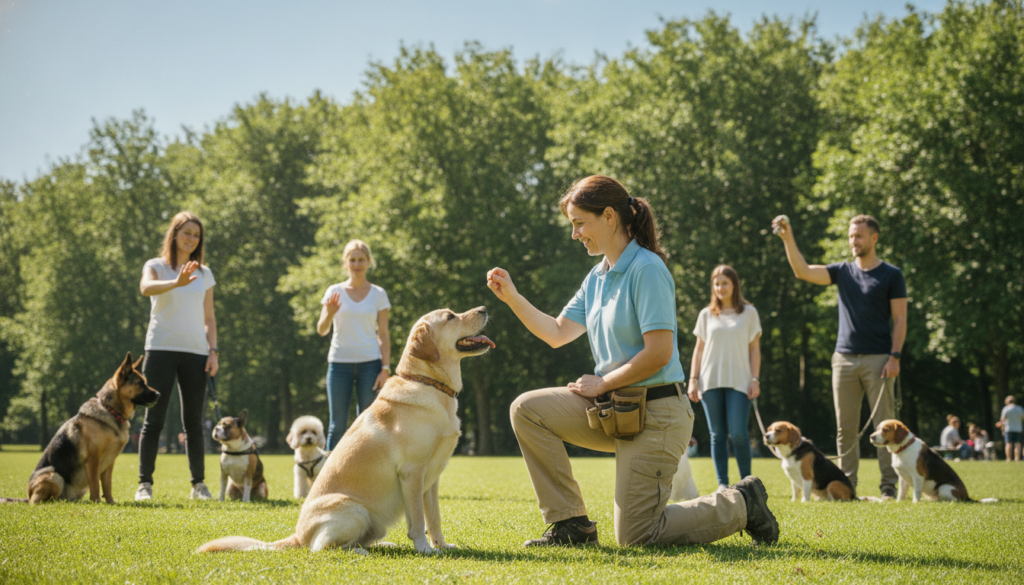
Addressing Barking, Chewing, Jumping, and Reactivity
A behavior plan usually combines management with training.
For jumping, owners may reward four paws on the floor or ask for a sit during greetings.
For unwanted chewing, access to inappropriate objects can be limited while suitable chew items are provided.
For reactivity, training may focus on increasing distance from triggers and rewarding calm responses before the dog becomes overwhelmed.
The goal is to make the desired behavior easier and more rewarding.
Using Desensitization and Counterconditioning
Desensitization and counterconditioning are commonly used when a dog reacts strongly to a particular trigger.
Desensitization introduces the trigger at a level the dog can handle without becoming highly stressed.
Counterconditioning pairs the trigger with something the dog enjoys, such as a high-value treat.
Over time, the dog’s emotional response to the trigger may change.
Progress should be gradual. Forcing a fearful dog into an overwhelming situation can make the problem more difficult.
Serious aggression, severe fear, or bite risk should be handled with professional guidance.
Relationship-Based and Choice-Based Training
Relationship-based training focuses on communication, trust, body language, motivation, and the individual needs of the dog.
Instead of following exactly the same routine with every dog, the owner or trainer adjusts the lesson based on how the dog responds.
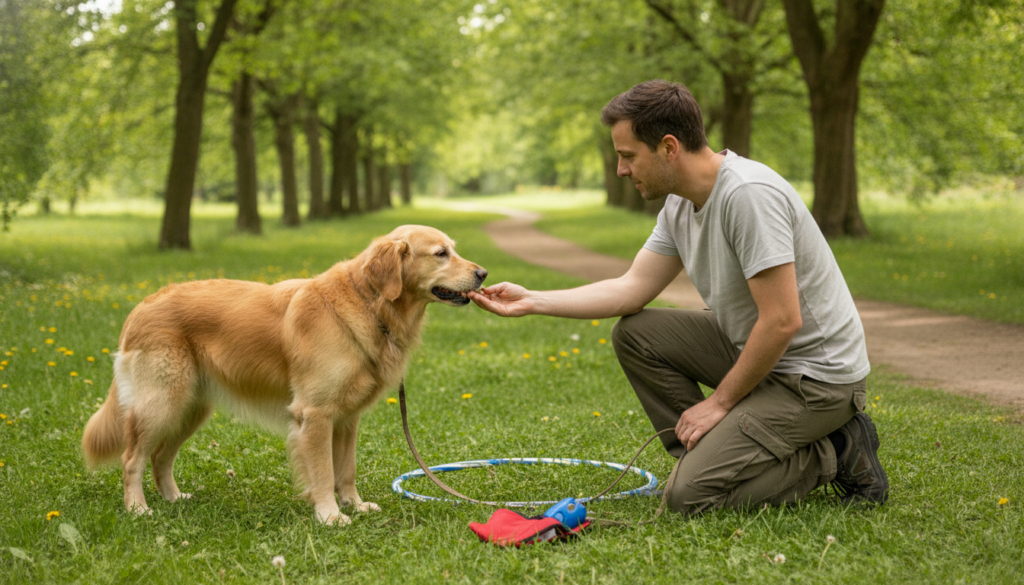
Paying Attention to Your Dog’s Body Language
Dogs communicate through posture, movement, facial expressions, and behavior.
During training, watch for signs that your dog is comfortable and engaged.
Signs of relaxation may include:
- Loose body posture
- Soft facial expression
- Willing engagement
- Comfortable movement
If your dog freezes, repeatedly avoids the activity, or appears highly stressed, reduce the difficulty and allow the dog to reset.
Giving Dogs Appropriate Choices
Choice-based learning gives dogs some control during training.
A dog may be allowed to pause, move away, or disengage safely before trying again.
This does not mean allowing the dog to ignore every cue. Instead, it means recognizing when stress or confusion is interfering with learning.
Adjusting distance, rewards, session length, and difficulty can help keep training productive.
Specialized Training for Active and Working Dogs
Some dogs participate in training that goes beyond everyday obedience.
Specialized training may provide physical exercise, mental stimulation, or preparation for specific tasks.
Agility Training
Agility training teaches a dog to move through obstacles such as tunnels, jumps, weave poles, and ramps while following the handler’s directions.
It combines physical activity with communication and problem-solving.
Beginners should start with simple exercises and introduce equipment gradually. Dogs should never be forced onto equipment that makes them uncomfortable.
Age, fitness, confidence, and physical health should also be considered before beginning more demanding activities.
Service, Therapy, Rescue, and Working-Dog Training
Working dogs may receive specialized training for specific roles.
Examples include:
- Service dog work
- Therapy visits
- Search-and-rescue
- Scent work
- Herding
- Hunting
- Law-enforcement roles
Each type of work requires different skills.
A service dog, for example, may need highly reliable behavior and task-specific training, while a search-and-rescue dog may focus heavily on scent detection and working in challenging environments.
Not every dog is suited to every type of specialized work. Temperament, health, motivation, and ability should be considered when choosing a training path.
Protection and Correction-Based Training Methods
Protection training and correction-based training are not the same thing.
Protection training prepares a dog for a specific working role and requires a high level of control, experience, and professional supervision.
Correction-based or traditional training methods may rely more heavily on pressure or unpleasant consequences to reduce unwanted behavior.
Some trainers combine rewards with equipment such as slip leads, prong collars, or electronic collars.
These approaches are debated within the dog-training community because methods that create fear, pain, or excessive stress may affect a dog’s emotional well-being.
For most pet owners, training should focus on clear communication, management, reinforcement, and the least intrusive effective approach.
Protection work, aggression cases, and situations involving bite risk should be handled with qualified professional support.
How to Choose a Dog Training Method
The best training method depends on your goals and your dog’s individual needs.
A puppy learning basic manners needs a different plan from an adult dog struggling with severe reactivity. Likewise, a family pet usually does not need the same training program as a working or competition dog.
When choosing an approach, consider:
- Your dog’s age
- Temperament
- Health
- Motivation
- Previous training
- Home environment
- Behavior challenges
- Your training goals
A good training plan should be realistic, understandable, and adjustable when the dog struggles.
How to Choose a Professional Dog Trainer
A professional trainer should be able to clearly explain how they train dogs and why they use particular methods.
Before hiring someone, ask questions about:
- Training methods
- Equipment used
- Experience
- Professional education or credentials
- Handling of fear and aggression
- How progress is measured
- How owners are involved in training
- What happens if the dog becomes stressed
Be cautious of trainers who guarantee instant results or claim that one method works for every dog.
Professional organizations such as IAABC, CCPDT, and other training organizations can also provide information about education, credentials, and professional standards.
The trainer should be willing to adjust the plan based on the individual dog rather than simply increasing pressure when progress slows.
Which Type of Dog Training Is Best?
There is no single type of dog training that is best for every dog.
For most family dogs, basic obedience combined with positive reinforcement provides a useful starting point.
Dogs with specific behavior challenges may need behavior modification, while active dogs may enjoy agility, scent work, or other specialized activities.
Working dogs require training designed around their specific role.
The most important factors are safety, clear communication, realistic expectations, and a training approach that considers the individual dog.
Conclusion
The best plan starts with one dog’s needs, feelings, motivation, home setting, and current behavior. Basic cues, positive reinforcement, behavior support, relationship work, agility, and service goals can meet different family aims.
Choose a humane method with clear signals, suitable rewards, steady practice, and realistic time goals. Reinforcement should build confidence, not fear. Watch for stress, confusion, frustration, or pain, then lower the challenge. A skilled professional trainer changes the approach rather than adding pressure.
Before hiring help, review standards from IAABC, IACP, and CCPDT. Ask about safety, credentials, progress measures, and tools. Good dog training takes patience and teamwork. With informed choices, dogs can develop safer habits and a stronger bond, while families enjoy a more rewarding life together.