
When Do Puppies Stop Growing Everything You Need to Know.
When do puppies stop growing? Learn how breed, genetics, nutrition, and health shape your puppy’s timeline and discover when your dog reaches full size.
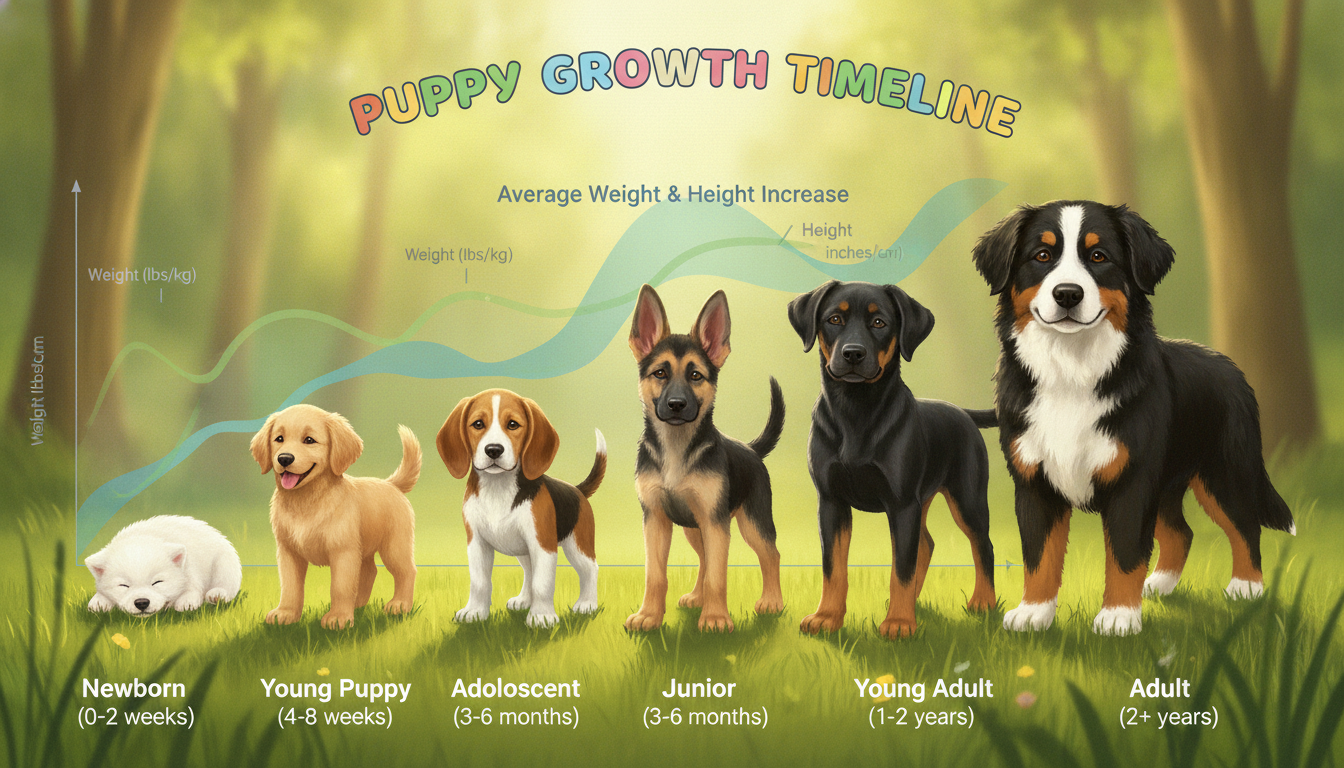
Watching a puppy grow can make time feel fast. One week, your dog fits in your arms. The next, oversized paws seem out of place.
When do puppies stop growing? It depends on breed size, genetics, nutrition, exercise, and overall health. Small dogs often reach adult size sooner, while large and giant breeds may keep growing for two years or longer.
Height and weight tell only part of the story. Your puppy may reach full size while its bones, muscles, behavior, and emotional maturity continue developing. This puppy growth timeline explains growth stages, development milestones, adult size estimates, and signs that your dog has finished growing.
when do puppies stop growing? Puppy Growth Timeline by Breed Size
Breed size offers a useful guide to your puppy’s growth timeline. The growth rate of puppies varies, even within the same breed. Age cannot predict exactly when growth will end, and puppies may grow steadily or in short spurts.
Small and Toy Breed Growth Timelines
Toy and small breeds often reach most of their adult height and weight between 6 and 12 months. Chihuahuas, Yorkshire Terriers, and Shih Tzus may mature sooner than larger dogs.
Your puppy may still gain muscle after reaching full height. Track body condition, weight, and appetite during this stage. A healthy puppy should have a visible waist and ribs beneath a light fat layer.
Medium Breed Growth Timelines
Medium breeds often finish their main growth around 12 to 15 months. Beagles, Border Collies, and Cocker Spaniels may follow this general pattern.
Growth spurts can make your puppy look lean or awkward for a short time. Regular veterinary checks compare weight gain with expected breed patterns. Your veterinarian can adjust feeding advice when needed.
Large and Giant Breed Growth Timelines
Large and giant breeds may grow until 18 to 24 months, and some mature later. Great Danes, Mastiffs, and Irish Wolfhounds can take longer to reach their adult frame.
These dogs may reach much of their adult height before their bones, muscles, and joints fully mature. Rapid weight gain can stress developing joints. Measured meals, safe exercise, and steady monitoring support healthy growth.
If you ask, “when do dogs reach full size,” use breed size as a starting point, not a fixed rule. Genetics, health, nutrition, and body condition can shift the timeline. Record weight changes and discuss unusual growth with your veterinarian.
Dog Growth Stages and Puppy Development Milestones
Understanding the main dog growth stages helps you set safe, realistic expectations. Growth includes body size, brain development, social skills, and emotional control. These areas mature at different speeds.
During the neonatal period, from birth to about two weeks, puppies rely on their mother for warmth, food, and care. Their eyes and ear canals stay closed at first. Opening their eyes, reacting to touch, and gaining weight are key puppy development milestones during this stage.
From about two to four weeks, puppies enter a fast learning period. They begin to stand, walk, play, and respond to sounds. Baby teeth start appearing, and puppies may eat softened solid food as they become steadier.

The early socialization period often runs from three to fourteen weeks. Your puppy learns to interact with people, dogs, and new surroundings. Calm exposure to household sounds, gentle handling, safe surfaces, and short car rides can build confidence.
Puppies develop bite inhibition through play with their mother and littermates. Support this skill by briefly ending rough play when your puppy bites too hard. Reward gentle behavior to give your puppy a clear, steady lesson.
- Schedule core vaccinations with your veterinarian.
- Use safe, controlled social experiences.
- Teach simple cues with short reward-based sessions.
- Offer exercise that fits your puppy’s age and breed.
During the juvenile stage, puppies gain better coordination and stronger interest in their surroundings. They may learn commands quickly, but they still need frequent rest and supervision. Training should cover house manners, leash skills, recall, and calm greetings.
Adolescence can bring extra energy, testing behavior, and changing confidence. A puppy may reach most of its adult height while impulse control and social judgment remain immature. Consistent rules, positive training, and veterinary care help guide your dog through this stage.
Adult maturity arrives at different times, depending on breed size and genetics. Large dogs often need more time to develop physically and emotionally than small dogs. The dog growth stages may overlap, so watch your puppy’s body, behavior, and health instead of age alone.
How Long Do Dogs Grow and What Affects Puppy Size Prediction?
Knowing how long do dogs grow depends on more than age. Breed type, sex, inherited traits, parent size, nutrition, activity, and health shape your puppy’s growth pattern. Small dogs may reach adult size within a year, while large breeds can grow for 18 to 24 months.
A puppy’s growth rate can change over time. Use breed information and veterinary care to track steady progress instead of trusting one estimate.
Breed Genetics and Expected Adult Size
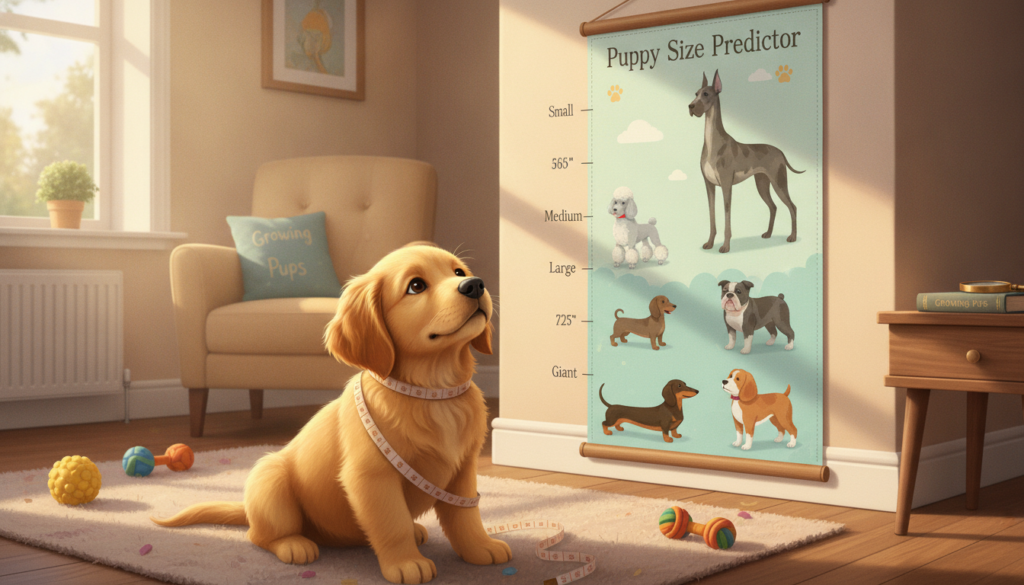
Breed genetics provide a useful starting point. Breed standards can show your dog’s usual adult weight, height, and body shape. Both parents’ sizes may offer a clearer guide, especially when they are known.
Sex can affect adult size, though each dog develops at its own pace. Mixed breed puppies can be harder to predict because their ancestry may include several body types. For these dogs, use a size range instead of one exact number.
Nutrition, Exercise, and Overall Health
Choose complete puppy food that matches your dog’s expected adult size. Large breed puppy formulas support controlled bone and joint development. Too many calories can cause rapid weight gain and stress growing joints.
Do not add calcium or other supplements unless your veterinarian recommends them. Measured meals help control portions. Aim for a healthy body condition, with ribs you can feel under a light layer of fat.
Choose exercise that fits your puppy’s age and build. Your veterinarian can suggest safe walks, play, and training. Regular checkups can identify poor growth, joint concerns, or health conditions affecting development.
Estimating Your Puppy’s Adult Weight and Height
Puppy size prediction works best when you combine several clues. Your veterinarian may review your puppy’s age, current weight, growth trend, breed details, paw size, and body frame.
- Track weight at regular intervals.
- Record changes in height and body length.
- Compare growth with the expected breed range.
- Ask your veterinarian to review the pattern.
Weight estimates are ranges, not promises. Puppies may grow in short bursts, so one measurement cannot show the full picture. Veterinary growth monitoring helps answer the question, how long do dogs grow, and when your puppy may reach adult size.
When Do Dogs Reach Full Size? Signs Your Puppy Is Finished Growing
To understand when do dogs reach full size, look beyond your puppy’s age. Breed, genetics, nutrition, and health all affect growth speed. Your veterinarian can read these signs within your dog’s puppy growth timeline.
Physical Signs of Completed Growth
Steady height and weight for several months suggest that most physical growth has ended. Your dog should develop a balanced body, with a more proportionate chest, legs, and head. Muscle tone may still improve as your dog gains strength.
Paw size alone cannot predict adult size. Some puppies have large feet during early growth, while others have more proportional paws. Growth plates close at different rates in different bones. A veterinarian may use X-rays to assess them when a medical reason exists.
Large and giant breeds may keep adding muscle after their height stabilizes. Their puppy growth timeline may extend well beyond the first year. Track body condition, weight, and movement during regular wellness visits.
Behavioral and Developmental Signs of Maturity
A maturing dog often focuses longer and responds to training more consistently. Impulsive actions may lessen, and daily energy may become easier to predict. Many dogs show more confidence in new places and routine interactions.
Sexual, social, and skeletal maturity do not happen on the same schedule. A dog may reproduce before its bones finish growing. Calm behavior does not prove that physical development is complete.
Continue balanced nutrition, preventive care, dental care, exercise, and training after visible growth slows. These habits support healthy joints, stable behavior, and long-term wellness as your dog reaches full size.
Conclusion
When do puppies stop growing? It mainly depends on your dog’s expected adult size. Toy and small breeds reach full size sooner, while large and giant breeds develop much longer.
Genetics shape your puppy’s basic growth pattern, but nutrition, exercise, health, and veterinary care also matter. A balanced diet and healthy body condition support steady development without causing excess weight gain.
Track your puppy’s weight and growth rate of puppies over time. Contact your veterinarian about slow, rapid, or uneven growth, or your puppy’s pain, weakness, digestive problems, or appetite changes. Regular checks can help you understand when do puppies stop growing and whether development is progressing normally.